
European wildcat (Felis silvestris silvestris): description, ecology and conservation
Overview of the European wildcat, its appearance, behaviour, distribution, threats (including hybridization with domestic cats), and conservation measures.
The European wildcat (Felis silvestris silvestris) is a small wild felid native to forests and scrublands across much of Europe and adjoining parts of western Asia. It belongs to the small cat subfamily often treated within the genus Felis; for more on its taxonomic context see Feline subfamily. This animal is distinct from feral domestic cats by its build, coat pattern and typically shy, solitary behaviour, although the boundary between truly wild and hybrid animals has become blurred in many areas.
Image gallery
10 Images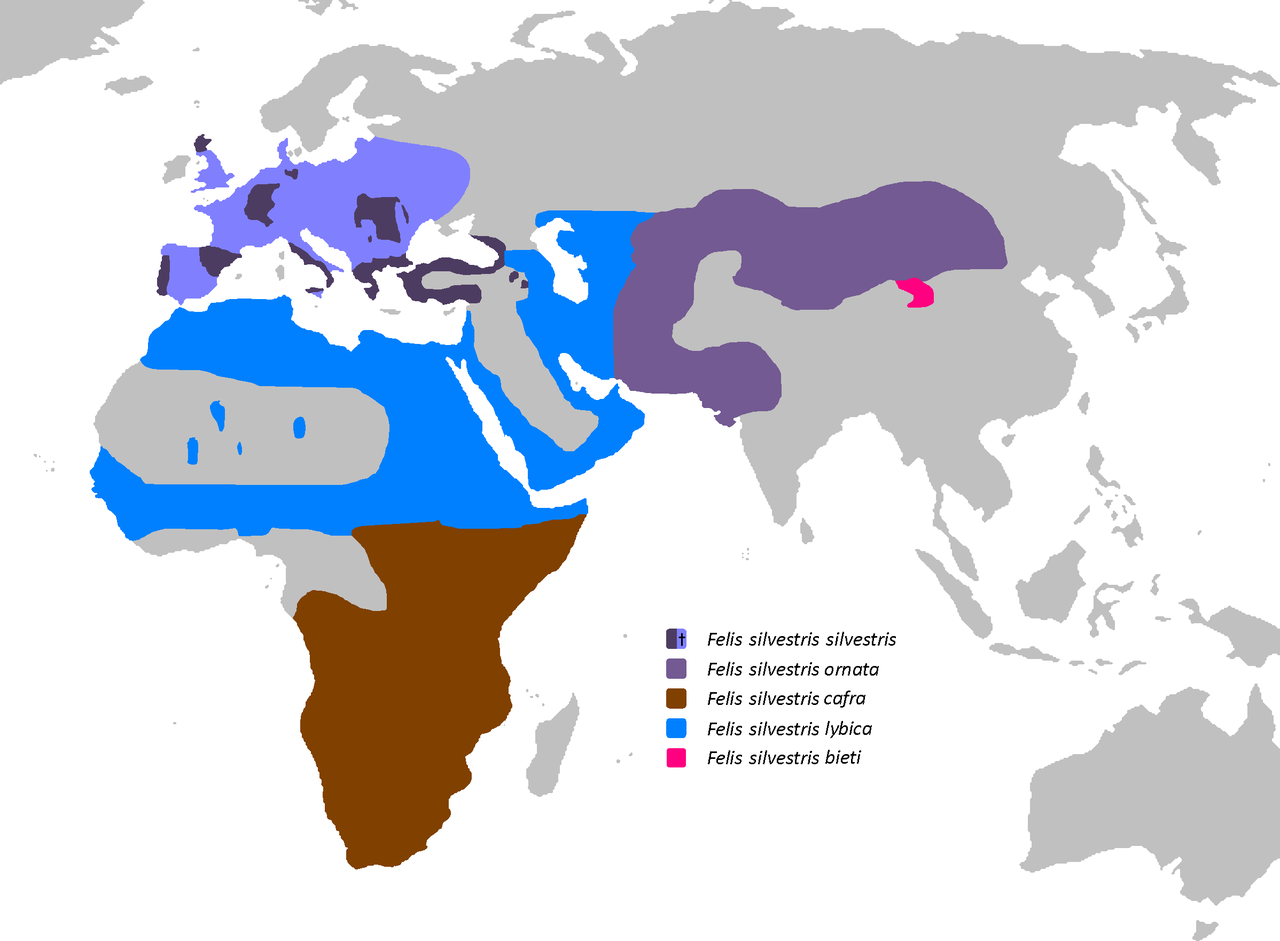



Appearance and biology
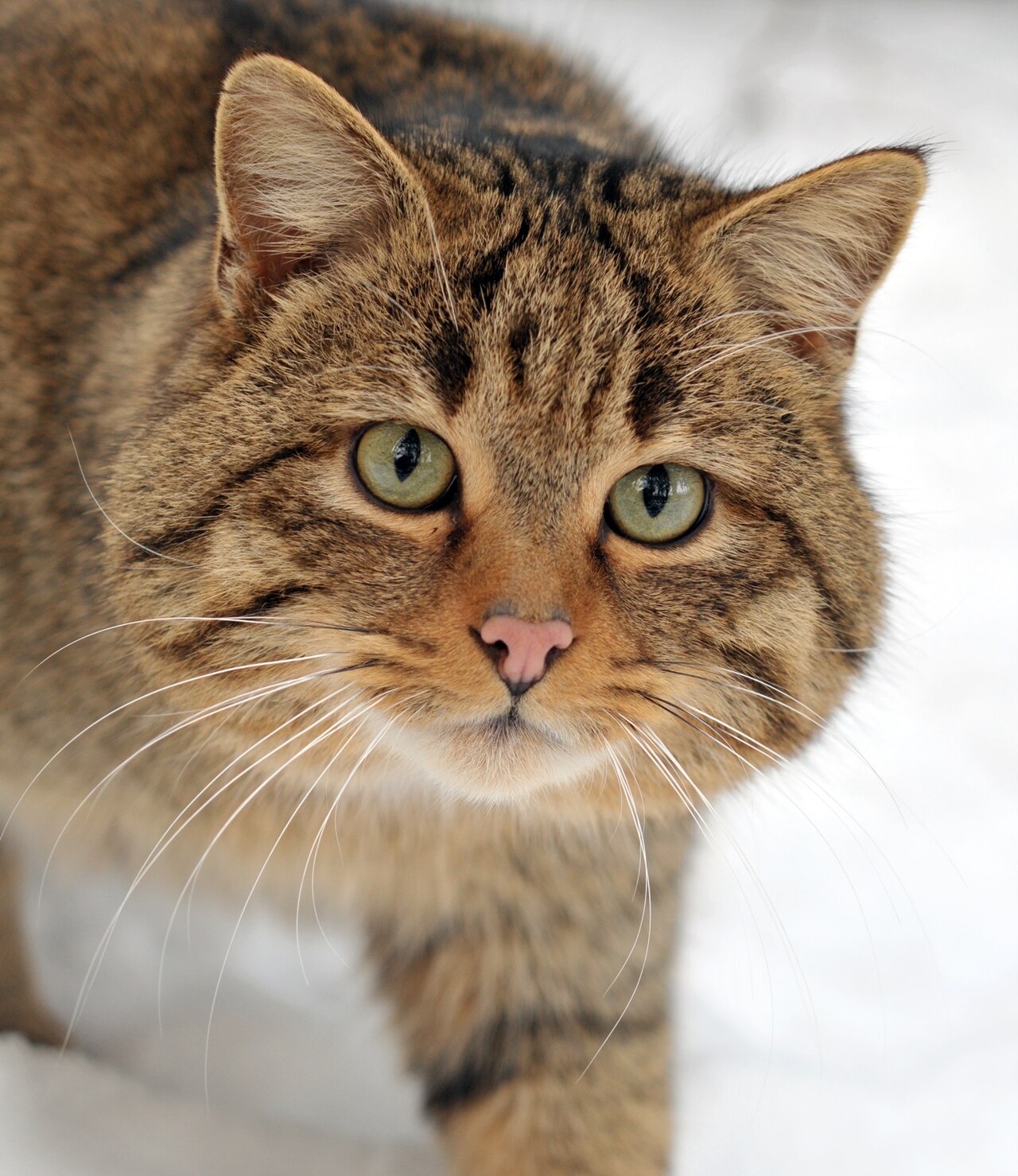
European wildcats are generally larger and more robust than most house cats, with longer legs and a stockier body. Their fur is usually dense, grey-brown with faint tabby striping; tails are characteristically bushy with several dark rings and a blunt, black tip. Adults range in body shape and size across their range, but unlike many domestic breeds they retain a wild-type musculature suited to stalking and killing small mammals. They are largely nocturnal or crepuscular, solitary outside the mating season, and primarily carnivorous—feeding on small rodents, rabbits, birds and occasionally amphibians and insects.
Range, habitat and variation
Felis silvestris populations occupy a variety of wooded habitats from western and central Europe eastward into parts of the Caucasus. The broader species shows geographic variation and has been separated into subspecies by some authorities; the European wildcat is one of these regional forms. The species as a whole occurs across Eurasia and into northern Africa, reflecting the complicated taxonomy and differing opinions about how many distinct subspecies exist. For a brief overview of its Eurasian distribution see Eurasian range. One formerly separate species, the Chinese mountain cat, has been reclassified by some researchers as a subspecies within this group (Chinese mountain cat).
Origins and relationships with domestic cats
Modern domestic cats descend from wildcat populations in the Near East and North Africa. The African wildcat (often named Felis silvestris lybica) is widely accepted as the primary ancestor of the domestic cat; see African wildcat. Throughout much of its range, the European wildcat has interbred with free-roaming domestic or feral cats. Such crossbreeding (hybridization) is widespread and a major conservation concern because it can dilute the genetic and phenotypic identity of true wildcats.
Threats and conservation
Key threats to the European wildcat include habitat loss and fragmentation, persecution in some regions, road mortality and competition or genetic mixing with domestic and feral cats. While the species as a whole is not extinct and retains strongholds in parts of eastern Europe and the Caucasus, many local populations are small or declining. Conservation responses combine legal protection, habitat management, population monitoring, genetic studies to detect hybridization, and programmes to control feral cats. Some countries run captive-breeding and reintroduction efforts or raise public awareness to reduce persecution.
Distinctive facts and human interactions
True European wildcats are generally difficult to tame and are more wary of humans than most feral domestic cats. The English word "wildcat" is sometimes also applied colloquially to feral housecats that live without owners, but biologists distinguish these from genetically pure wild Felis silvestris. Maintaining wildcat populations is important for biodiversity: as mesopredators they help control rodent populations and indicate the health of woodland ecosystems. Research, monitoring and targeted conservation remain essential to preserve genetically distinct wildcat populations across Europe.
Questions and answers
Q: What is the scientific name of the wildcat?
A: The scientific name of the wildcat is Felis silvestris.
Q: Where is the wildcat native to?
A: The wildcat is native to Eurasia.
Q: Why is the wildcat called "wild"?
A: The wildcat is called "wild" because it is almost impossible to tame.
Q: Has crossbreeding occurred between wildcats and domestic cats?
A: Yes, crossbreeding with domestic cats has occurred in almost the whole of the species' range.
Q: How does the wildcat differ from house cats in terms of their physical characteristics?
A: Wildcats are larger than house cats, and they have longer legs and more robust bodies.
Q: How many subspecies of wildcats are there?
A: There are about 22 subspecies of wildcats, or only four according to some experts.
Q: Which subspecies of wildcats did our domestic cats originate from?
A: Our domestic cats originated from the subspecies known as the African wildcat.
Related articles
Author
AlegsaOnline.com European wildcat (Felis silvestris silvestris): description, ecology and conservation Leandro Alegsa
URL: https://en.alegsaonline.com/art/32635
Sources
- iucnredlist.org : "Felis silvestris"
- sciencemag.org : sciencemag.org/content/317/5837/519.abstract