
European polecat (Mustela putorius)
A compact mustelid native to western Eurasia and north Africa. Overview of identification, behaviour, distribution, taxonomy, relations with humans, hybrids and conservation status.
Overview
The European polecat (Mustela putorius) is a small carnivorous mammal of the mustelid family native to much of western Eurasia and parts of north Africa. Often called the common polecat, black or forest polecat, wild ferret or foumart, it is a close relative of other weasels, minks and ferrets. The species is best known for its dark brown fur, pale underparts and characteristic facial mask, and for producing a strong-smelling secretion used in scent marking.
Image gallery
10 Images
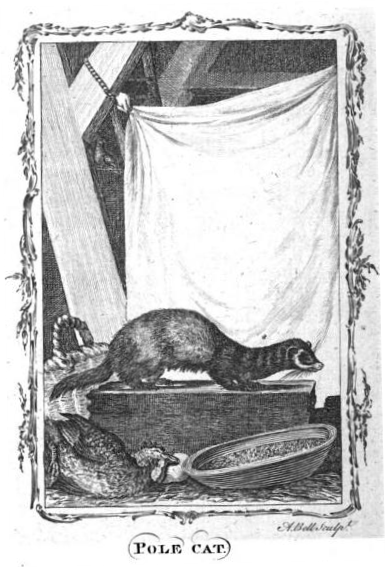


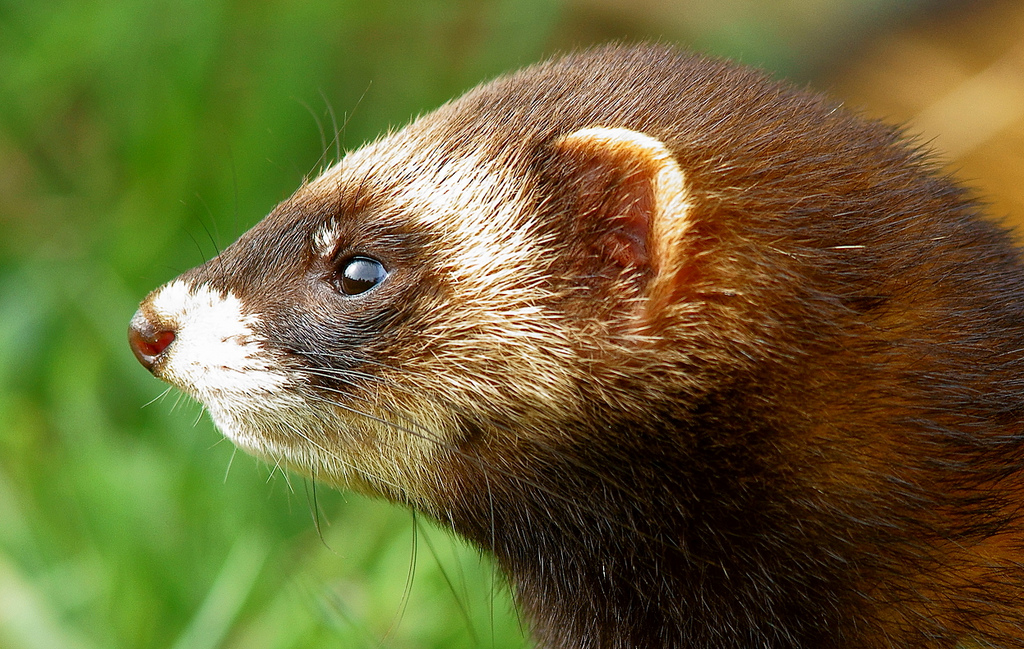
Identification and anatomy
Polecats have a relatively short, stocky body compared with many other mustelids, a robust skull and powerful dentition adapted for capturing and killing small vertebrates. Typical features include a masked face, rounded ears and a tail shorter than that of many relatives. Colouration is mainly dark brown with lighter underparts, though occasional colour variants such as albino individuals occur. Polecats are often less lithe than martens or civets but are muscular and capable hunters.
Distribution, habitat and history
The species ranges from western Europe across parts of central Europe and into western Asia; an isolated population occurs in northwestern Africa. Fossil evidence indicates that the European polecat arose in Western Europe during the Middle Pleistocene. It occupies a variety of habitats including mixed woodland, farmland, hedgerows, marshes and edges of rivers, usually where small mammal prey and shelter such as burrows or dense vegetation are available.
Behaviour, diet and reproduction
Polecats are primarily nocturnal and crepuscular predators that feed on small rodents, birds, amphibians, reptiles and large insects. They may carry or cache prey in burrows, and sometimes deliver a lethal bite to the skull or cervical region of larger prey. Compared with some mustelids they are relatively tolerant of neighbors and are not strictly territorial; same-sex individuals may share parts of a range. Reproductive behaviour is polygynous; females give birth to litters of kits in late spring to early summer and rear them until they reach independence in a few months.
Taxonomy, hybrids and the domestic ferret
Molecular and morphological studies place the European polecat close to the steppe polecat, the black-footed ferret and the European mink. It can interbreed with some close relatives — hybridization with steppe polecats and with the black-footed ferret produces fertile offspring under some conditions, whereas crosses with European mink generally produce hybrids that are less fertile or sterile. The domesticated ferret derives from the European polecat and was used historically for hunting rodents and rabbits; selective breeding over centuries produced the tame varieties kept as pets or working animals today.
Human interactions and conservation
The polecat has a long and mixed relationship with humans. It has been valued historically for its role in controlling pests and for its fur, yet in many regions it was persecuted by gamekeepers and associated with negative folklore. Cultural references in literature have reflected these attitudes. Today the species is widespread and classified as Least Concern by the IUCN owing to its broad range and generally stable populations, though local declines have occurred because of habitat loss, persecution and road mortality. Conservation efforts focus on habitat restoration, legal protection where necessary and public education to correct misunderstandings about the species' behaviour.
Further reading and resources
- Overview of Mustelidae family
- Range and distribution maps
- Colour variations and albinism in mustelids
- Comparative notes on minks
- Weasel relatives and identification
- Reproductive strategies in mustelids
- Mammalian pregnancy and breeding seasons
- Rodents as prey species
- Bird predation by small carnivores
- Amphibians and reptiles in polecat diets
- Reptile predators and ecological roles
- Hunting techniques and prey dispatch
- Pleistocene origins and fossil record
- Domestication history of the ferret
- Historical persecution by gamekeepers
- Cultural associations and folklore
- Literary references and historical texts
- Conservation assessments and IUCN status
Questions and answers
Q: What is the scientific name of the European polecat?
A: The scientific name of the European polecat is Mustela putorius.
Q: What color is a typical European polecat?
A: A typical European polecat is dark brown, with a pale underbelly and a dark mask across its face. Occasionally, there are other color variations such as albinos.
Q: What family does the European polecat belong to?
A: The European polecat belongs to the mustelid family, which also includes minks and other weasels.
Q: How does the European polecat mark its territory?
A: The European polecat marks its territory by secreting a particularly foul-smelling liquid.
Q: When do pregnant female European polecats usually give birth?
A: Pregnant female European polecats usually give birth in early summer to litters consisting of five to ten kits.
Q: What type of animals does the European Polecat feed on?
A: TheEuropean Polecat feeds on small rodents, birds, amphibians and reptiles. It occasionally cripples its prey by piercing its brain with its teeth and stores it in its burrow for future consumption.
Q: When did the domestication of ferrets begin? A:The domestication of ferrets began more than 2000 years ago for hunting vermin
Related articles
Author
AlegsaOnline.com European polecat (Mustela putorius) Leandro Alegsa
URL: https://en.alegsaonline.com/art/32622
Sources
- iucnredlist.org : "Mustela putorius"
- vwt.org.uk : Hybridization and the phylogenetic relationship between polecats and domestic ferrets in Britain
- ferret.ru : "Khonorik: Hybrids between Mustelidae"
- mawdesley-village.org.uk : Cobham, Alan (n.d.) Dialect – A Glossary of Lancashire Words as Spoken in Mawdesley. Mawdesley Village Web Site. [online].
- worldcat.org : 498697660 · archive.org · archive.org
- archive.org : British mammals; an attempt to describe and illustrate the mammalian fauna of the British islands from the commencement of the Pleistocene period down to the present day
- archive.org : Mammals of the Soviet Union. Vol. II, part 1b, Carnivores (Mustelidae and Procyonidae)
- archive.org : The hand-book to the British Mammalia
- archive.org : Catalogue of the Mammals of Western Europe (Europe Exclusive of Russia) in the Collection of the British Museum
- archive.org : The Influence of Man on Animal Life in Scotland; Study in Faunal Evolution