
European hornet (Vespa crabro)
Comprehensive overview of the European hornet, covering identification, biology, nesting, diet, behavior, range, interactions with people, ecological role, and safe management.
Overview
The European hornet (Vespa crabro) is a large social wasp native to much of Europe and parts of Asia. It is a eusocial species with distinct castes (queen, workers, males) and builds characteristic paper-like nests from chewed plant fibers. The species is an important predator of other insects and a familiar presence in rural and suburban landscapes.
Image gallery
10 Images


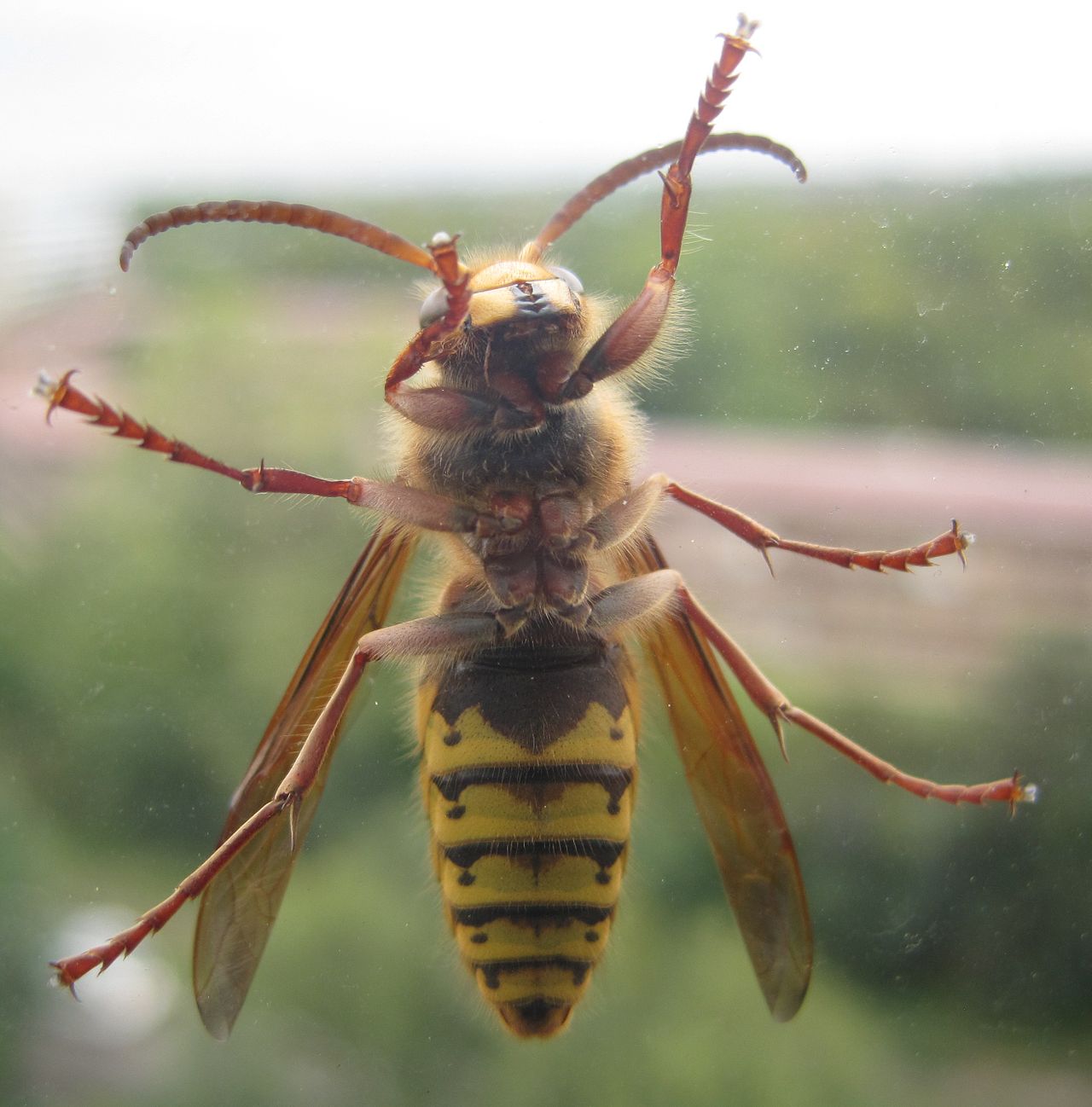


Identification and appearance
Adults are noticeably larger and more robust than many common paper wasps and flies. Key field marks include a reddish-brown head and thorax, a yellow abdomen banded with dark markings, and broad wings. Size and body proportions vary between queens, workers and males; queens are the largest. In regions outside Eurasia the European hornet is the only commonly referred-to true hornet.
Nesting, life cycle and colony development
Each colony begins when a fertilized queen that overwintered in shelter emerges in spring and locates a cavity to found a nest. Nests are constructed from chewed plant material and other fibers mixed with saliva to form a paper-like envelope and internal combs. Typical nest sites include hollow trees, wall voids, attics and other sheltered cavities. The queen rears the first workers and then focuses on egg laying while workers maintain the nest, forage and care for brood. Colonies grow through summer and produce new reproductive males and queens in late season; the original colony usually dies out with the onset of cold weather, while newly mated queens overwinter.
Diet and ecological role
European hornets are predators and scavengers. Adults forage for protein-rich prey such as larger insects, including other wasps and sizable solitary bees, and they feed brood with chewed insect tissues. Adults also consume sugary substances such as tree sap, ripe fruit and nectar, and may be attracted to sweet human foods at picnics. By preying on many insect species they help regulate local populations and play a role in ecosystem balance.
Behavior and interactions with people
These hornets generally avoid unnecessary conflict with people but will defend a nest vigorously if their nest is disturbed. Stings occur when individuals are threatened, grabbed, stepped on or when a nest is bothered. For most people a sting causes localized pain and swelling that subsides over days; people with insect-venom allergy can have severe reactions and should seek medical advice. Hornets may also become noticeable when attracted to outdoor food or lights at dusk.
Range, introduction and distinctions
The species is widespread across Europe and parts of Asia and has been introduced to parts of North America, where it is often cited as the only commonly recognized true hornet. Within its native range it is typically considered a native predator that can benefit gardens and orchards, whereas human perceptions vary depending on proximity of nests to buildings and activity of colonies.
Management, safety and prevention
- Avoid approaching or disturbing active nests; observe from a safe distance.
- Prevention: seal gaps in walls and roofs, remove or screen access to cavities, and limit food attractants such as exposed sugary foods.
- Control: removal of established nests is best undertaken by trained pest professionals using appropriate protective equipment and methods timed to colony behavior.
- Individuals allergic to stings should carry appropriate medication and seek prompt medical attention after a sting.
Further reading and resources
For identification, regional distribution and management recommendations consult local entomological guides and pest management authorities. Useful topics to search include general overviews of eusocial wasp biology, regional species accounts and conservation contexts provided in regional guides. For information on prey relationships and ecological interactions see resources that discuss predation on other wasps and larger solitary bees, and consult local wildlife or agricultural extension services for site-specific advice.
Because management approaches and legal protections can vary by jurisdiction, always check local regulations and guidance before attempting nest removal or other control measures.
Questions and answers
Q: What is the European hornet?
A: The European hornet (Vespa crabro) is a large eusocial wasp found in Europe and North America.
Q: How do European hornets make their nests?
A: European hornets make their nests out of plant material and other fibers to create paper nests.
Q: How do European hornets usually react to humans?
A: European hornets are usually known as pests by humans who come in contact with them. They are defensive of their hive and sometimes aggressive around food sources.
Q: What do European hornets eat?
A: European hornets eat large insects, mostly wasps and large bees.
Q: Do European hornets sting humans?
A: Yes, European hornets can sting humans in response to being stepped on or grabbed. They may also sting without warning.
Q: What are the symptoms of a European hornet sting?
A: The pain from a European hornet sting may persist for a few days with swelling.
Q: Do European hornets usually avoid conflict?
A: Yes, European hornets usually avoid conflict but are defensive of their hive and may become aggressive around food sources.
Related articles
Author
AlegsaOnline.com European hornet (Vespa crabro) Leandro Alegsa
URL: https://en.alegsaonline.com/art/32615
Sources
- vespa-crabro.com : "Hornets: Gentle Giants"
- bioone.org : "A Hornet Steals Prey from a Spider"
- doiserbia.nb.rs : "Determination of Some Structural Features of the Nest Paper"