
Eureka Stockade (1854) — miners' uprising at Ballarat, Victoria
An 1854 armed protest by gold miners at Ballarat, Victoria, against licensing and representation; became a pivotal event in Australian political reform and national symbolism.
Overview
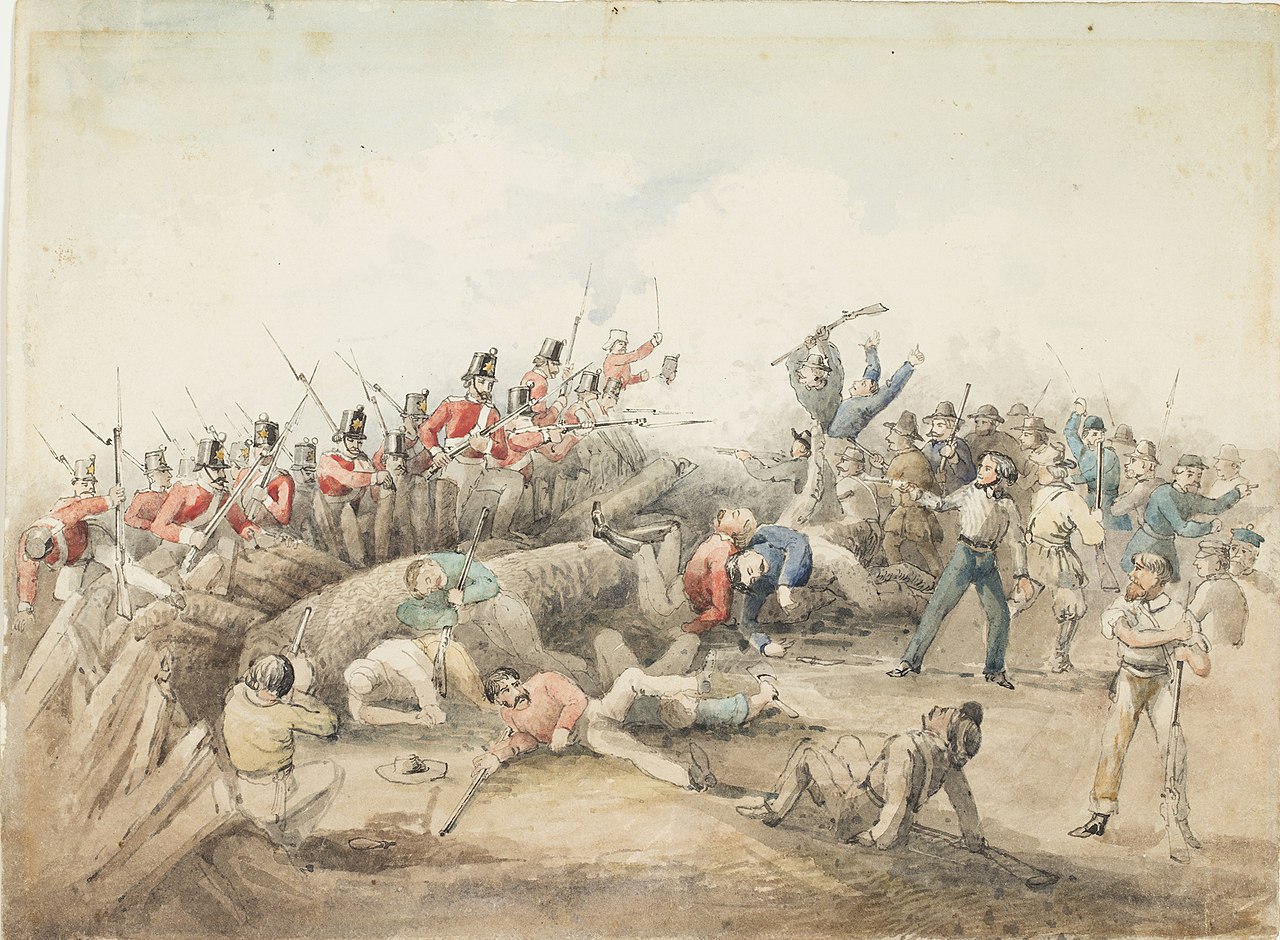
The Eureka Stockade was an armed protest by gold miners at Ballarat in the colony of Victoria on 3 December 1854. Miners objected to the colonial administration's system of mining licences and the way those licences were enforced. The confrontation began after months of tensions and culminated in the construction of a crude defensive enclosure—commonly called the stockade—on Bakery Hill above the diggings. The skirmish between miners and government forces was brief but violent and is widely regarded as a significant episode in Australia's political development.
Image gallery
10 Images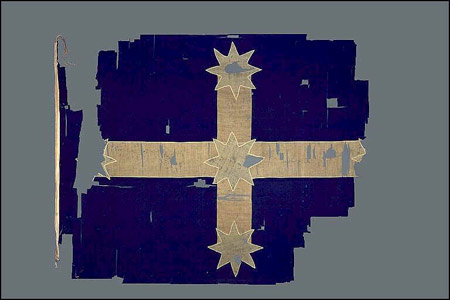


Background and causes
During the 1850s gold rush, large numbers of people from Britain, Europe, China and other places came to Victoria to seek wealth. Many miners were required to buy a costly licence to dig for gold, a charge they often resisted as unfair. Miners complained not only about the licence fee but also about intrusive policing, arbitrary searches, and lack of legal rights. They argued that taxes and laws should be accompanied by political representation in the colonial parliament. These grievances helped foster organised resistance and led to public meetings, petitions and the formation of miner associations.
The uprising and the stockade
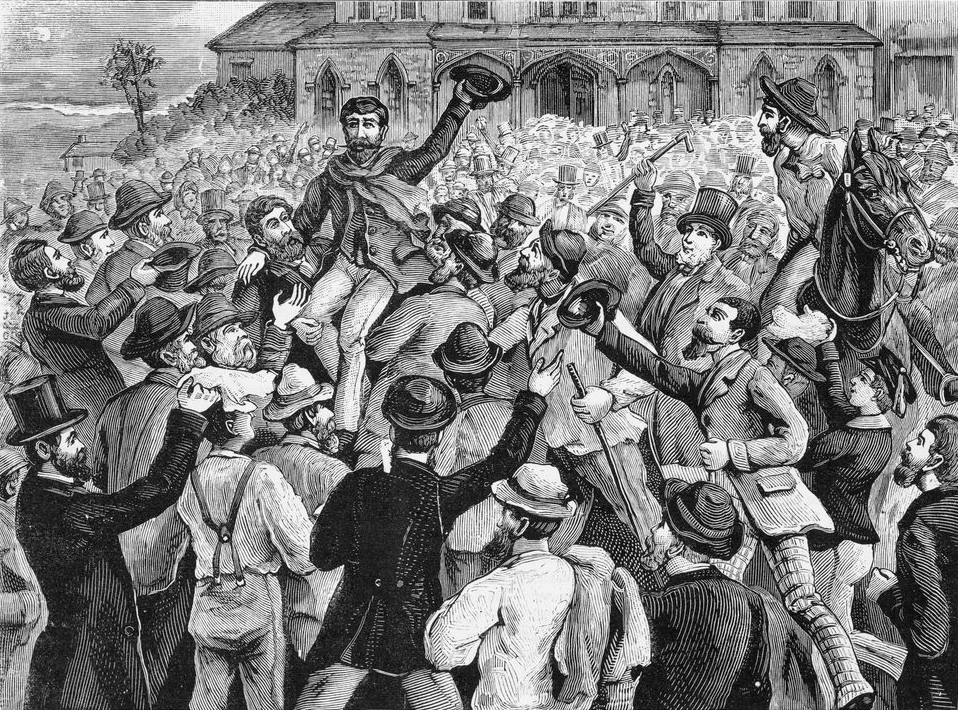
In late 1854 a group of miners elected leaders and adopted a banner that has since become emblematic—the Eureka Flag. Influential figures included Peter Lalor, who emerged as a commander of the miners' force. The miners erected a timber and earthwork enclosure on the ridge overlooking their camp. At dawn on 3 December government troops and police attacked the stockade. The engagement lasted only a short time, but it resulted in casualties on both sides. Contemporary accounts describe confusion and close-range fighting; historical summaries note that the clash left dozens dead or wounded.
Aftermath and significance
The immediate suppression of the stockade was followed by arrests and trials. Public reaction in the colony was mixed, but the event intensified scrutiny of mining administration and colonial governance. In the months and years afterwards authorities introduced changes to licensing, and reforms expanded voting rights and local representation. Many historians consider the Eureka Stockade a turning point that helped shape democratic reforms in Victoria and contributed to a developing Australian political identity.
Participants, symbols and legacy
- Participants: miners from Britain and Ireland, continental Europe, China and elsewhere who worked on the Ballarat fields.
- Leadership: figures such as Peter Lalor are often associated with the uprising.
- Banner: the Eureka Flag became a lasting symbol of defiance and is used in commemorations and debates.
Further reading and connections
The Eureka Stockade is often described as a protest against licensing and for fair political representation. For general context see treatments of colonial law and goldfields administration, and accounts of the social mix on the goldfields. Useful entry points include articles on the rebellion, the mechanics of the gold licence, and studies of colonial Victoria and Ballarat (Victoria, Australia). Discussions of political representation and franchise reform that followed the events are found under topics related to representation and civil rights. For cultural and ethnic aspects, see material on the role of the Irish in the goldfields.
The Eureka Stockade remains a subject of public memory, scholarly interpretation and civic commemoration. It is taught as part of Australian colonial history and continues to be referenced in debates about democracy, protest and national symbols.
Questions and answers
Q: What was the Eureka Stockade?
A: The Eureka Stockade was a rebellion by gold miners at Ballarat, Victoria, Australia.
Q: Where did the miners come from?
A: The miners came from England, Ireland, Scotland, Wales, Canada, Italy, Hungary, France, Germany, China and Australia.
Q: Why did the miners refuse to pay a licence fee?
A: The miners refused to pay a licence fee to look for gold because they said that the money for the licence was a tax, and that if they had to pay tax then they should be represented in the parliament.
Q: Who became the leader of the miners?
A: Irish miner Peter Lalor became the leader of the miners.
Q: What did they build on Bakery Hill?
A: They built a fort, or stockade, on Bakery Hill above the gold diggings on the Eureka gold lead.
Q: Who attacked the miners?
A: The British Army attacked the miners.
Q: How long did the battle last?
A: The battle went for 20 minutes and more than 30 people were killed.
Related articles
Author
AlegsaOnline.com Eureka Stockade (1854) — miners' uprising at Ballarat, Victoria Leandro Alegsa
URL: https://en.alegsaonline.com/art/32565
Sources
- education.abc.net.au : "Eureka stockade Digibook -"
- artgalleryofballarat.com.au : "Collection"
- abc.net.au : "Eureka flag heads to Adelaide for restoration - ABC News (Australian Broadcasting Corporation)"
- thecourier.com.au : "Eureka flag works to cost up to $100,000 - Local News - News - General - The Courier"
- greenleft.org.au : "Eureka flag and union insignia banned"
- smh.com.au : "Flags and hard hat slogans banned under new building code"
- au.news.yahoo.com : "Eureka flag 'hijacked by racists' - The West Australian"