
Eugène Dubois
Dutch physician and early paleoanthropologist who discovered the fossils known as Java Man (Pithecanthropus/Homo erectus) and pioneered purposeful field searches for ancient human ancestors.
Overview
Marie Eugène François Thomas Dubois (28 January 1858 – 16 December 1940) was a Dutch physician and early paleoanthropologist who became internationally known for the discovery of the fossils commonly called Pithecanthropus erectus (later classified as Homo erectus), often referred to as "Java Man." Although hominid remains had been found before, Dubois was one of the first scientists to set out with the specific aim of locating fossil human ancestors.
Image gallery
1 Image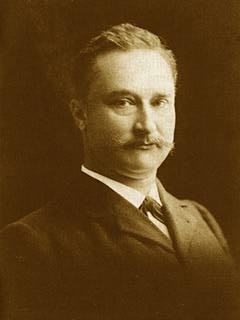
Life and training
Trained as a medical doctor and anatomist, Dubois served in the Dutch East Indies (now Indonesia) as a military surgeon and researcher. His interest in human origins was influenced by the Darwinian debates of the late 19th century, and he chose to combine clinical anatomy with fieldwork. He spent extended periods near river deposits and fossil-bearing strata where exposure and erosion made discoveries more likely.
Discovery at Trinil
In the early 1890s Dubois carried out excavations along the Solo (Brantas) River on Java, at a site called Trinil. There he recovered a skullcap, a molar tooth and a femur which he believed belonged to a single type of creature intermediate between apes and modern humans. These remains were initially named Pithecanthropus erectus and popularly dubbed "Java Man." The material is widely cited as among the first major finds that linked anatomy with evolutionary hypotheses about human origins.
Scientific reception and controversy
Dubois's conclusions provoked debate. Some contemporaries questioned whether the skullcap and femur belonged to the same individual or even the same species, and others were skeptical of his anatomical interpretations. Over time, as more fossils were found elsewhere and comparative methods improved, the remains were re-evaluated and generally placed in the species Homo erectus. The discussion around Dubois's finds played a major role in shaping early paleoanthropological standards for evidence and interpretation.
Methods and contributions
Dubois is notable for introducing a systematic search ethic into the study of human antiquity: he chose specific geological settings, conducted repeated field seasons, and combined anatomical expertise with on-site recovery. His approach emphasized careful comparison of skeletal traits and an effort to situate fossils in a geological and environmental context. The finds themselves became touchstones in debates over human evolution, migration, and the antiquity of hominids.
Legacy and significance
Although some of Dubois's claims sparked controversy, his work helped establish paleoanthropology as an active field of inquiry. The Java material remains historically important: it was among the earliest discoveries that suggested an extended deep history for the human lineage outside Europe. Dubois kept custodial control of his collection for many years and later his material became part of Dutch scientific collections, where it continued to be studied. Today his name is closely associated with the transition from opportunistic finds to targeted searches for human ancestors.
- Key finds: skullcap, molar, femur recovered at Trinil (Java).
- Notable for: deliberate field searches and anatomical comparisons.
- Ongoing relevance: debates about species assignment, variability, and early human dispersal.
For further context and biographical resources, see general profiles of Dubois and summaries of the Java discoveries in paleoanthropological literature. Scholarly and museum sources provide more detailed stratigraphic, anatomical and historical treatments of these classic specimens. Biography and profiles, hominid overviews and detailed discussions of the fossils remain useful starting points for readers who wish to explore the subject more deeply.
Questions and answers
Q: Who was Eugène Dubois?
A: Eugène Dubois was a paleoanthropologist from the Netherlands.
Q: What did Eugène Dubois discover?
A: Eugène Dubois discovered Pithecanthropus erectus, which was later redesignated as Homo erectus.
Q: How did Eugène Dubois earn worldwide fame?
A: Eugène Dubois earned worldwide fame for his discovery of Pithecanthropus erectus or 'Java Man'.
Q: Was Dubois the first person to study hominid fossils?
A: No, hominid fossils had been studied before Dubois, but he was the first anthropologist to embark upon a purposeful search for them.
Q: What is Pithecanthropus erectus?
A: Pithecanthropus erectus is an extinct hominid species that Eugène Dubois discovered and later redesignated as Homo erectus.
Q: When was Eugène Dubois born and when did he die?
A: Eugène Dubois was born on January 28, 1858, and he died on December 16, 1940.
Q: What did Eugène Dubois do that was significant for the field of paleontology?
A: Eugène Dubois' purposeful search for hominid fossils was significant as it marked the beginning of the scientific study of human evolution, and his discovery of Pithecanthropus erectus or 'Java Man' was a major milestone in the field of palaeoanthropology.
Related articles
Author
AlegsaOnline.com Eugène Dubois Leandro Alegsa
URL: https://en.alegsaonline.com/art/32484
Sources
- mnsu.edu : mnsu.edu