
Eucalyptus viminalis (Manna Gum): description, range, uses and ecology
Eucalyptus viminalis, the manna or ribbon gum, is a tall Australian eucalypt valued for wildlife habitat and timber. This article covers its appearance, subspecies, ecology, uses and notable facts.
Overview
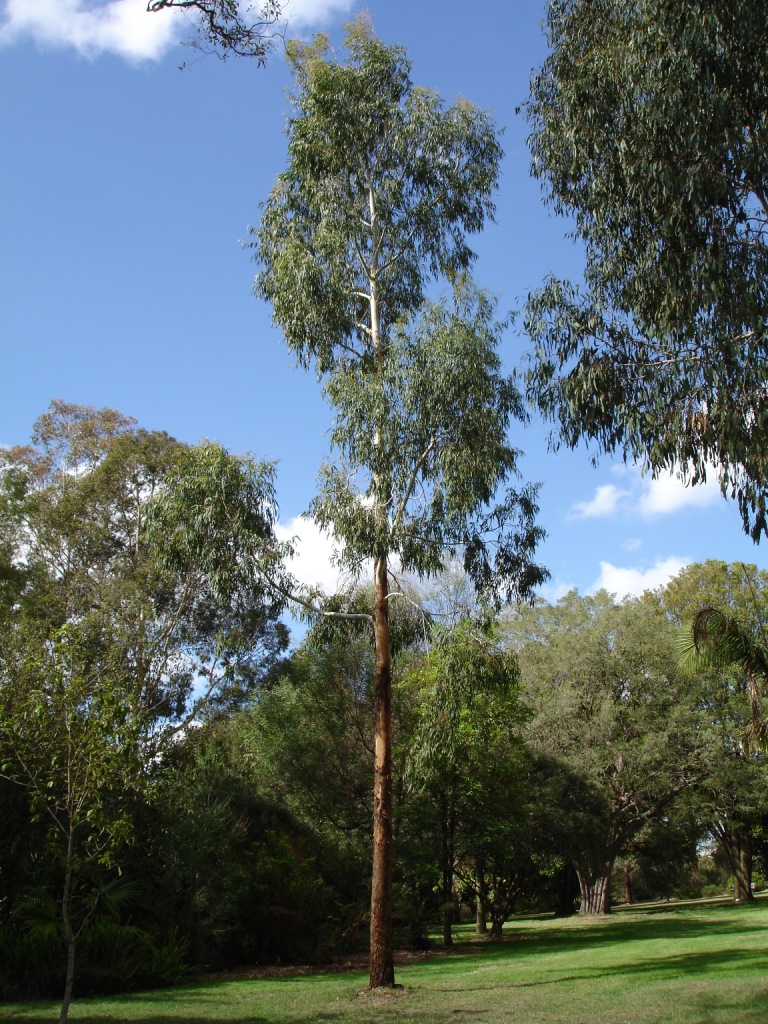
Eucalyptus viminalis, commonly called the manna gum, ribbon gum or white gum, is a tall tree native to Australia. It belongs to the group of flowering trees known generally as eucalypts. The species is recognized for its smooth, often pale trunk, peeling bark ribbons and long lance-shaped leaves. It grows as a straight, single-trunk tree reaching substantial heights, and is a conspicuous component of many cooler temperate woodlands.
Image gallery
8 Images



Physical characteristics
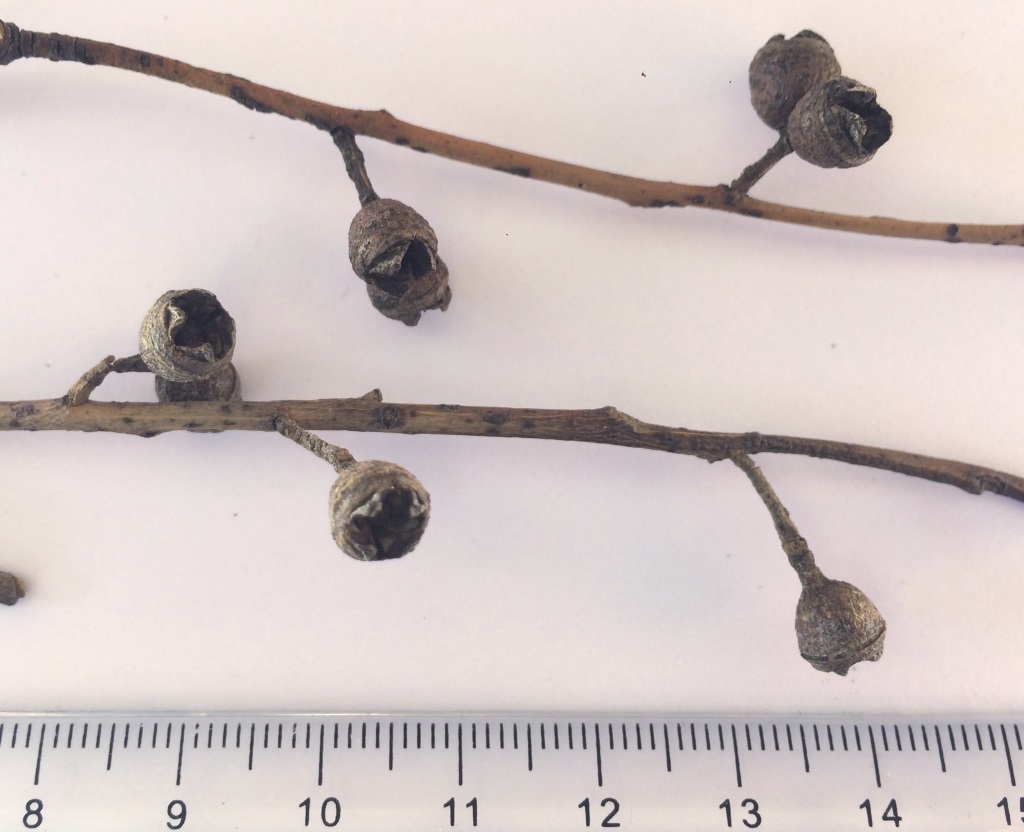
E. viminalis typically attains heights up to about 40 metres. The lower trunk and large branches often retain rough bark, while upper branches and the bole display smooth bark that peels in long, papery strips or "ribbons" that may collect among the branches or on the ground. Leaves are narrow and glossy; the tree produces clusters of white flowers followed by capsule fruits characteristic of the genus. Key identification features include:
- Tall, straight habit with a smooth, pale upper trunk and ribbon-like peeling bark;
- Lanceolate adult leaves that are favoured forage for some marsupials;
- White flowers and woody seed capsules borne in groups typical of eucalypts.
Distribution and habitat
Eucalyptus viminalis is found in the cooler parts of southeastern Australia, including mountain and coastal woodlands. It is a common species in regions where frost and cooler temperatures are more frequent than in arid zones. Mature specimens have been planted outside their native range; for example a notably large tree with the greatest recorded trunk diameter (324.7 cm) is located at Woodbourne in Marlborough, New Zealand — see Woodbourne record.
Subspecies and variation
The species is divided into recognized subspecies that differ slightly in distribution and foliage characteristics. These include E. viminalis subsp. viminalis, which occurs in regions such as New South Wales, Tasmania and parts of South Australia including the Mount Lofty Range. Other subspecies occur in western Victoria and southeastern South Australia, and in southern Victoria. Local climate and soils influence growth form and bark persistence.
Ecology, wildlife and sap
Leaves of Eucalyptus viminalis are an important food source for specialist folivores. They are particularly favoured by the koala, and the tree supplies both browse and shelter. The sap and manna exudates of the species contain measurable sugar concentrations (reported in field studies as modest percentages) and provide a seasonal food source for a range of arboreal mammals, including small gliding marsupials; the tree thus supports animals such as various tree-dwelling marsupials and species of small gliders that visit for sap and nectar. It also plays a role in local bird and insect communities.
Uses, timber and cultivation
The wood of E. viminalis is pale pink to pinkish-brown, often streaked with light grey. It is workable and taken for furniture, flooring and millwork where attractive colour and finish are desired. Because the timber is not highly durable and has moderate strength it is generally unsuited to heavy structural applications, though it has been used in light framing. The species tolerates cooler climates (surviving light frosts and temperatures reported down to around −15 °C under some conditions), which has permitted cultivation beyond Australia in temperate regions of Europe and New Zealand. It is planted for amenity, reforestation and shelterbelt purposes as well as for habitat restoration.
Notable facts and management
As a widely recognized gum eucalypt, Eucalyptus viminalis is significant both ecologically and culturally. Its bark ribbons, seasonal manna and prominent presence in certain woodlands make it a familiar tree in its range. Management considerations include susceptibility to some root and wood pathogens, sensitivity of native wildlife to large-scale clearing, and the need to consider suitability for planting in non-native landscapes to avoid invasive behaviour. For general reference on related eucalypt species and cultivation advice see local forestry or botanical sources such as tree guides and specialist eucalypt literature; for wildlife interactions consult resources on marsupial ecology and koala habitat.
Questions and answers
Q: What is Eucalyptus viminalis also known as?
A: Eucalyptus viminalis is also known as Manna Gum, White Gum, Ribbon Gum or Viminalis.
Q: How tall does it typically grow?
A: It typically grows to about 40 metres tall.
Q: What type of bark does it have?
A: It has rough bark on the trunk and larger branches, with the upper part of the tree peeling away in long "ribbons" which can collect on the branches and surrounding ground.
Q: What is the largest recorded diameter of a E. viminalis tree?
A: The largest recorded diameter of a E. viminalis tree is 324.7 cm at Woodbourne in Marlborough, New Zealand.
Q: What animals eat its leaves?
A: Koalas eat its leaves.
Q: What other animals feed on its sap?
A: Its sap has a 5–15% sugar content which makes it an essential food for tree dwelling marsupials like the Yellow-bellied Glider, and the Sugar Glider.
Q: How many subspecies are there of this species?
A: There are three subspecies - E. viminalis subsp. viminalis – NSW, Victoria, Tasmania, Mount Lofty Range of South Australia; E. viminalis subsp cygnetensis – western Victoria, southeastern South Australia; and E.viminalis subsp pryoriana – southern Victoria
Related articles
Author
AlegsaOnline.com Eucalyptus viminalis (Manna Gum): description, range, uses and ecology Leandro Alegsa
URL: https://en.alegsaonline.com/art/32459
Sources
- register.notabletrees.org.nz : "Tree Information"
- wikidata.org : Q2137116
- species.wikimedia.org : Eucalyptus viminalis
- ville-ge.ch : 16562
- id.biodiversity.org.au : 65838
- calflora.org : 3539
- ecocrop.fao.org : 5946
- eol.org : 245551
- gd.eppo.int : EUCVI
- eunis.eea.europa.eu : 175975
- profiles.ala.org.au : Eucalyptus viminalis
- gbif.org : 3177112
- npgsweb.ars-grin.gov : 16104
- inaturalist.org : 77093
- ipni.org : 593454-1