
Ernst Heinrich Weber
German physician and pioneer of experimental psychology and psychophysics, known for systematic studies of sensation, the just-noticeable difference and the two-point threshold.
Overview
Ernst Heinrich Weber (born 24 June 1795 – died 26 January 1878) was a German physician and anatomist whose experimental studies of human sensation helped establish the empirical study of perception. Trained in medicine, anatomy and physiology, Weber applied careful measurement and controlled procedures to questions about how physical stimulation relates to sensory experience. His findings provided core observations that later shaped the discipline of psychophysics.
Image gallery
1 Image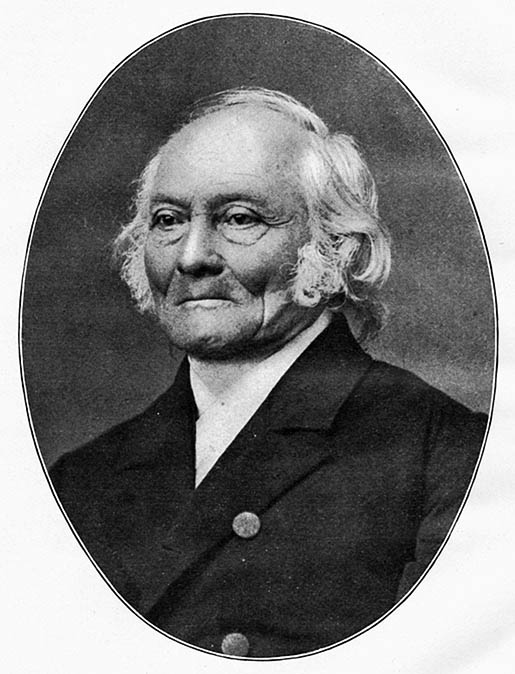
Early life and career
Weber came from an academic family. Two of his younger brothers were also scientists: one became known as a physicist and the other worked in anatomy; family ties and university connections influenced his scholarly path. After completing medical training and early work in clinical settings, Weber taught anatomy and physiology and accepted a long-term post as a professor at the University of Leipzig, where he supervised students and conducted laboratory experiments that combined clinical insight with quantitative methods. Contemporary biographical notes often refer to his clinical background as central to his approach to research (physician, anatomy, physiology).
Experimental work and methods
Weber introduced systematic, repeatable procedures for testing human sensitivity to physical stimuli. He used simple apparatus and comparative trials to measure thresholds: for example, how small a change in weight a subject could reliably detect, or how close two points on the skin could be before they were perceived as a single touch. His experiments emphasized controlled variation of stimulus intensity, careful recording of responses, and replication—practices that became standard in later experimental psychology and sensory physiology.
Weber's law and the just-noticeable difference
From his observations emerged the concept later called Weber's law: the smallest detectable difference between two stimulus magnitudes tends to be a roughly constant proportion of the baseline magnitude. Weber described the idea in terms of just-noticeable differences (JNDs) obtained empirically for modalities such as weight discrimination and brightness judgments. Though Weber himself reported empirical regularities rather than formal mathematical theory, his data were essential for later formalization by students and successors in psychophysics.
Tactile sensitivity and the two-point threshold
One of Weber's influential measures is the two-point threshold, which quantifies spatial resolution on the skin by determining the minimal separation at which two simultaneous touches are felt as distinct. He documented systematic variation in this threshold across body regions and linked such differences to underlying sensory innervation. The two-point threshold remains a basic concept in studies of somatosensation, clinical assessment and rehabilitation.
Influence and legacy
Weber did not present a unified mathematical theory of psychophysics himself, but his empirical results and insistence on rigorous measurement provided the foundation for later theoretical work. Histories of sensation and psychophysics often cite his studies of sensation and touch as pivotal. His teaching and published observations influenced generations of psychologists, physiologists and anatomists and contributed to the emergence of laboratory-based approaches to perception.
Later life and recognition
Weber remained associated with Leipzig for much of his career and retired after decades of teaching and research. Biographical summaries and academic catalogues note his career milestones, academic appointments and the diffusion of his methods through students and colleagues (professorship). For further archival information researchers consult institutional records and scholarly indices that preserve correspondence, experimental notes and contemporary commentaries.
Significance for modern science
In modern terms, Weber is remembered for advancing measurement-based inquiry in psychology and for empirical findings that link physical stimulus properties to perceptual experience. His work illustrates the transition from descriptive physiology to controlled experimental science and helped establish standard experimental techniques still in use in sensory research and clinical testing. Brief summaries of his experiments appear in many overviews of the origins of experimental psychology, and more detailed treatments are available in specialized histories and reviews.
Further reading and resources
- Primary and secondary historical materials are indexed in university archives and scholarly collections (family and colleagues, contemporaries).
- Introductory discussions of psychophysics and Weber's empirical studies are available in educational texts and review articles (birth and early records, death and memorials).
- For institutional holdings and digitized documents consult library catalogs and archive listings (anatomical collections, physiological archives).
Weber's careful measurements, clear experimental designs and the empirical regularities he reported remain important milestones in the history of psychology and the science of sensation. His name endures in the concepts and methods that connect physical stimuli to perceptual judgment and in the pedagogical lineage that shaped laboratory psychology in the nineteenth century and beyond.
Questions and answers
Q: Who was Ernst Heinrich Weber?
A: Ernst Heinrich Weber was a German physician and one of the founders of experimental psychology.
Q: What was Weber's area of expertise?
A: Weber specialized in anatomy and physiology.
Q: What was Weber's contribution to psychology?
A: Weber's studies on sensation and touch and his emphasis on good experimental techniques gave new direction and areas of study to future psychologists, physiologists, and anatomists.
Q: What was Weber's family background?
A: Weber was born into an academic background, with his father serving as a professor at the University of Wittenberg. Two of his younger brothers, Wilhelm and Eduard, were also influential in academia, both as scientists.
Q: Where did Weber work as a lecturer and professor?
A: Weber worked as a lecturer and professor at the University of Leipzig and stayed there until his retirement.
Q: When was Weber born and when did he die?
A: Weber was born on June 24, 1795, and he died on January 26, 1878.
Q: What was the significance of Weber's studies on sensation and touch?
A: Weber's studies on sensation and touch were significant because they gave new direction and areas of study to future psychologists, physiologists, and anatomists.
Related articles
Author
AlegsaOnline.com Ernst Heinrich Weber Leandro Alegsa
URL: https://en.alegsaonline.com/art/32025