
Epistle to the Romans
Paul’s Letter to the Romans is a foundational New Testament treatise on sin, justification by faith, and the relationship of Jews and Gentiles in God’s plan, blending theology with ethical exhortation.
The Epistle to the Romans, often called Romans, is a letter in the New Testament traditionally attributed to the Apostle Paul. Written in the mid‑first century, it addresses the Christian community in the city of Rome and presents a systematic account of the gospel. Unlike some of Paul’s shorter, occasion‑driven letters, Romans sets out a sustained theological argument about human sinfulness, God’s righteousness, and the means by which people are made right with God.
Image gallery
8 Images
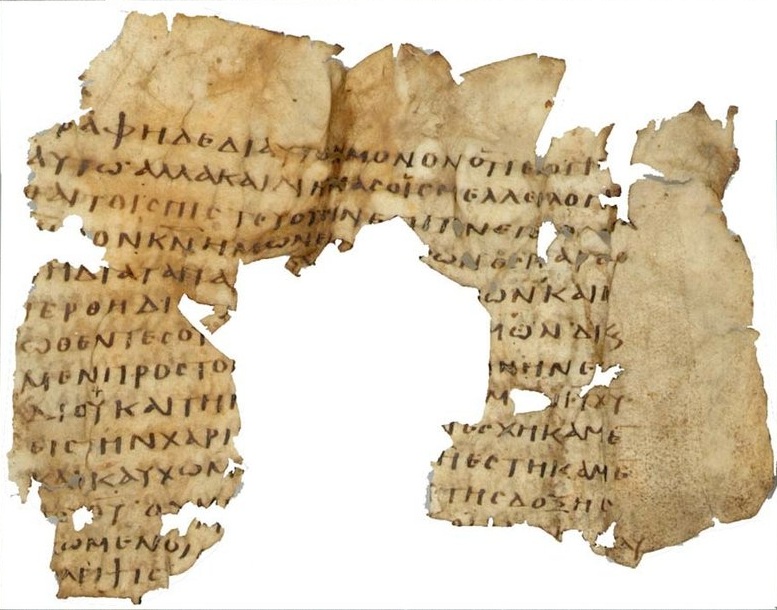




Purpose and audience
Paul appears to have written Romans to a mixed congregation of Jewish and Gentile believers in Rome. He had not founded that community but expected to visit it. The letter serves several aims at once: to explain the core message of Christian faith, to prepare for Paul’s planned visit and missionary travel, and to foster unity between different groups within the Roman church. For discussion of Paul’s other writings see Pauline letters, and for context about the churches he addressed see early Christian communities in various cities. The letter itself is directed to the Christian assembly in Rome, then part of Italy.
Structure and main themes
Romans is commonly divided into three broad sections. The first section (roughly chapters 1–8) lays out doctrine: the universality of sin, justification by faith, the role of the law, and life in the Spirit. The middle portion (chapters 9–11) addresses God’s ongoing relationship with Israel and the place of the Jewish people in salvation history. The final section (chapters 12–16) applies these truths to everyday church life, ethics, and mutual obligations.
- Sins and human need: Paul argues all people are under sin and in need of God’s saving action (sin).
- Justification by faith: Righteousness is a gift received through trust rather than earned by works.
- Christ’s work and the Spirit: Salvation is centered on Jesus and his saving death and is lived out by the Holy Spirit.
- Law and scripture: Paul quotes the Old Testament to support his argument about God’s covenant faithfulness.
Historical influence and reception
Romans has exerted major influence on Christian theology and practice. Its exposition of justification by faith was central to later theological developments, notably within the Protestant Reformation. Pastors, theologians and lay readers have used Romans as a resource for preaching, catechesis and doctrinal formulation. The letter’s careful use of Jewish Scripture and its appeal to both conscience and reason made it a bridge between Jewish traditions and emerging Gentile Christianity, contributing to debates about identity and inclusion in the early church.
Practical teaching and notable features
Beyond abstract theology, Romans offers concrete ethical direction: instructions about humility, love, use of spiritual gifts, and relations to governing authorities. Its closing chapter names multiple individuals in the Roman congregation, revealing the social makeup of the house churches Paul hoped to visit. The letter’s style combines legal, rhetorical and pastoral elements, and its quotations of earlier Scripture anchor Paul’s claims in a broader sacred tradition. For wider study and comparative texts see resources on Christian doctrine and the role of epistles in early Christianity.
Why Romans still matters
Readers return to Romans for clear statements about human brokenness and divine grace, for counsel about Christian living, and for insight into the early church’s attempts to live out an inclusive faith. Its careful reasoning and pastoral sensitivity make it a frequent subject of scholarly commentary, devotional reading and ecumenical discussion, and it remains a central document for understanding the shape of Christian belief and practice.
Further study may look to commentaries, historical studies and translations to trace how Romans has been read across traditions and eras; for introductory pathways consult general resources on the Pauline corpus and epistolary literature (Pauline letters, church history overviews, and collections of ancient city inscriptions and texts).
Questions and answers
Q: What is the Epistle to the Romans?
A: The Epistle to the Romans is a letter written by the Apostle Paul to the early church in Rome, Italy.
Q: Why did Paul write this letter?
A: Paul wrote this letter to explain an important point in Christianity, which is that all humankind is guilty of sin before God, and that people can only be made righteous through trusting in God's ways and believing in Jesus.
Q: What does Paul prove by quoting the Old Testament in this letter?
A: Paul proves that all humankind is guilty of sin before God.
Q: How are people made righteous according to Christianity?
A: People are made righteous through trusting in God's ways and believing in Jesus.
Q: What happens to believers once they believe in Jesus?
A: Believers receive the Holy Spirit, who helps them live a new life.
Q: What does Paul ask the Romans to do in this letter?
A: Paul asks the Romans to observe Christian ethics and submit themselves to authorities.
Q: Why is this letter influential in Christianity?
A: This letter is influential because it explains to non-Christians and new Christians what their Christian belief is all about.
Related articles
Author
AlegsaOnline.com Epistle to the Romans Leandro Alegsa
URL: https://en.alegsaonline.com/art/31757