
Epidexipteryx — a Jurassic maniraptoran notable for ornamental tail feathers
Epidexipteryx is a small Jurassic maniraptoran dinosaur known from a single well-preserved Chinese specimen, notable for elongated ribbon-like tail feathers that illuminate early stages of feather evolution and display.
Epidexipteryx is a small extinct genus of genus within the broader group of maniraptoran theropod dinosaurs, known from a single well-preserved fossil specimen conserved in China. The preserved remains come from sediments attributed to the lacustrine deposits of the Daohugou Beds, and are generally regarded as Middle to Late Jurassic in age. The specimen was recovered in what is today northeastern China and has been important in discussions of how complex integumentary structures first evolved.
Image gallery
10 Images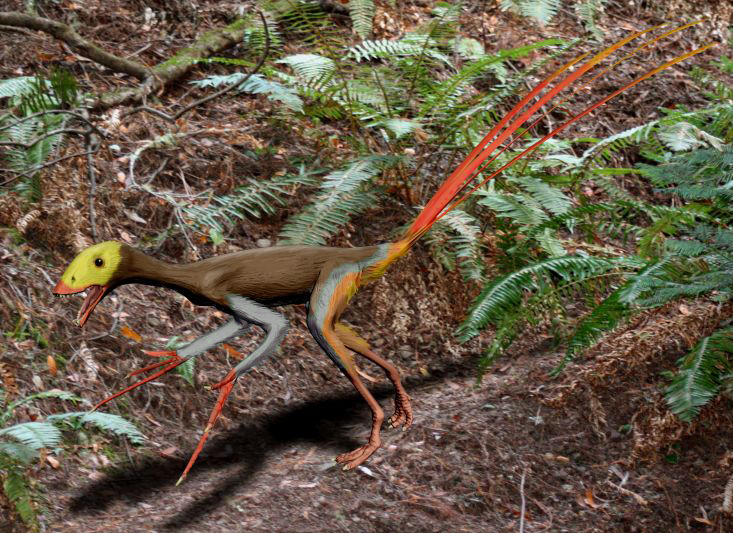




Physical characteristics
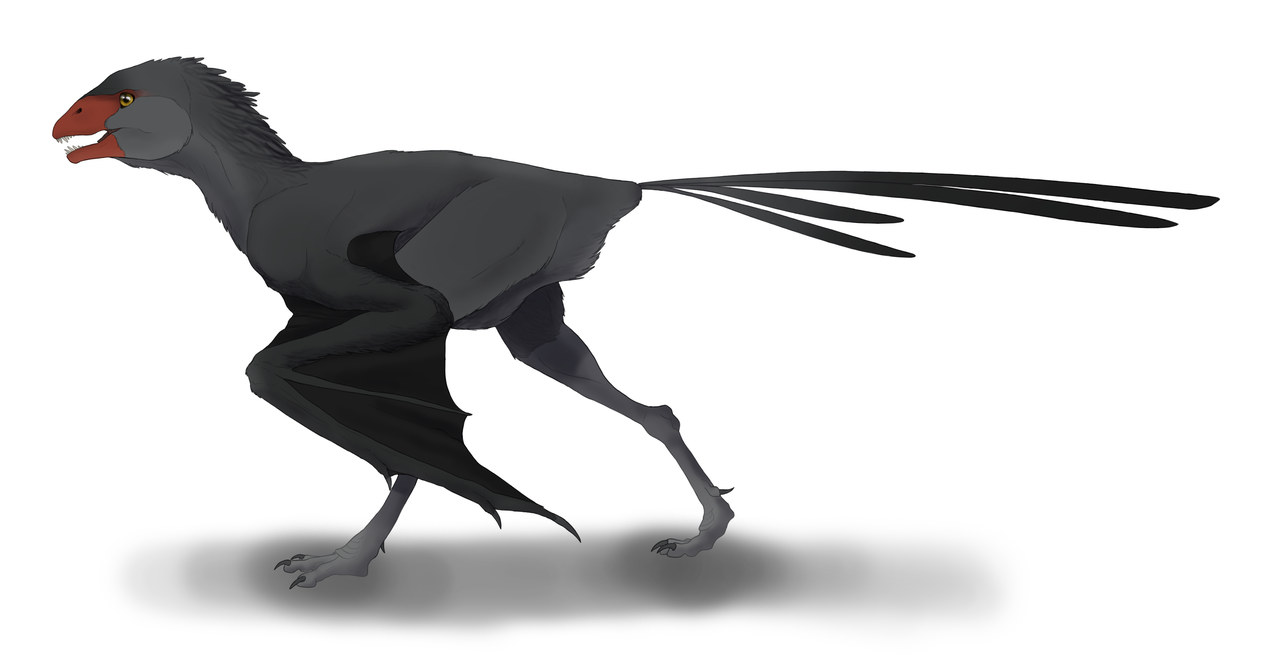
This small theropod had a lightweight skeleton and several unusual integumentary features. The body shows filamentous coverings interpreted as simple feathers, while the tail bears a set of elongated, ribbon-like structures. These elongate rectrices differ markedly from the vaned flight feathers of later birds: they are flattened and broadened along their length and are widely interpreted as ornamental rather than aerodynamic. Forelimb feathers forming true wing remiges are not clearly preserved on the known specimen, suggesting that its tail ornaments served display or signaling functions.
Discovery and geological context
The only known specimen originates from the fossil-rich Daohugou Beds, a horizon that has yielded many small vertebrates and feathered theropods. These deposits are lacustrine in origin and preserve fine anatomical detail, allowing paleontologists to study soft-tissue impressions and integument. Because the specimen is known from a single, exceptionally preserved individual, interpretations of its biology and behaviour are based primarily on that material and comparisons with related taxa.
Scientific significance
Feathers in early theropods appear to have served multiple roles before being co-opted for flight. The ornamental tail feathers of Epidexipteryx are considered among the earliest clear examples of display-oriented feather specializations, supporting hypotheses that visual signalling and sexual selection helped drive feather diversification. The combination of primitive skeletal traits and derived integumentary specializations makes the genus a key datapoint in reconstructing the sequence of evolutionary changes that produced avian characteristics.
Classification and ongoing research
Researchers place Epidexipteryx within the paravian/maniraptoran assemblage, but exact affinities remain under study as new discoveries and analyses refine relationships among small, feathered theropods. Because the taxon is known from a single specimen, additional finds would help clarify variation, ontogeny and the possible roles of the tail structures in life. Ongoing work combines anatomical study, phylogenetic analysis and comparisons with contemporaneous faunas to better situate this genus in the broader picture of Jurassic small-theropod diversity.
For broader context, consult treatments of the genus and of early maniraptoran evolution as well as regional overviews of Jurassic fossil assemblages: genus, maniraptoran, dinosaurs, the specimen record at repositories noted by fossil reports, the study of feathers, the Jurassic context, the Daohugou Beds, and the regional record from China.
Questions and answers
Q: What is Epidexipteryx?
A: Epidexipteryx is a genus of small maniraptoran dinosaurs known from one fossil specimen in Beijing.
Q: What is the significance of Epidexipteryx?
A: Epidexipteryx is the earliest known example of ornamental feathers in the fossil record.
Q: How old is Epidexipteryx?
A: Epidexipteryx is believed to be from the Middle or Upper Jurassic age Daohugou Beds of Inner Mongolia, China, which is perhaps 160 to 168 million years old.
Q: Where was the fossil specimen of Epidexipteryx found?
A: The fossil specimen of Epidexipteryx was found in Beijing, China.
Q: What type of dinosaur is Epidexipteryx?
A: Epidexipteryx is a small maniraptoran dinosaur.
Q: How many fossil specimens of Epidexipteryx have been found?
A: Only one fossil specimen of Epidexipteryx has been found.
Q: What is the meaning of the name Epidexipteryx?
A: Epidexipteryx means 'display feather'.
Related articles
Author
AlegsaOnline.com Epidexipteryx — a Jurassic maniraptoran notable for ornamental tail feathers Leandro Alegsa
URL: https://en.alegsaonline.com/art/31710