
Eoraptor: an early dinosaur from the Ischigualasto Formation
Eoraptor was a small, early dinosaur from the Late Triassic of Argentina. Known from well‑preserved fossils, it helps illuminate the anatomy, ecology, and early evolution of dinosaurs.
Overview
Eoraptor is a small, early dinosaur known from the Late Triassic rocks of northwestern Argentina. First described from material recovered in the Ischigualasto Formation, it lived roughly 230 million years ago and is important because its fossils are well preserved and occur in strata that can be dated precisely by volcanic layers. Although once labeled a primitive theropod, later studies have placed Eoraptor very near the base of the dinosaur tree, and its features are often cited in discussions about how dinosaurs first diversified.
Image gallery
10 Images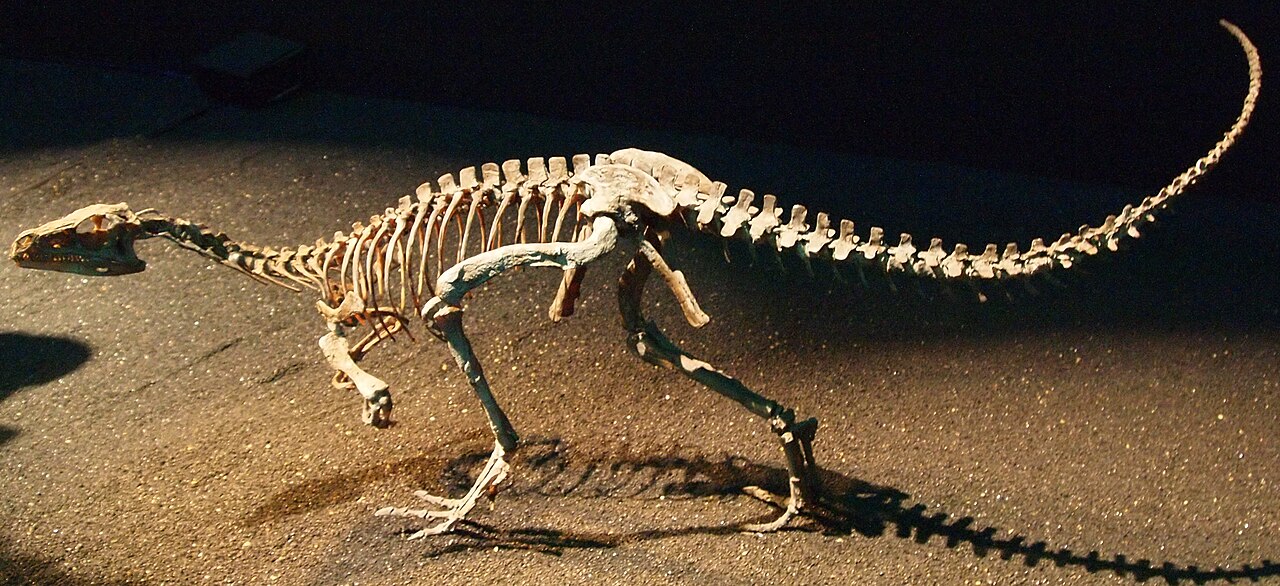




Anatomy and inferred lifestyle
Eoraptor was lightly built and bipedal, with a body length of about one metre. It had long hind limbs, a relatively long tail, a lightly constructed skull, and hollow bones consistent with an agile, active animal. The skull bore dozens of small teeth of different shapes: some are blade‑like and serrated, others are leaf‑shaped. This heterodont dentition suggests a versatile diet, and many authors interpret Eoraptor as an omnivore or opportunistic carnivore rather than a specialized predator.
Distinctive features
- Five digits on the hand, with two reduced digits—considered a primitive condition among early dinosaurs.
- Small, recurved teeth in the front of the jaws and broader, leaf‑shaped teeth toward the back, indicating a mixed diet.
- Light, hollow limb bones and a gracile build suggesting good mobility.
Discovery, dating, and geological context
The holotype specimens of Eoraptor were excavated from the Ischigualasto Formation in Argentina, a sequence of Triassic sediments exposed as badlands today. The formation preserves a nearly continuous record of much of the Triassic and has been intensively studied because volcanic ash beds within the sequence can be dated radiometrically. Those dates place Eoraptor in the Carnian stage of the Late Triassic, making it one of the earlier known dinosaurs in the fossil record. The depositional environment was a volcanically influenced floodplain crossed by rivers, with seasonal rainfall and diverse terrestrial vertebrate communities.
Ecology and associated fauna
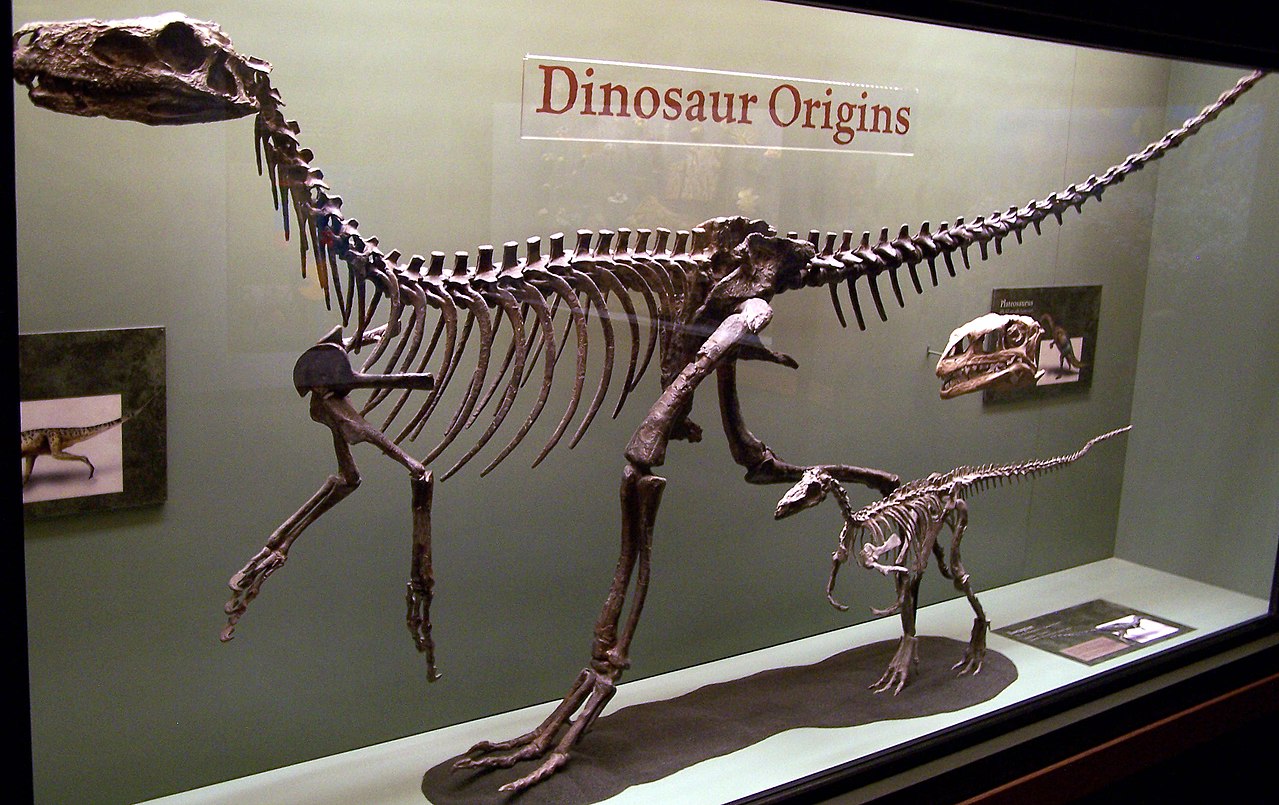
Eoraptor shared its habitat with a variety of archosaurs and synapsids. In the Ischigualasto beds, rhynchosaurs and cynodonts are especially common, and large carnivorous archosaurs such as Herrerasaurus are among the better known dinosaurian predators. Dinosaurs in this fauna are relatively rare compared with other tetrapods, but the assemblage includes early representatives of the major dinosaur lineages, offering a snapshot of an ecosystem in which dinosaurs were just beginning to diversify.
Evolutionary significance and classification
The anatomical mosaic present in Eoraptor—primitive wrist and hand anatomy combined with skull and dental traits shared with later dinosaurs—has made it a focus of studies about the origin of major dinosaurian features. Its combination of characters has led to differing interpretations: some analyses recover it as an early theropod, others as a basal saurischian near the split between saurischians and ornithischians. This uncertainty underscores how transitional fossils like Eoraptor are crucial for understanding evolutionary branching near the root of Dinosauria.
Further reading and related topics
Questions and answers
Q: What type of dinosaur was Eoraptor?
A: Eoraptor was a theropod dinosaur, which is a type of carnivore or omnivore.
Q: How long ago did Eoraptor live?
A: Eoraptor lived about 245 million years ago in the Lower Triassic period.
Q: What physical features did Eoraptor have?
A: Eoraptor had light, hollow bones, a long head with dozens of small, sharp teeth, and five fingers on its grasping hands (two of the fingers on each hand were very small). It also walked on two long legs and was about 1 meter (3.3 feet) in length.
Q: Where was the fossil found?
A: The fossil was found in the Ischigualasto Formation in Argentina.
Q: What other fossils are found in this formation?
A: In addition to dinosaur fossils, there are also rhynchosaurs and cynodonts which make up most of the tetrapod fossils found in this formation.
Q: What types of dinosaurs were present at this location?
A: The dinosaurs that were present at this location included both ornithischians and saurischians, with Herrerasaurus being the most numerous among them.
Q: What kind of environment existed when these dinosaurs lived? A: When these dinosaurs lived, it was a volcanically active floodplain dominated by rivers with strong seasonal rainfall.
Related articles
Author
AlegsaOnline.com Eoraptor: an early dinosaur from the Ischigualasto Formation Leandro Alegsa
URL: https://en.alegsaonline.com/art/31666
Sources
- doi.org : 10.1371/journal.pone
- doi.org : 10.3897/zookeys.63.550
- ncbi.nlm.nih.gov : 3088398
- pubmed.ncbi.nlm.nih.gov : 21594020
- pensoft.net : pensoft.net/inc/journals/download.php?fileId=1401&fileTable=J_GALLEYS
- dx.doi.org : 10.1038/nature21700