
Endocrinology: hormones, glands, functions, disorders, and clinical practice
Comprehensive overview of endocrinology: glands, hormone actions, mechanisms, common disorders, diagnostics, treatments, research areas, and links to introductory resources and specialty guidance.
Overview
Endocrinology is the scientific and clinical discipline concerned with the endocrine system and the chemical messengers called hormones. It spans basic research into how glands and cells produce signaling molecules, and medical practice that diagnoses and manages hormone-related disorders. Physicians may train in internal medicine or pediatrics and then subspecialize in clinical endocrinology to care for patients with metabolic, growth, reproductive or adrenal conditions. For a general introduction, consult resources on the endocrine system and on endocrinology as a medical specialty.
Image gallery
3 Images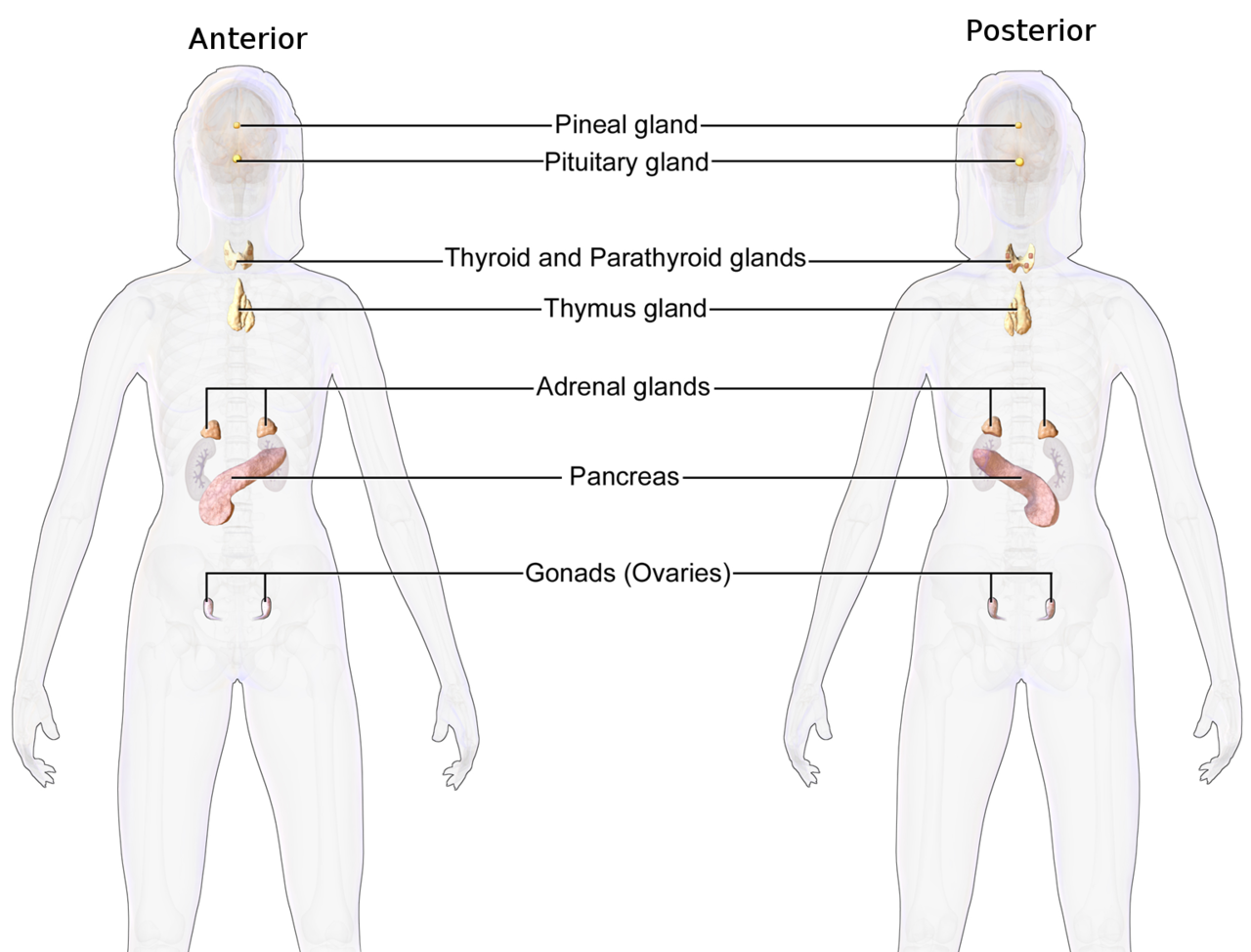


Major glands and components
The endocrine network comprises discrete glands and hormone-secreting tissues that release signals into the bloodstream or act locally. Principal organs include:
- Hypothalamus and pituitary — central regulators that coordinate many peripheral glands.
- Thyroid and parathyroids — control metabolic rate and calcium balance.
- Adrenal glands — produce cortisol, aldosterone and adrenal androgens involved in stress responses and fluid homeostasis.
- Pancreas (endocrine portion) — secretes insulin and glucagon to regulate blood glucose.
- Gonads (ovaries and testes) — produce sex steroids that govern development and reproduction.
- Other sources include the pineal gland, placenta during pregnancy, the gastrointestinal tract and adipose tissue, which release hormones with local and systemic effects.
Hormone actions and physiological roles
Hormones modulate a wide range of physiological processes. They regulate metabolism, direct patterns of growth and development, influence sleep and circadian rhythms (sleep), and affect digestion through gut peptides (digestion). Hormonal systems participate in fluid and waste handling (excretion and electrolyte balance), shape mood and affective states (mood), coordinate the response to physical and psychological stress, and enable lactation after childbirth (lactation). They also support muscle function and movement (movement), orchestrate reproductive cycles (reproduction), and can modulate sensory processing and perception indirectly.
Mechanisms and categories
Biochemically, hormones include peptide/protein hormones (for example insulin), steroid hormones (such as cortisol and sex steroids) and amino acid–derived hormones (including thyroid hormones and catecholamines). They act via specific receptors on target cells, triggering intracellular signaling cascades that alter gene expression, ion channel activity, enzyme function, or cellular metabolism. Signaling can be endocrine (through the blood), paracrine (neighboring cells), autocrine (self-targeting) or neuroendocrine (neurons releasing hormones).
Diagnostic approaches
Diagnosis relies on clinical assessment supported by laboratory measurements of hormone concentrations, dynamic stimulation or suppression tests, imaging of glands (ultrasound, MRI, CT), and sometimes genetic testing. Interpretation requires awareness of physiological variation with age, sex and circadian rhythm. Biochemical testing is complemented by assessments of target-organ effects, such as bone density for disorders of calcium regulation or glucose monitoring for diabetes.
Common disorders and management
Frequent endocrine conditions include diabetes mellitus, hypo- and hyperthyroidism, adrenal insufficiency, Cushing syndrome, pituitary adenomas, growth disorders, metabolic bone diseases such as osteoporosis, and disorders of puberty and fertility. Management strategies are tailored to the disorder and may include hormone replacement, medications that modify hormone synthesis or action, lifestyle measures (diet, exercise), interventional procedures, and multidisciplinary follow-up to address complications and comorbidities.
Research, public health and special topics
Contemporary endocrinology intersects molecular biology, genetics, epidemiology and environmental health. Active research areas include the effects of endocrine-disrupting chemicals on development, novel hormone analogues and receptor modulators, precision medicine approaches to diabetes and hormonal cancers, and the neuroendocrine basis of behavior. Public health efforts focus on screening, prevention of metabolic disease and evidence-based guidelines for hormone therapies.
Distinctions and resources
Endocrine signaling differs from nervous conduction in speed, duration and mode of distribution, yet both systems interact closely. Because many symptoms are nonspecific, diagnosis often integrates biochemical tests, imaging and clinical context. For introductory and clinical guidance, consult overview materials on the endocrine system, specialty information at endocrinology professional pages, and topic-specific reviews on metabolism, growth, development, sleep, digestion, excretion, mood, stress, lactation, movement, reproduction and perception.
This article summarizes core concepts; further detail is available in specialized textbooks, clinical guidelines and current research literature for readers seeking in-depth information on particular glands, hormones or disorders.
Questions and answers
Q: What does endocrinology study?
A: Endocrinology studies the functioning of the endocrine system and hormones.
Q: What is the endocrine system?
A: The endocrine system consists of several glands in different parts of the body that secrete hormones directly into the blood.
Q: What is the medical specialty of endocrinology?
A: Endocrinology is a medical specialty that doctors can choose to work in after finishing their general study of medicine.
Q: What are the functions of hormones?
A: Hormones have many different functions and modes of action. They are active in metabolism, growth and development, tissue function, sleep, digestion, respiration, excretion, mood, stress, lactation, movement, reproduction, and perception.
Q: What is behavioral endocrinology?
A: Behavioral endocrinology is another field that studies the effect of hormones on behavior.
Q: What kind of animals does endocrinology study?
A: Endocrinology is the science of the endocrine system and hormones in a wide range of animals.
Q: How are hormones released into the body?
A: Hormones are released into the blood by glands in the endocrine system.
Related articles
Author
AlegsaOnline.com Endocrinology: hormones, glands, functions, disorders, and clinical practice Leandro Alegsa
URL: https://en.alegsaonline.com/art/31385
Sources
- idea.ucr.edu : Introduction to behavioral endocrinology
- www-rci.rutgers.edu : behavioral endocrinology
- patient.co.uk : "Type 1 Diabetes"
- diabetes.webmd.com : "Endocrine disorders"
- endocrineweb.com : "Diagnosing hyperthyroidism: overactivity of the thyroid gland"