
Enantiornithes — Mesozoic "opposite birds"
Extinct clade of Mesozoic avialans known for toothed beaks and clawed wings; diverse Cretaceous birds that left no living descendants and are known mainly from fossil deposits worldwide.
Overview
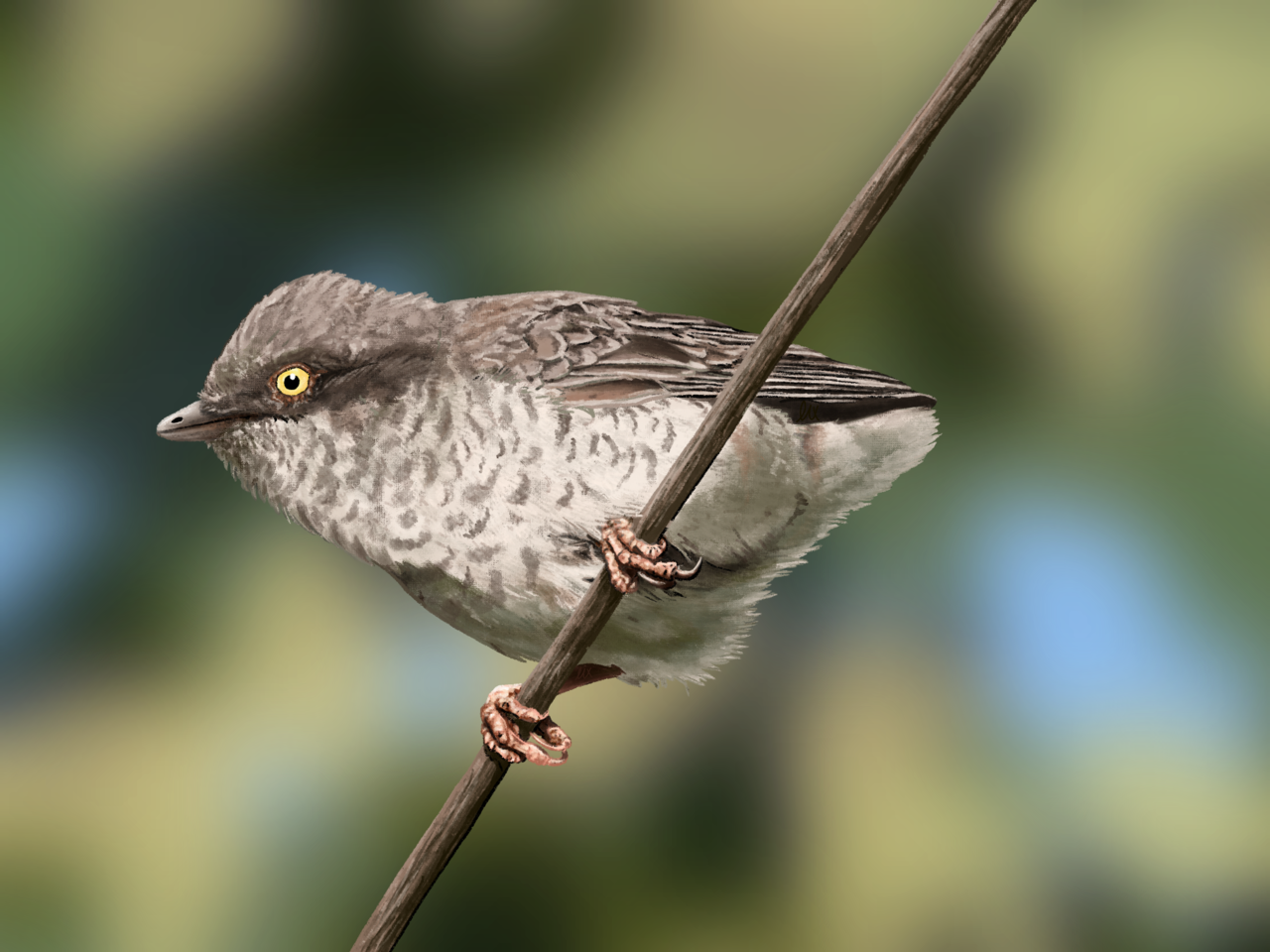
Enantiornithes is an extinct group of avialans first recognized as a distinct clade in the late 20th century. These animals were among the most abundant and diverse birds of the Mesozoic, especially during the Cretaceous. Although they shared many flight-related adaptations with modern birds, enantiornitheans retained a number of primitive characteristics such as teeth and clawed wing digits. They disappeared at the end of the Cretaceous and are not thought to have any direct living descendants.
Image gallery
10 Images


Key characteristics
Enantiornithes combined both derived and ancestral traits. Distinguishing features commonly cited by paleontologists include:
- Toothed jaws rather than the toothless beaks of most living birds.
- Clawed fingers on the manus (wing), often capable of grasping.
- A shoulder articulation formed by a reversed concave–convex contact between the coracoid and scapula, the feature that inspired the group's name.
- Variably developed sterna and pectoral girdles adapted for powered flight in many species.
- Foot anatomy often indicating perching or arboreal habits in numerous taxa.
For broader context, enantiornitheans are a branch of the larger assemblage often called avialans, which includes all birds and their close relatives. They lived during the Mesozoic era and are best known from Cretaceous deposits.
Diversity, ecology and paleobiology
More than eighty species names have been proposed, though not all are based on complete material and some remain dubious. Enantiornithes occupied a range of ecological niches: small arboreal insectivores, larger shore‑ or fish‑feeding forms, and species with varied flight abilities. Bone microstructure, preserved feathers, and limb proportions show they were competent fliers in many cases and that plumage played a role in insulation, display, and aerodynamics.
Fossil record and discovery
Important fossils have come from sites across the world, with especially informative specimens preserved in fine-grained Cretaceous deposits that reveal feathers and delicate bones. The group was named by Cyril Walker, who noted the ‘‘opposite’’ articulation of the scapula and coracoid; this feature contrasts with the condition seen in living birds and is reflected in the name derived from Ancient Greek. Fragmentary remains have produced taxonomic challenges, and ongoing study continues to refine which named forms represent valid species (taxonomic assessments).
Extinction and significance
Enantiornithes vanished at the Cretaceous–Paleogene boundary alongside non-avian dinosaurs and some other Mesozoic bird groups such as the hesperornithids. Their disappearance left only the ancestors of modern birds to diversify in the Cenozoic. The group matters to science because it documents an independent, successful radiation of toothed, often arboreal birds and provides insight into the early evolution of flight and avian anatomy, including the unusual shoulder joint that gives the clade its name.
Notable points and ongoing research
Researchers continue to study enantiornitheans to clarify their relationships, growth patterns, and life habits. New finds and improved preparation techniques frequently change interpretations of anatomy and diversity. For accessible overviews and specimen images consult detailed paleontological summaries and databases (Cretaceous context, era summaries). Fieldwork and computed imaging are likely to produce further important discoveries and to resolve outstanding taxonomic questions.
Questions and answers
Q: What is Enantiornithes?
A: Enantiornithes is a group of extinct avialans or "birds" that were most abundant and diverse during the Mesozoic era.
Q: What did most Enantiornitheans look like?
A: Most Enantiornitheans had teeth and clawed fingers on each wing but otherwise looked much like modern birds.
Q: How many species of Enantiornitheans have been named?
A: Over 80 species of enantiornitheans have been named, but not all are valid species as some names represent only single bones.
Q: When did Enantiornitheans become extinct?
A: Enantiornitheans became extinct at the Cretaceous-Paleogene boundary along with all other non-avian dinosaurs and hesperornithids.
Q: Did Enantiornitheans leave any living descendants?
A: No, Enantiornitheans are thought to have left no living descendants.
Q: What does the name Enantiornithes mean?
A: The name Enantiornithes means "opposite birds" in Ancient Greek.
Q: What is the most fundamental and characteristic difference between Enantiornithes and all other birds?
A: The most fundamental and characteristic difference between Enantiornithes and all other birds is the nature of the articulation between the scapula and the coracoid, where the 'normal' condition is completely reversed. This refers to an anatomical feature where the articulation of the shoulder bones has a concave-convex socket joint that is reverse of the joint in modern birds.
Related articles
Author
AlegsaOnline.com Enantiornithes — Mesozoic "opposite birds" Leandro Alegsa
URL: https://en.alegsaonline.com/art/31324
Sources
- doi.org : 10.1111/bij.12313
- books.google.com : "Skeletal morphology and systematics of the Cretaceous Euenantiornithes (Ornithothoraces: Enantiornithes)"
- doi.org : 10.4202/app.2010.0047
- ui.adsabs.harvard.edu : 1981Natur.292...51W
- doi.org : 10.1038/292051a0