
Emerald ash borer (Agrilus planipennis): invasive beetle threatening ash trees
The emerald ash borer is a metallic green beetle native to Asia that has become an invasive pest in North America, killing millions of ash trees and triggering wide-ranging ecological and management responses.
Overview
The emerald ash borer (Agrilus planipennis) is a small, metallic green beetle native to parts of East Asia. First detected in North America in the early 2000s, it is now recognized as a highly destructive invasive insect that attacks ash trees (Fraxinus species). The species has spread across many regions and is cited as a principal cause of widespread ash mortality where it has become established.
Image gallery
10 Images




Identification and life cycle
Adults are slender, about 6–13 mm long, with a distinctive iridescent green coloration. Females lay eggs in bark crevices; after hatching, larvae bore into the cambium and phloem layers under the bark. Larval feeding creates characteristic S-shaped galleries that disrupt nutrient and water transport, often killing a tree within two to four years depending on tree health and climate. In warmer areas the beetle commonly completes a one-year life cycle; in colder regions development may take two years.
Signs, spread, and detection
Early signs of infestation include canopy thinning, epicormic sprouting, bark splitting, and D-shaped exit holes left by emerging adults. Moving infested firewood, nursery stock, or other wood materials has been a major pathway for human-assisted spread. Natural spread by flight is slower but contributes to local expansion. Detection commonly uses visual surveys, bark peeling, and traps baited with pheromones or plant volatiles.
Impacts
The emerald ash borer has caused the death of millions of ash trees in North America, with broad ecological and economic consequences. Losses affect urban tree cover, forest composition, wildlife habitat, and timber and nursery industries. Dead and dying ash also increase costs for tree removal and replacement in streets and landscapes, and may alter fire risk and watershed characteristics in heavy infestation zones.
Management and control
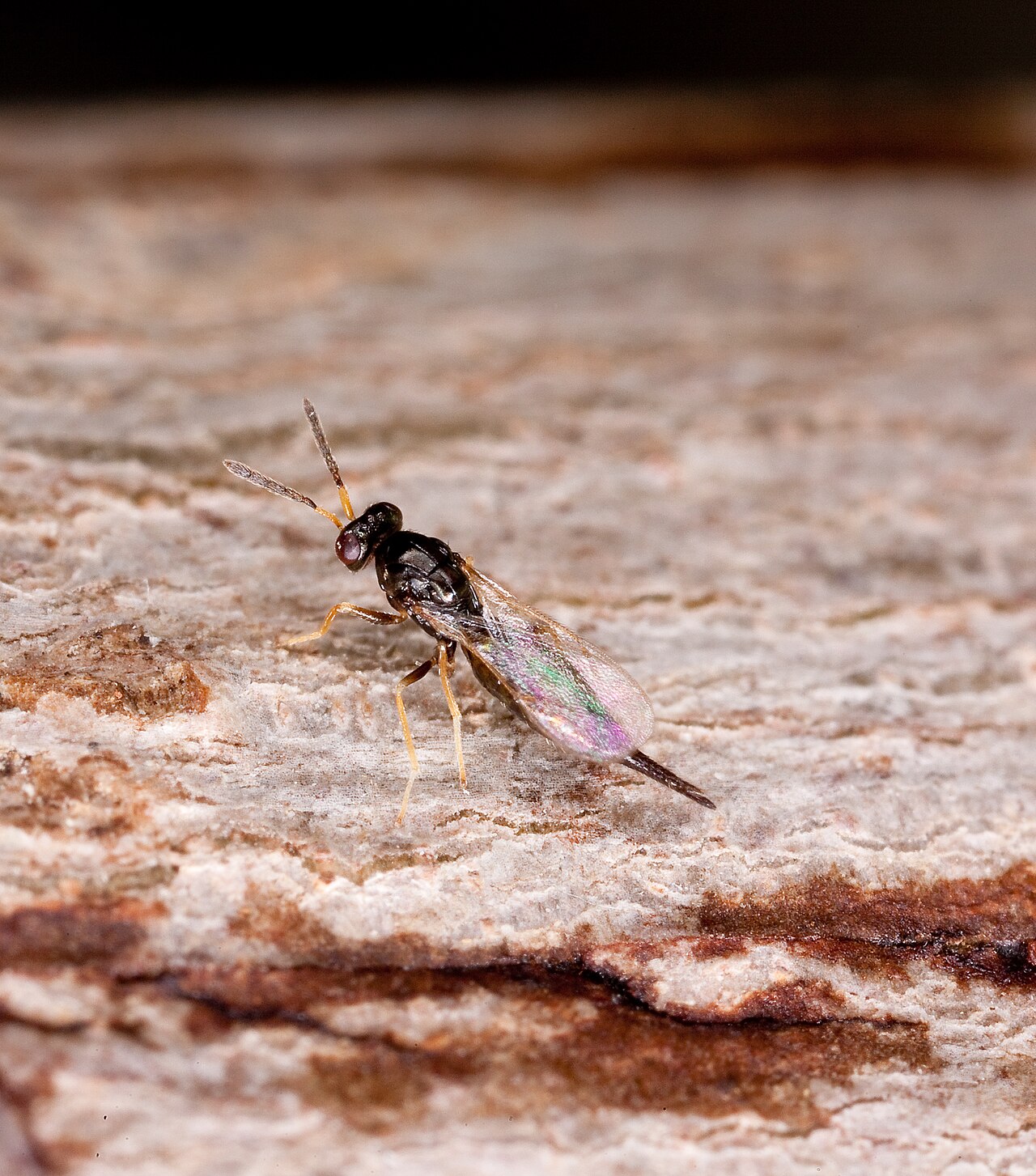
Control approaches combine prevention, chemical treatment, biological control, and sanitation. Systemic insecticides can protect high-value trees when applied appropriately, but are not feasible at landscape scale. Quarantines and public outreach aim to limit movement of potentially infested wood. Several parasitoid wasp species from the beetle’s native range have been released experimentally as classical biological control agents. Entomopathogenic fungi and integrated strategies are also under evaluation. Despite these efforts, eradication has not been achieved in established regions; programs focus on slowing spread and reducing impacts.
History and response
Believed to have arrived accidentally in wood packing material, the emerald ash borer was first reported in North America in the early 2000s and spread rapidly across multiple states and provinces. Governments, researchers, arborists, and communities have coordinated surveys, regulatory measures, and research into control options. Long-term strategies emphasize early detection, preserving genetic or seed resources of ash, and diversifying urban and forest plantings to reduce dependence on a single genus.
Notable facts and distinctions
Not all ash species show identical susceptibility; some differences in tolerance or survival have been observed. The species is distinct from other Agrilus beetles by its metallic color and its specific host preference for Fraxinus. While biological control shows promise, released natural enemies require careful monitoring to assess effectiveness and non-target effects.
Further information and resources
- Species profile and identification
- Native range overview
- Biology in Asia
- First detections in North America
- Pathways of introduction
- Current distribution maps
- Invasive species status
- Pest management guidance
- Impacts on ash trees
- Regional risk assessments
- Larval feeding and host damage
- Phloem and cambium interactions
- Biological control research
- Parasitoid wasp releases
- Fungal control trials
Questions and answers
Q: What is the emerald ash borer?
A: The emerald ash borer is a shiny green beetle native to Asia that destroys ash trees.
Q: How did the emerald ash borer make its way into the United States?
A: The emerald ash borer made its way into the United States by accident.
Q: How many ash trees has the emerald ash borer killed so far?
A: The emerald ash borer has killed at least 25 million ash trees so far.
Q: What is the average emerging season for the emerald ash borer?
A: The average emerging season for the emerald ash borer is early spring to late summer.
Q: How many eggs does a female emerald ash borer lay?
A: A female emerald ash borer lays around 75 eggs, but up to 300 from early May to mid-July.
Q: What efforts have been made to slow down the spread of the emerald ash borer?
A: Huge efforts have been made to slow down the spread of the emerald ash borer. Parasitoid wasps from Asia are being released, and a fungus which kills insects is being tried.
Q: How long is the emerald ash borer's life cycle estimated to be?
A: The emerald ash borer's life cycle is estimated to be one year in southern Michigan but may be up to two years in colder regions.
Related articles
Author
AlegsaOnline.com Emerald ash borer (Agrilus planipennis): invasive beetle threatening ash trees Leandro Alegsa
URL: https://en.alegsaonline.com/art/31102
Sources
- commons.wikimedia.org : Emerald ash borer
- species.wikimedia.org : Agrilus planipennis
- emeraldashborer.info : EmeraldAshBorer.info
- aphis.usda.gov : "Biological control of Emerald Ash Borer (Agrilus planipennis)"
- nrs.fs.fed.us : "Developing a classical biological control program for Agrilus planipennis (Coleoptera: Buprestidae), an invasive ash pest in North America"
- sciencedaily.com : "Biocontrol: Fungus and wasps released to control Emerald Ash Borer"