
Emberizidae: the buntings and New World sparrows
Emberizidae is a diverse family of small seed-eating passerine birds including Old World buntings and New World sparrows, with complex taxonomy and a mainly American origin.
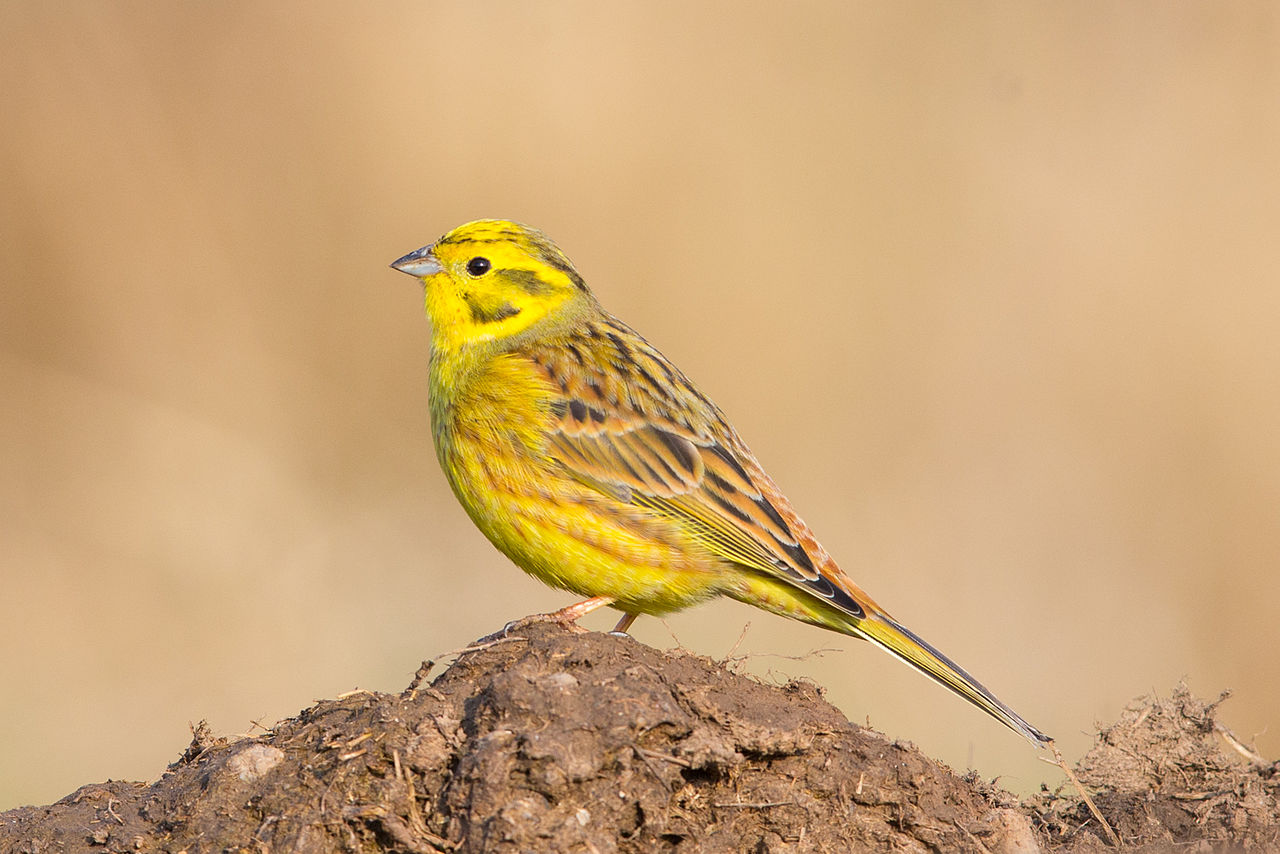
The bird family Emberizidae encompasses a varied group of small to medium-sized passerines often called buntings in the Old World and American sparrows in the New World. These birds are typically seed-eaters with a robust, finch-like bill adapted to cracking seeds. They are part of the larger assemblage of passerine or perching birds and are commonly encountered across a wide range of habitats in both temperate and tropical regions as simple, often streaked-plumaged species that can be inconspicuous or striking depending on the taxon.
Image gallery
10 Images


Description and behavior
Members of Emberizidae show a range of plumage patterns and vocal behaviors but share several general traits. Their bills are conical and strong, suited for granivory, though many species supplement their diet with insects during the breeding season. Plumage is often cryptic—browns, greys and streaking—or more conspicuously colored in males of some species. Many species are ground-foraging, nesting in shrubs or on the ground, and several undertake seasonal migrations.
- Bills: short, conical, adapted for seed eating.
- Size: small to medium passerines, generally 12–20 cm body length in common species.
- Diet: mainly seeds and grains, plus insects at times.
- Behavior: ground feeding, skulking in vegetation, often with distinctive calls.
Distribution and evolutionary origins
Although many emberizid species are well known from Europe and Asia, the family has its greatest diversity in the Americas. Current evidence suggests an origin in South America, with subsequent expansion northward into North America and later crossings into eastern Asia and beyond. This historical pattern helps explain why relatively few emberizid species occur across Europe and Africa compared with the Americas, where many genera radiated and diversified.
Taxonomy and relationships
The classification of Emberizidae has undergone major revisions in recent decades. Although long treated as a broad family that included many sparrow-like birds, molecular studies have shown that some Neotropical genera are closer to the tanager radiation. As a result, boundaries between families have shifted and remain under study. Emberizids are not closely related to the Old World sparrows of the family Passeridae, despite similar common names. Well-known North American members include the juncos and towhees, and these groupings have been reassessed repeatedly as genetic data accumulate.
Modern workers examine mitochondrial and nuclear DNA to clarify relationships; this process has moved some species in and out of Emberizidae and led to debate about whether certain tanager-like genera belong here. For example, the genus Chlorospingus has at times been placed near tanagers and at other times considered part of emberizid assemblages. The family-level taxonomy therefore remains in a state of flux, with ongoing revisions expected.
Examples, ecological role, and conservation
Representative genera historically placed in Emberizidae include Old World buntings (genus Emberiza) and New World sparrows such as Zonotrichia, Junco and Pipilo. These birds play important roles in ecosystems as seed predators and dispersers and as prey for larger animals. Some species are widespread and common; others have restricted ranges and face threats from habitat loss, fragmentation and climate change. Because the group contains both resident tropical species and long-distance migrants, conservation priorities vary widely across taxa.
In summary, Emberizidae is a useful but evolving concept in ornithology: a family defined by shared morphology and ecology but whose membership continues to be refined by modern genetic studies. For further reading see general resources on passerine diversity and family-level revisions in recent ornithological literature (family overview, passerine context, bird traits, comparative sparrows, South American origins, North American distribution, Asian expansion, European record, African representation, Americas diversity, taxonomic studies).
Questions and answers
Q: What is Emberizidae?
A: Emberizidae is a large family of passerine birds that are seed-eating birds with a finch-like bill.
Q: What are the common names for Emberizidae in the Old World and New World?
A: Emberizidae are typically known as buntings in the Old World and American sparrows in the New World.
Q: Are Emberizidae closely related to sparrows?
A: No, Emberizidae are not closely related to the (Old World) sparrows, the family Passeridae.
Q: Which North American birds are part of the Emberizidae family?
A: The Emberizidae family includes North American birds known as juncos and towhees.
Q: Where did the Emberizidae family probably originate?
A: The Emberizidae family probably originated in South America.
Q: Why are there few Emberizidae species in Europe and Africa compared to the Americas?
A: The family probably spread first into North America before crossing into eastern Asia and continuing to move west, which explains the comparative paucity of emberizid species in Europe and Africa when compared to the Americas.
Q: What is the current state of taxonomy for Emberizidae?
A: Like with several other passerine families, the family's taxonomy is in a state of flux. Many genera in South and Central America are more closely related to tanager clades, and at least one tanager genus (Chlorospingus) may belong here in the Emberizidae.
Related articles
Author
AlegsaOnline.com Emberizidae: the buntings and New World sparrows Leandro Alegsa
URL: https://en.alegsaonline.com/art/31070