
Emanuel Lasker: World Chess Champion, Mathematician, and Game Theorist
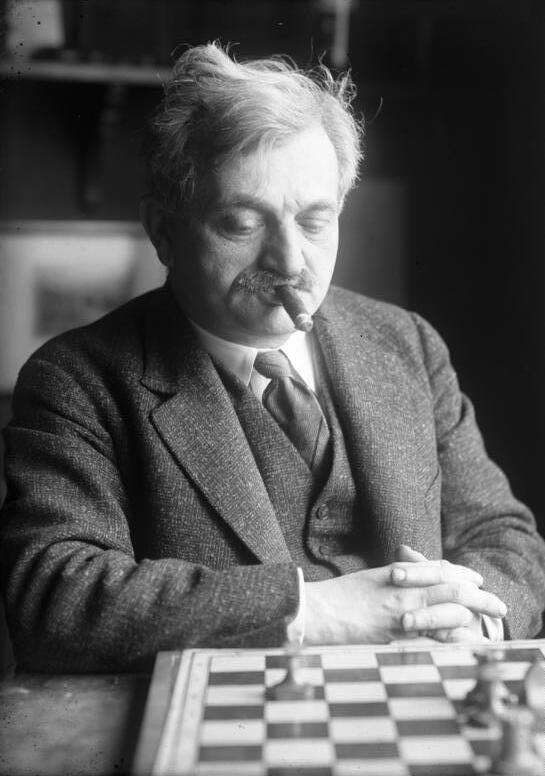
Emanuel Lasker (1868–1941) was a German chess world champion for 27 years, a mathematician whose work influenced algebra, and a prolific writer and inventor of games.
Overview
Emanuel Lasker was a leading figure in turn-of-the-century intellectual and sporting life: a German chess player who held the World Championship for 27 years, and a scholar with recognized contributions to mathematics and the theory of games mathematics. He combined practical competitive success with writings on play and strategy, and later in life engaged with other strategic games such as bridge and Go philosophy.
Image gallery
10 Images


Chess career and achievements
Lasker became World Chess Champion by defeating the reigning title-holder and then successfully defended his title against several of the leading challengers of his era. During his long reign he was widely regarded as one of the most formidable and resourceful players, admired for the psychological depth and adaptability of his approach. He finally relinquished the title to José Raúl Capablanca in a match that closed his official championship tenure in 1921.
- Key opponents: victories and championship matches involved figures such as Wilhelm Steinitz, Siegbert Tarrasch, Frank Marshall, Dawid Janowski and others Steinitz.
- Style: Lasker favored flexible, practical play that often sought to complicate positions and exploit opponents' weaknesses rather than follow dogmatic principles.
Because he demanded significant financial terms for matches and exhibitions, Lasker was sometimes criticized for putting commerce before sport. He insisted on conditions and stakes that would protect his livelihood; he had seen predecessors fall into poverty and took care to secure his own finances.
Contributions beyond competitive chess
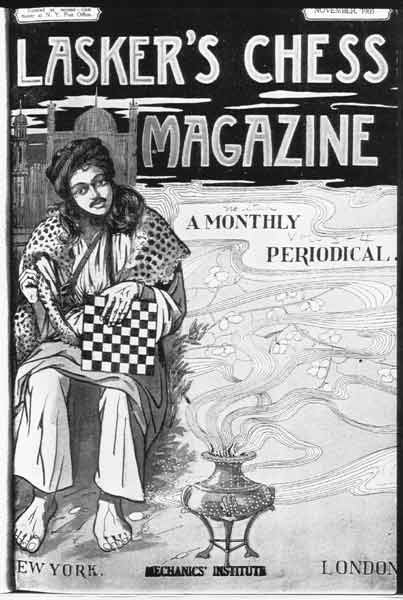
Outside tournament play, Lasker wrote about the psychology and practical aspects of chess, and he created at least one new board game, Lasca. He was also a keen card-player and a first-class contract bridge player who authored material on other games. His writings mixed technical analysis with reflections on competitive temperament and decision-making. These contributions kept him influential in chess circles even after his competitive peak.
Mathematics and intellectual legacy
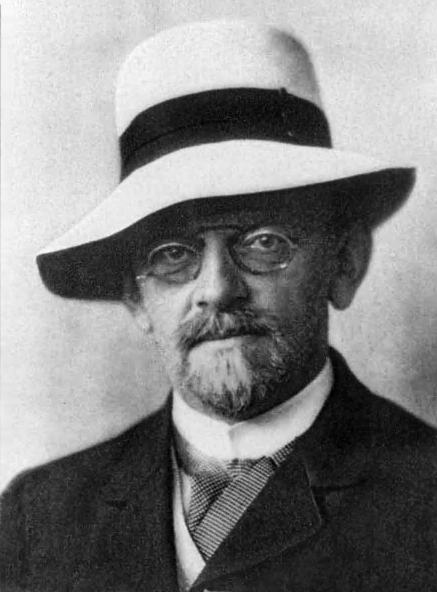
Alongside his chess career Lasker pursued serious mathematical work; his doctoral-level research addressed algebraic structures and had a lasting influence on the development of modern algebraic theory. Later mathematicians built on aspects of his work when formalizing results about decompositions and ideals in polynomial systems doctoral algebra.
Controversies, later life and legacy
Some of Lasker’s match conditions and fee demands provoked debate and contributed to efforts to standardize rules for World Championship contests. He spent his later years active in writing and promoting games, and he left a complex legacy that mixes outstanding competitive achievement with contributions to game design and mathematics. Lasker remained a public intellectual who crossed disciplinary boundaries and continued to influence both chess players and theorists of play and strategy bridge.
Today Lasker is remembered not just for the length of his championship reign but for the adaptability of his play, his role in shaping championship practice, and his broader intellectual contributions. His life illustrates the close ties that can exist between abstract thought and competitive skill, and he is widely studied by historians of chess and algebra alike.
Questions and answers
Q: Who was Emanuel Lasker?
A: Emanuel Lasker was a German chess player, mathematician, and philosopher who was World Chess Champion for 27 years.
Q: Was Lasker one of the strongest players ever?
A: Yes, Lasker is generally regarded as one of the strongest players ever.
Q: Who did Lasker lose the title to?
A: Lasker lost the title to Capablanca in 1921.
Q: Why did Lasker demand high fees for matches and tournaments?
A: Lasker demanded high fees for matches and tournaments because he had seen how Steinitz's life had ended in poverty, and was determined to avoid this fate.
Q: Why were the conditions Lasker demanded for World Championship matches controversial?
A: The conditions Lasker demanded for World Championship matches in the last ten years of his reign were controversial because they prompted attempts to define rules for championship matches.
Q: Was Lasker also a talented mathematician?
A: Yes, Lasker was a talented mathematician, and his Ph.D. thesis is regarded as one of the foundations of modern algebra.
Q: What other games did Lasker write about besides chess?
A: Lasker wrote about contract bridge, Go, and his own invention, Lasca.
Related articles
Author
AlegsaOnline.com Emanuel Lasker: World Chess Champion, Mathematician, and Game Theorist Leandro Alegsa
URL: https://en.alegsaonline.com/art/31062
Sources
- findarticles.com : UXL Encyclopedia of world biography
- chesscafe.com : The London Chess Fortnightly
- measuringworth.com : "Six ways to compute the relative value of a U.S. Dollar amount, 1774 to present"
- en.wikisource.org : "From the Editorial Chair"
- chesshistory.com : "How Capablanca became world champion"
- books.google.com : Lasker's Manual of Chess
- emis.de : "A solution of two-person single-suit whist"
- research.interface.co.uk : "About Lasca — a little-known abstract game"
- chesshistory.com : "Chess and Bridge"
- chesshistory.com : The strange lives of one man
- chesshistory.com : "5076. Lasker's last words"
- books.google.com : The Steinitz Papers: letters and documents of the first World Chess Champion