
Élie Ducommun — Swiss peace activist and Nobel Peace Prize laureate
Élie Ducommun (1833–1906) was a Swiss organizer and pacifist who directed the International Peace Office and shared the 1902 Nobel Peace Prize for his work promoting arbitration and international cooperation.
Overview
Élie Ducommun (19 February 1833 – 7 December 1906) was a Swiss educator, journalist and prominent organiser in the international peace movement. Best known for leading the Bureau international de la paix (International Peace Office) from its foundation in 1891 until his death, he shared the 1902 Nobel Peace Prize with Charles Albert Gobat for sustained service to the cause of arbitration and peaceful dispute resolution.
Image gallery
2 Images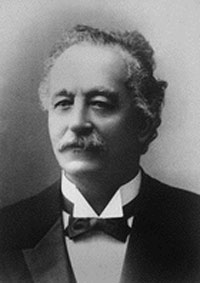

Early life and career
Ducommun was born in Geneva, Switzerland, and trained initially as a teacher. Over the next decades he worked as a tutor, language instructor, journalist and translator, and held administrative posts including a period as a translator at the Swiss federal Chancellery (1869–1873) and later as secretary for the Jura-Simplon railway and steel concerns (1873–1891). These positions developed his skills in communication and organisation, which later became central to his pacifist work.
Peace activism and the International Peace Office
In 1867 Ducommun helped to establish the Ligue de la paix et de la liberté (League of Peace and Liberty), an early European society advocating peaceful settlement of international disputes. When the International Peace Office was created in 1891 in Bern to provide a permanent secretariat for the growing network of national peace societies, Ducommun was appointed its first director. He accepted the post on principle and notably refused a salary, seeing the role as a service to an ideal rather than a profession.
Work and methods
Ducommun's contributions were less doctrinal and more practical: he coordinated correspondence among peace organisations, organised international meetings, compiled documentation on arbitration and disarmament proposals, and kept the offices of the movement operating reliably. His careful record‑keeping and administrative discipline created continuity between conferences and helped to professionalise an otherwise informal movement.
Legacy and recognition
The Nobel Committee recognised Ducommun and Gobat in 1902 for their long-standing work to promote arbitration and prevent war. Ducommun continued as director of the International Peace Office until his death in Bern in 1906, and his tenure established the office as the organizational centre of the early international peace movement. His example—modest, organised and persistent—became a model for later non-governmental organisations engaged in international cooperation.
Notable facts
- He refused to draw a salary for his post at the International Peace Office, emphasizing voluntary service.
- He combined practical administrative work with advocacy for arbitration as an alternative to war.
- His leadership helped transform a loose network of societies into a coordinated international movement.
Ducommun's life illustrates how sustained administrative effort, rather than dramatic public oratory, can create durable institutions for international peace. For readers seeking primary sources and contemporary accounts, the historical archives of national peace societies and the records of the International Peace Office offer direct documentation of his work and correspondences.
Questions and answers
Q: Who was Élie Ducommun?
A: Élie Ducommun was a Swiss peace activist and winner of the Nobel Peace Prize in 1902.
Q: Who did Élie Ducommun share the Nobel Peace Prize with?
A: Élie Ducommun shared the Nobel Peace Prize with Charles Albert Gobat.
Q: When was Élie Ducommun born?
A: Élie Ducommun was born on February 19, 1833.
Q: What positions did Élie Ducommun hold before he was appointed director of the Bureau international de la paix?
A: Before he was appointed director of the Bureau international de la paix, Élie Ducommun worked as a tutor, language teacher, journalist, and a translator for the Swiss federal Chancellery, and later as secretary for the Jura-Simplon Steel Company.
Q: What was the Ligue de la paix et de la liberté?
A: The Ligue de la paix et de la liberté was a League for Peace and Liberty, which Élie Ducommun helped to found in 1867.
Q: What was the Bureau international de la paix?
A: The Bureau international de la paix was the first non-governmental international peace organization, based in Bern, which Élie Ducommun directed from 1891 until his death.
Q: How did Élie Ducommun die?
A: Élie Ducommun died from respiratory and heart failure on December 7, 1906 in Bern, Switzerland at the age of 73.
Related articles
Author
AlegsaOnline.com Élie Ducommun — Swiss peace activist and Nobel Peace Prize laureate Leandro Alegsa
URL: https://en.alegsaonline.com/art/30828
Sources
- nobelprize.org : Biography at the Nobel Foundation