
Electrical outlet: types, components, safety, and common uses
An electrical outlet (receptacle) is a fixed socket that provides alternating current to devices. This article explains parts, common types, safety devices, installation locations, and international differences.
Overview
An electrical outlet, often called a receptacle or socket, is a fixed connector that lets portable equipment access an alternating current power source. Outlets are the termination point for an electrical circuit in homes, workplaces and public spaces. They are typically mounted on a wall; installers may also place them in floors, ceilings or specialized panels depending on function and building design. For general reference to the incoming supply see power supply.
Image gallery
10 Images



Parts and characteristics
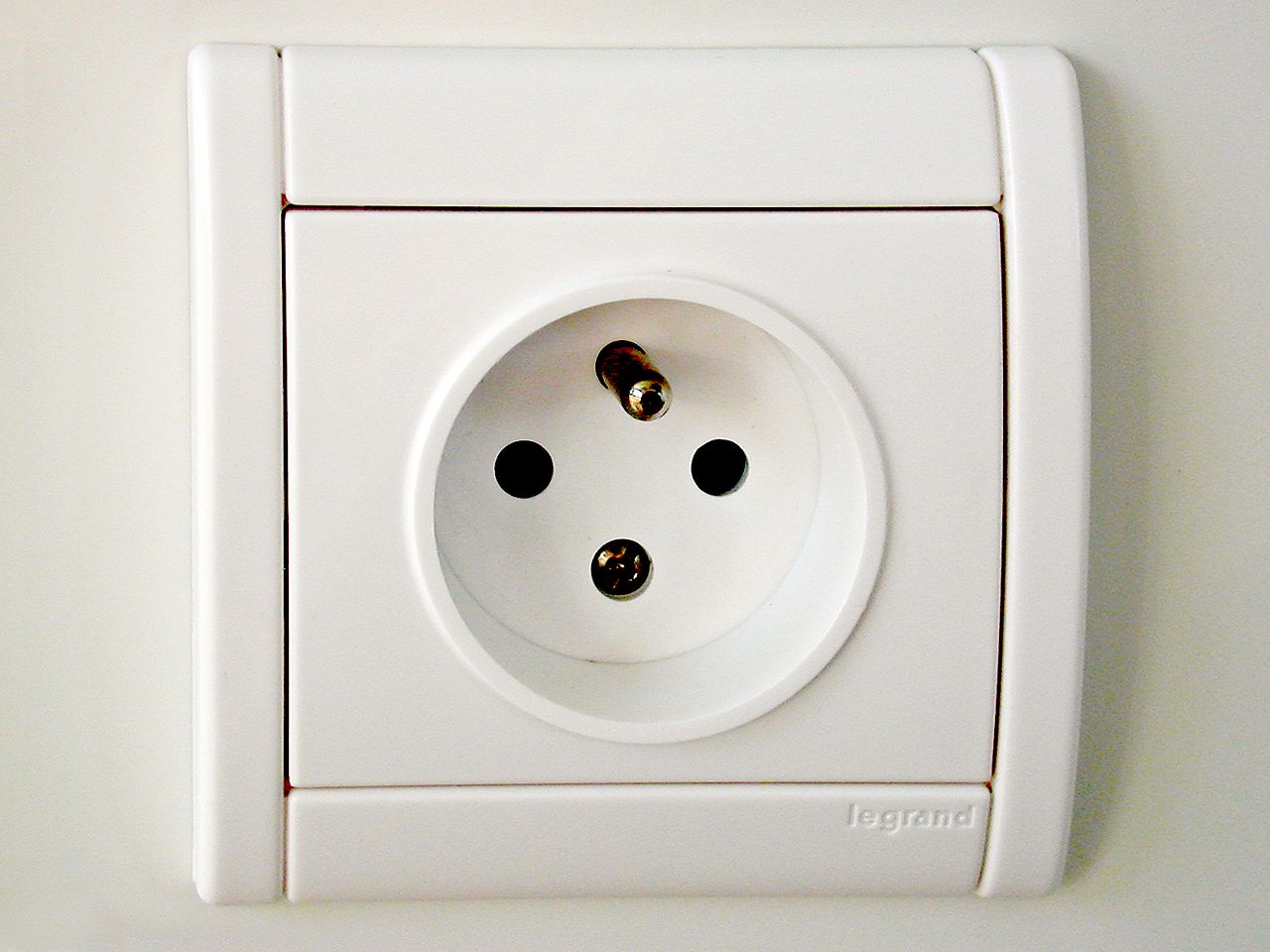
Most outlets consist of a faceplate, a receptacle body, live and neutral contacts, and an earth/ground terminal where required. They are mounted into an electrical box that provides mechanical support and wiring space. Modern receptacles may include features such as polarized slots to ensure correct polarity, grounding contacts for safety, internal shutters to block foreign objects, or integrated low-voltage connectors such as USB ports.
Types, standards and regional differences
Countries and regions use different plug shapes, pin arrangements, and nominal voltages, so a plug that fits one outlet will not always fit another. International and national standards (including IEC recommendations and national wiring codes) define safe configurations, ratings and marking. Travel adapters and converters are commonly used to bridge plug shape and voltage differences; consult local regulations and appliance ratings before using them. Typical mounting locations include the wall, floor and even the ceiling for special equipment.
Safety devices and specialized outlets
To reduce hazards, many outlets are protected by ground-fault circuit interrupters (GFCI) or arc-fault circuit interrupters (AFCI). GFCIs are required in wet areas such as kitchens and bathrooms; they cut power if they detect imbalanced current. Weatherproof, tamper-resistant, hospital-grade and isolated-ground outlets address particular environments and risks. Some receptacles are designed for higher currents, three-phase power, or for dedicated appliances.
Installation, use and maintenance
Outlets must be installed in accordance with local electrical codes and connected to correctly sized wiring and overcurrent protection. Common safety practices include avoiding overloaded power strips, keeping outlets clear of moisture, and replacing damaged receptacles. When servicing, power should be switched off at the breaker and verification made that the circuit is de‑energized.
Distinctions and notable facts
Terminology can vary: "outlet" and "receptacle" commonly refer to the fixed part in the building, while a "plug" or "male connector" is attached to a device. Voltage and plug form factors differ worldwide; check the rated voltages and frequency compatibility of equipment before connecting, and use appropriate adapters when necessary. For more detailed technical specifications and code guidance consult standards and the local authority having jurisdiction or manufacturer documentation (power supply, ceiling references).
Questions and answers
Q: What is an electrical outlet or a receptacle?
A: An electrical outlet or receptacle is a socket that connects an electrical device to an electricity supply.
Q: Where are electrical outlets usually installed in buildings?
A: Electrical outlets are usually installed in the wall, although they can also be installed in the floor.
Q: Where else can electrical outlets be found other than the wall and the floor?
A: Occasionally, they can be found in the ceiling for powering devices such as garage door openers or neon signs in storefront windows.
Q: Do all countries have the same type of electrical outlets and voltages?
A: No, different countries often have different outlet types and voltages.
Q: Is it possible to use a device with a different type of outlet in a country with a different outlet type?
A: Yes, adapters are available to convert between the different types.
Q: What role do adapters play in changing the outlet types between countries?
A: Adapters make it possible to convert between the different types of electrical outlets in different countries.
Q: What are the possible locations that an electrical outlet can be found in buildings?
A: Electrical outlets can be found on the wall, floor or ceiling in buildings.
Related articles
Author
AlegsaOnline.com Electrical outlet: types, components, safety, and common uses Leandro Alegsa
URL: https://en.alegsaonline.com/art/30701