
El Lissitzky (Lazar Markovich Lissitzky)
Russian avant-garde artist and designer (1890–1941) known for Suprematism, the Proun series, innovative typography, exhibition design and influence on Bauhaus and Constructivism.
Overview
El Lissitzky (Lazar Markovich Lissitzky, 1890–1941) was a Russian artist and designer whose work spanned painting, graphic design, exhibition architecture and typography. He played an essential role in the early 20th-century avant-garde and helped to promote and develop Suprematist ideas originated by Kazimir Malevich. His practice combined geometric abstraction, spatial experimentation and strong political engagement.
Image gallery
10 Images




Style and main projects
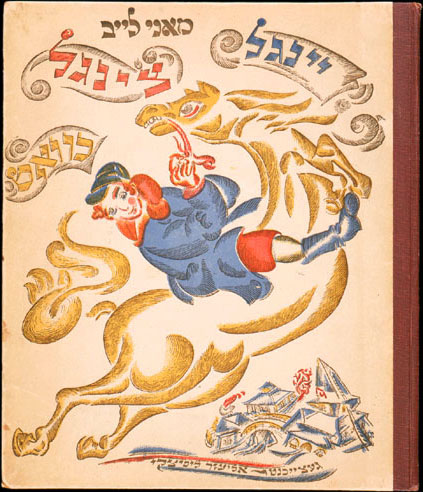
Lissitzky is best known for the Proun series—works that blurred the boundary between painting and architecture by introducing three-dimensional illusions and engineered compositions. These works used simple geometric forms, diagonals and a restrained palette to suggest movement and spatial depth. He adapted Suprematist vocabulary to applied arts, producing books, posters and typographic systems that emphasized clarity, contrast and dynamic layout.
Techniques and media
Working across media, Lissitzky experimented with photomontage, photograms and mechanical reproduction to create striking visual arguments. His poster imagery—most famously the political poster often titled "Beat the Whites with the Red Wedge"—made powerful use of symbolism and simplified form for mass communication. In typography and book design he explored asymmetry, bold sans-serif lettering and integration of text with image to advance readability and visual impact.
Exhibitions, architecture and influence
Beyond easel painting, Lissitzky designed exhibition installations and pavilions that staged objects and graphics in deliberately angled planes to guide viewers through space. His ideas influenced contemporaneous movements in Europe, including the Bauhaus and Constructivism, and informed later modernist approaches to graphic design, corporate identity and museum display.
Lissitzky collaborated with leading figures of the Russian avant-garde and spent periods working abroad, where his teaching and publications helped disseminate his methods. His work is studied both for its formal innovations and for its attempt to reconcile avant-garde aesthetics with social and political aims.
Notable works and further reading
- Biographical summary and dates
- El Lissitzky and Suprematism
- Overview of graphic and typographic work
- Photomontage and experimental techniques
- Poster imagery and propaganda art
- Book and layout design examples
- Exhibition architecture and installations
- Collaborations with contemporaries
- Proun series explained
- Influence on the Bauhaus
- Connections to Constructivism
- Major works and reproductions
- Exhibition history and catalogues
- Critical studies and essays
- Collections holding his work
For concise introductions and archival materials, consult the linked resources above. These cover Lissitzky's development from avant-garde painter to influential designer whose visual language helped shape modern graphic culture.
Questions and answers
Q: Who was El Lissitzky?
A: El Lissitzky was a Russian artist, designer, photographer, typographer, and architect who was an important figure of the Russian avant-garde.
Q: What did El Lissitzky help develop?
A: El Lissitzky helped develop suprematism with his mentor Kazimir Malevich.
Q: What did he design for the former Soviet Union?
A: He designed exhibition displays and propaganda works for the former Soviet Union.
Q: How did his work influence other movements?
A: His work greatly influenced the Bauhaus and constructivist movements.
Q: What techniques and ideas did he experiment with in 20th century graphic design?
A: He experimented with various techniques and ideas in 20th century graphic design.
Q: When was El Lissitzky born?
A: El Lissitzky was born on November 23rd 1890 (O.S November 11th).
Q: When did he die?
A:El Lissitzky died on December 30th 1941.
Related articles
Author
AlegsaOnline.com El Lissitzky (Lazar Markovich Lissitzky) Leandro Alegsa
URL: https://en.alegsaonline.com/art/30567
Sources
- spintongues.msk.ru : "El Lissitzky in Weimar Germany"