
Altarpiece: history, forms, and liturgical role
Altarpieces are artworks placed above or behind the altar in Christian churches. This article explains their forms, history, functions, materials, and key terms such as triptych, polyptych, retable, and reredos.
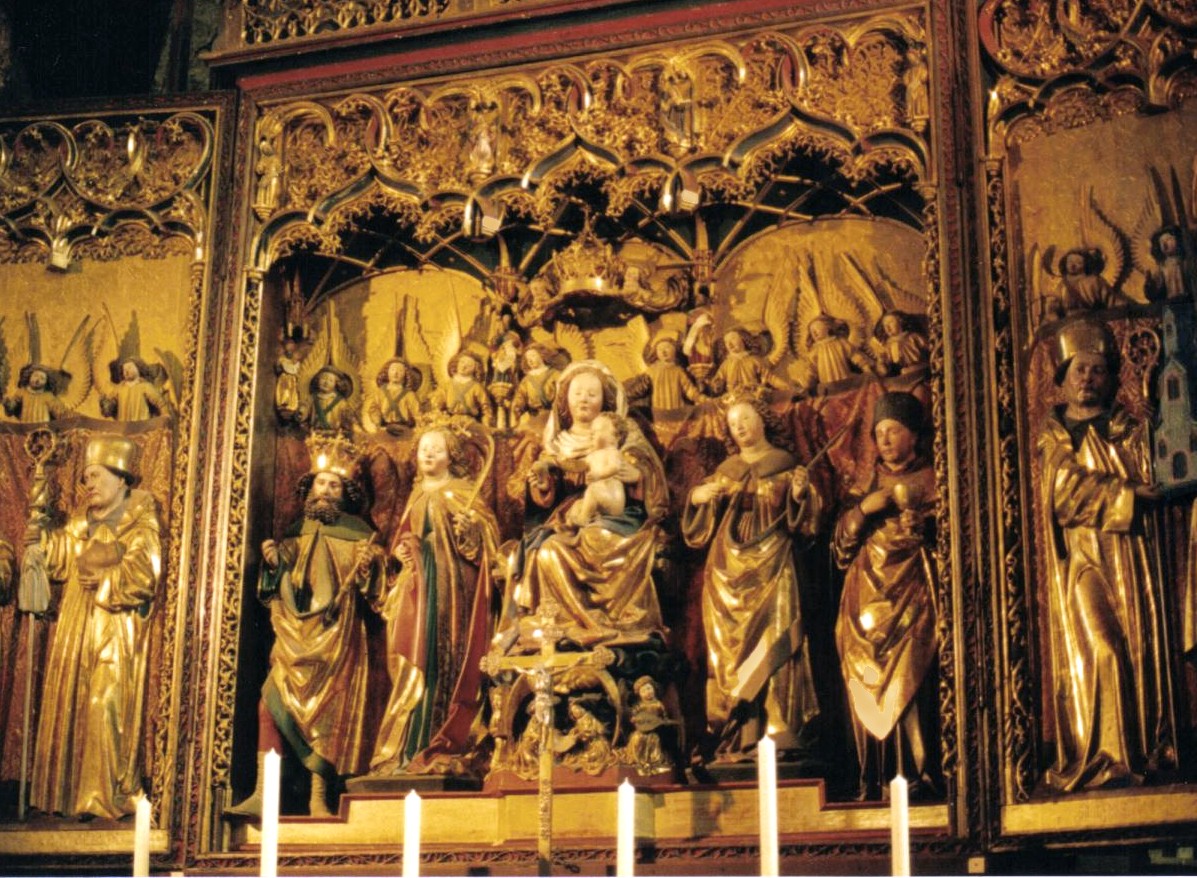
An altarpiece is an artwork created to stand above, behind, or immediately adjacent to a church altar. Traditionally associated with Christian worship, an altarpiece may be a painted panel, a set of panels, a carved relief, freestanding sculpture, or a combination of these modes. Its imagery commonly focuses on Christ, the Virgin, saints, or scenes from the Bible and serves both devotional and didactic purposes. See the altar and the broader Christian liturgical context for how altarpieces function in worship.
Image gallery
10 Images




Common forms and parts
Altarpieces vary in format and complexity. Frequent types include single-panel works, triptychs (three panels), and polyptychs (multiple hinged panels). Components and related terms include:
- Central panel: the primary image or scene.
- Wings: hinged side panels that open and close.
- Predella: a horizontal band beneath the main panels with smaller scenes.
- Reredos and retable: architectural screens or platforms behind an altar, sometimes carved or painted.
History and development
Altarpieces developed with the growth of Christian liturgy and church architecture. In the Byzantine world, icon screens and painted panels emphasized a formal, iconic style. During the medieval and Gothic periods, carved and painted altarpieces became increasingly elaborate. The Renaissance brought new naturalism and oil painting techniques, while the Baroque era emphasized dramatic composition and sculptural illusion. The Reformation and changing liturgical tastes in some regions led to simpler church furnishings, though many historic altarpieces remain important works of art.
Materials, technique, and conservation
Artists used tempera, oil paint on wood panels, gilding, stone carving, and polychromed sculpture. Conservators today face challenges such as panel warping, paint flaking, and the ethical handling of detached wings or relocated pieces now found in museums. Famous examples of painted altarpieces are often referenced in art history and museum collections; for painting techniques more generally consult resources on paintings.
Function, significance, and distinctions
Beyond decoration, altarpieces frame the altar visually and theologically, directing attention to sacramental action. They can be focal points for private devotion and public rites alike. Distinctions among terms—triptych vs. polyptych, retable vs. reredos—reflect format and placement rather than strict stylistic rules. Some altarpieces combine painted panels with sculptural elements; see examples of mixed-media works and carved sculptures for comparisons.
Altarpieces remain key objects in the study of religious art, liturgy, and cultural history, offering insight into artistic techniques, devotional practices, and the changing relationship between art and worship over centuries.
Questions and answers
Q: What is an altarpiece?
A: An altarpiece is a work of religious art designed to be placed above the altar in a Christian church.
Q: What materials can be used to create an altarpiece?
A: An altarpiece can be made from a variety of materials such as wood, stone or painted canvas depending on its style and purpose.
Q: What is the significance of an altarpiece in a Christian church?
A: The altarpiece serves as a focal point for worship and typically displays religious imagery or symbolism that is meaningful to the congregation.
Q: What are some common features of an altarpiece?
A: Many altarpieces depict religious figures such as Jesus, Mary, or saints, and often utilize bright colors and detailed decorations.
Q: Can an altarpiece contain both paintings and sculptures?
A: Yes, some altarpieces are comprised of both paintings and sculptures, and may even incorporate other artistic elements such as gold leaf or intricate carvings.
Q: Are altarpieces exclusive to any particular denomination of Christianity?
A: No, altarpieces can be found in many different denominations of Christianity, including Catholic, Protestant, and Orthodox.
Q: How has the altarpiece evolved over time?
A: The style and design of altarpieces have changed over time with different artistic movements and cultural influences. Some modern altarpieces may incorporate abstract or contemporary elements.
Related articles
Author
AlegsaOnline.com Altarpiece: history, forms, and liturgical role Leandro Alegsa
URL: https://en.alegsaonline.com/art/3035