
Edward Teach (Blackbeard)
Edward Teach, known as Blackbeard, was an early 18th-century English pirate active in the Caribbean and along the American Atlantic seaboard; his life blends recorded events and later myth.
Edward Teach (often written Thatch) — popularly known as Blackbeard — was one of the best-known pirates of the early 18th century. Operating in the Caribbean and off the eastern coast of the American colonies, he commanded a fleet of small vessels and a larger captured ship that became his flagship. That vessel, originally the French slave ship La Concorde, was re‑named Queen Anne's Revenge after her capture. The ship ran aground and was abandoned around 1718 near Beaufort Inlet, North Carolina, a loss that signalled a turning point in his career.
Image gallery
10 Images






Appearance and armament
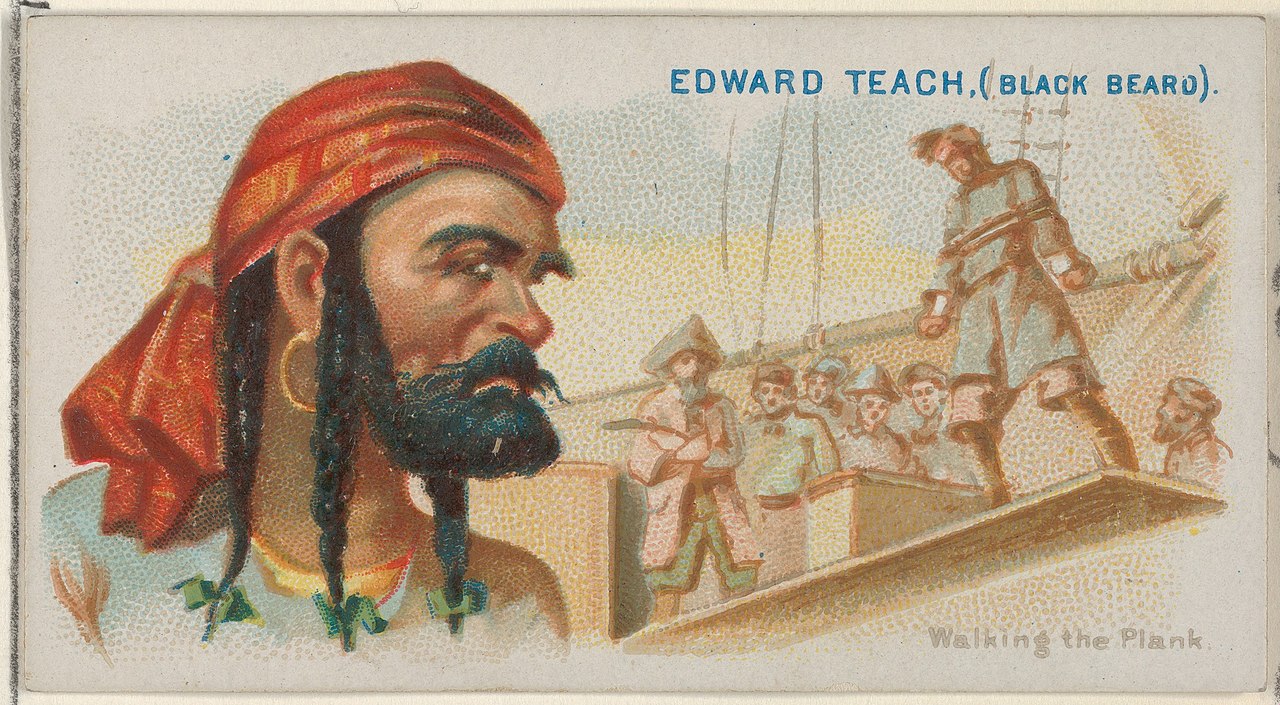
Contemporary descriptions and later engravings helped create Blackbeard's intimidating image. He cultivated a fearsome presence that combined clothing, arms and theatrical touches. Accounts describe a large feathered tricorn hat and an array of weapons worn openly during engagements. He reputedly carried many swords, knives and pistols and staged dramatic effects to frighten opponents.
- Swords, pistols and cutlasses were displayed to convey menace.
- Knives and boarding weapons emphasised close‑quarters fighting.
- Several pistols were sometimes kept ready for use in a single exchange.
One notorious dressing‑room effect was the use of slow-burning fuses braided into his beard and hair to produce smoke and an infernal appearance during combat. This practice echoed techniques associated with early firearm ignition systems — the older matchlocks — before the wider adoption of flintlock mechanisms.
Career and actions
Teach likely began as a privateer before turning to outright piracy in the years after the War of the Spanish Succession. Between about 1716 and 1718 he seized prizes throughout the Caribbean and along the Atlantic colonies. He consolidated a reputation for bold blockades and episodic cruelty, but he also negotiated with colonial authorities at times. Records and contemporary reports show piracy raids, captured merchantmen and a brief period of influence in port towns where his presence disrupted trade.
Defeat and death
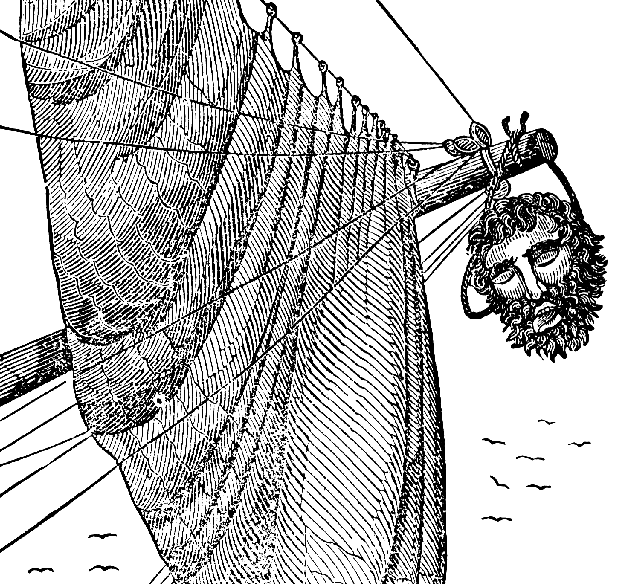
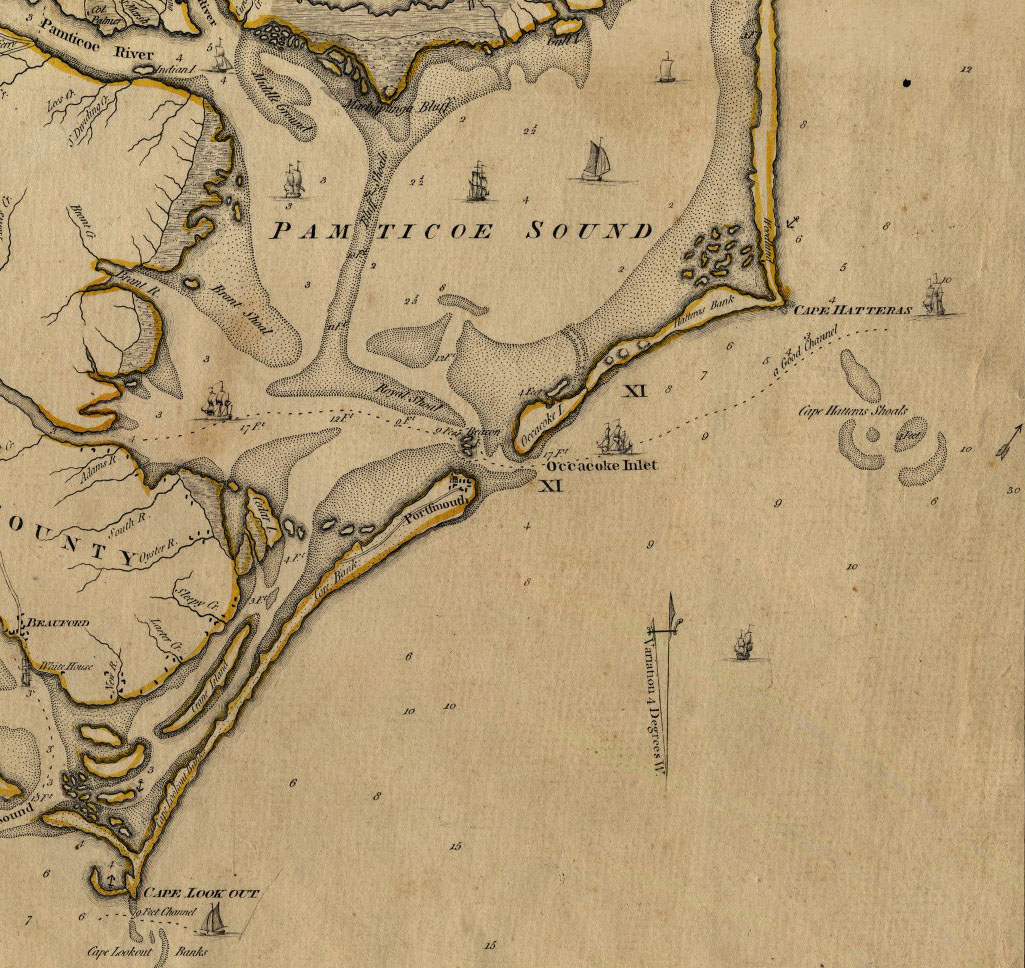
By 1718 colonial governments had resolved to suppress piracy. In November of that year Lieutenant Robert Maynard of the Royal Navy engaged Blackbeard off Ocracoke Inlet. After a fierce fight Teach was killed on 22 November 1718; his death was widely reported and used as an example intended to deter other pirates. Reportedly his head was severed and displayed to underscore the consequences of piracy.
Legacy and historical view
Blackbeard's life sits between fact and legend. Many popular tales derive from the book A General History of the Pyrates, which mixes eyewitness material, hearsay and embellishment; that source claims he had as many as fourteen wives, a figure historians treat with scepticism. Interest in his flag, ship and material remains has continued into modern times: the wreck believed to be Queen Anne's Revenge was located and investigated in the late 20th century, and artifacts recovered have helped scholars and museums interpret piracy's material culture.
- Areas of operation: the Caribbean and North American Atlantic coasts.
- Noted vessel: his flagship, the captured ship originally built as a French merchant and slaver.
- Fame rests on a mixture of recorded action, theatrical self‑presentation and later popular myth.
Today Blackbeard remains a prominent symbol of the so‑called Golden Age of Piracy: a figure studied by maritime historians, portrayed in literature and film, and represented in museum exhibitions that explore the real economic, legal and social conditions that produced piracy in the early 1700s.
Questions and answers
Q: What was Edward Teach's nickname?
A: Edward Teach was often called "Blackbeard the Pirate".
Q: What is believed to be his real last name?
A: Some historians think that his real last name may have been Thatch.
Q: What ship did Blackbeard sail on?
A: Blackbeard sailed on a captured French slave ship which he renamed Queen Anne's Revenge.
Q: How did Blackbeard make himself look frightening during battle?
A: During battle, Blackbeard wore a big feathered tricorn hat and had lots of swords, knives, and pistols. He also had lighted rope matches woven into his enormous black beard which burned slowly and gave off lots of smoke.
Q: How were guns lit before flintlock guns were invented?
A: Before flintlock guns were invented, burning rope was used to light the gunpowder in cannons and guns. These old fashioned guns were called matchlocks.
Q: How many wives did Blackbeard have?
A: According to A General History of the Pirates, Blackbeard had as many as fourteen wives but he was not legally married to most of them.
Related articles
Author
AlegsaOnline.com Edward Teach (Blackbeard) Leandro Alegsa
URL: https://en.alegsaonline.com/art/30292
Sources
- ncmaritimemuseums.com : "NC Maritime Museums : One historic coast. Three unique museums. :: Hatteras, Beaufort & Southport"
- qaronline.org : "Blackbeard: History of the Dreaded Pirate"