
Edouard van Beneden (1846–1910): cytologist and pioneer of chromosome study
Belgian cytologist and marine biologist who elucidated chromosome behavior in meiosis, helping to lay foundations for modern genetics and cell biology.
Overview
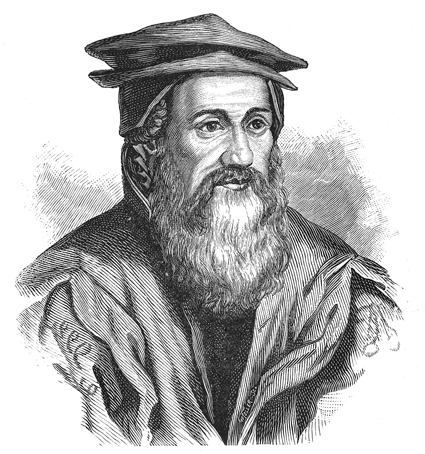
Edouard Joseph Marie van Beneden (5 March 1846 – 28 April 1910) was a Belgian scientist known for fundamental work in cell biology and early genetics. Born in Leuven and dying in Liège, he served as a professor of zoology at the University of Liège. Van Beneden combined interests in cytology and marine biology, producing observations that clarified how hereditary material is distributed during cell division.
Image gallery
2 Images
Career and scientific approach
Van Beneden worked at a time when microscopy and staining techniques were rapidly improving. His careful examination of cell structure emphasized observation of whole life cycles and reproductive cells rather than isolated phenomena. Trained and employed within university laboratories, he contributed to the emerging discipline of cytology by applying systematic, comparative studies across species, with a notable focus on parasitic roundworms and other marine organisms.
Major contributions: chromosomes and meiosis
Van Beneden's most influential work concerned the pairing and segregation of chromosomes during the formation of sex cells. Using the roundworm Ascaris as a model, he described how chromosomes behave during meiosis, the specialized cell division that produces gametes. He showed that meiotic divisions reduce the chromosome complement so that each gamete receives one set of chromosomes, producing a haploid state; fertilization restores the diploid state. These observations helped establish a physical basis for heredity and informed early theories in genetics.
Mitosis and collaboration
In parallel with contemporaries, van Beneden helped define the essential features of mitosis, the process by which a cell duplicates its chromosomes and divides into genetically similar daughter cells. His work complemented discoveries by Walther Flemming and Eduard Strasburger, together forming a clearer picture of how cells maintain chromosomal continuity across somatic divisions while producing variation in sexual reproduction.
Significance and legacy
Van Beneden's careful descriptions linked observable chromosomal behavior to inheritance, bridging descriptive cytology and the theoretical framework of heredity. By demonstrating how chromosome number and pairing change between somatic and reproductive divisions, he supplied evidence that chromosomes carry information critical to the genetic identity of organisms. His findings influenced later work that established chromosomes as the physical basis of genes and heredity.
Key findings and examples
- Use of Ascaris as a model organism to reveal chromosome segregation patterns.
- Clarification of the difference between mitosis (conservative duplication) and meiosis (reductive division producing haploid gametes).
- Integration of cell biological observation with the emerging field of genetics, shaping how researchers approached heredity and variation.
Though experimental genetics developed rapidly after his lifetime, van Beneden's meticulous microscopy and life-cycle studies remain a classic example of how careful observation can reveal fundamental biological mechanisms. His work is still cited in histories of cytology and the early development of genetic theory.
Questions and answers
Q: Who was Edouard Joseph Marie Van Beneden?
A: Edouard Joseph Marie Van Beneden was a cytologist and marine biologist who was a professor of zoology at the University of Liège.
Q: What were Van Beneden's contributions?
A: Edouard Joseph Marie Van Beneden contributed to cytology and genetics through his work on the roundworm Ascaris. In this work, he discovered how chromosomes combined during meiosis, during the production of gametes.
Q: What did Beneden discover with Walther Flemming and Eduard Strasburger?
A: Beneden discovered, with Walther Flemming and Eduard Strasburger, the essential facts of mitosis.
Q: How is meiosis different from mitosis?
A: In meiosis, only one set of chromosomes ends up in each gamete, a condition called haploid. In contrast to meiosis, the double (diploid) set of chromosomes in daughter cells is identical to those in the parent cells.
Q: Is there a change in the genetic apparatus in mitosis?
A: Excepting rare accidents, there is no change in the genetic apparatus during mitosis.
Q: What was the roundworm Ascaris used for in Van Beneden's work?
A: The roundworm Ascaris was used in Van Beneden's work to discover how chromosomes combined during meiosis.
Q: Where was Van Beneden a professor of zoology?
A: Van Beneden was a professor of zoology at the University of Liège.
Related articles
Author
AlegsaOnline.com Edouard van Beneden (1846–1910): cytologist and pioneer of chromosome study Leandro Alegsa
URL: https://en.alegsaonline.com/art/30206