
Edith Massey — American character actress and cult film icon
Edith Massey (1918–1984) was an American character actress and memorable member of John Waters’ ensemble. Known for eccentric roles, a punk-era music project, and a Baltimore thrift shop, she remains a cult figure.
Overview
Edith Massey (May 25, 1918 – October 24, 1984) was an American character actress and distinctive pop-culture personality best known for her work with filmmaker John Waters. A native of Baltimore who became part of Waters’ regular troupe of performers—often called the Dreamlanders—Massey developed a reputation for blunt, idiosyncratic portrayals that stood out in low-budget, transgressive cinema of the 1960s through the 1980s. Waters first cast her after encountering her while she worked as a waitress in a Baltimore bar frequented by him and his friends.
Image gallery
1 Image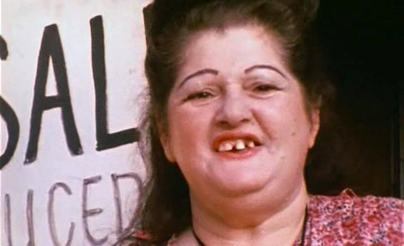
Screen persona and notable roles
Massey was not a conventionally trained actor; her onscreen presence relied on a memorable look, frank delivery, and a fearless willingness to play grotesque or comic parts. She appeared in a string of Waters’ best-known films, often in supporting roles that left an outsized impression. Her credits include multiple collaborations with Waters such as Multiple Maniacs, Pink Flamingos, Female Trouble, Desperate Living, and Polyester. These films circulated widely within midnight-movie and underground-film circuits, helping to secure Massey’s reputation beyond the local scene.
Discovery and craft
The story of Massey’s discovery is part of her legend: a nonprofessional performer recruited from everyday life whose personality translated directly to the screen. Her characters often combined blunt humor, sudden vulnerability, and outrageous costume or makeup choices—traits that matched Waters’ appetite for shock, satire, and camp. Critics and fans have described her work as emblematic of a kind of personality-driven cult stardom that bypassed mainstream training and polish.
Music, business ventures, and public life
In the late 1970s and early 1980s Massey extended her public profile beyond film. She fronted a short-lived punk-influenced group called Edie and the Eggs, performing a theatrical set that appealed to the same alternative audiences who followed Waters. Back in Baltimore she opened a thrift store named Edith’s Shopping Bag, which became a small local attraction and a tangible expression of the thrift-and-finds aesthetic she projected. For further contemporary accounts and images of her public persona see general biographical summaries.
Documentary and later years
Filmmaker Robert Maier produced a short documentary in 1975 titled Love Letter to Edie, which recorded aspects of Massey’s personality and everyday life. She continued to be associated with Waters’ circle until the early 1980s. Massey died in 1984; since then, retrospectives, festival screenings, and fan publications have kept interest in her work alive, and she is frequently mentioned in discussions of cult cinema and outsider performance.
Legacy
Massey’s legacy rests on several intersecting grounds: the memorable characters she created on screen, her visibility within a notable chapter of independent American filmmaking, and her connection to the era’s countercultural currents—especially the overlap between underground film audiences and early punk scenes. She remains a reference point for scholars and fans exploring how personality, place, and low-budget aesthetics shaped alternative stardom in the late 20th century.
Selected filmography and projects
- Multiple Maniacs (film appearance)
- Pink Flamingos (film appearance)
- Female Trouble (film appearance)
- Desperate Living (film appearance)
- Polyester (film appearance)
- Edie and the Eggs (musical project)
- Edith's Shopping Bag (Baltimore thrift store)
- Love Letter to Edie (1975 short documentary)
For readers seeking more context: look to histories of underground and independent American film, studies of John Waters’ ensemble, and accounts of Baltimore’s local arts scenes in the 1960s–1980s. Additional resources and archival materials can be found through filmographies and local cultural histories available online and in print; see also general background on Waters and his collaborators via director-focused overviews and regional accounts at Baltimore cultural histories.
Questions and answers
Q: Who was Edith Massey?
A: Edith Massey was an American actress who acted in several of director John Waters' most well-known movies.
Q: Which movies did Edith Massey act in?
A: Edith Massey acted in Multiple Maniacs, Pink Flamingos, Female Trouble, Desperate Living, and Polyester.
Q: How did John Waters discover Edith Massey?
A: John Waters discovered Edith Massey as a waitress in a Baltimore bar he and his friends frequented.
Q: What did Edith Massey do in the late 1970s and early 1980s?
A: In the late 1970s and early 1980s, Edith Massey capitalized on her Waters infamy by touring as the lead singer of a punk band (Edie and the Eggs) and opening a thrift store in Baltimore called Edith's Shopping Bag.
Q: Who made a documentary short about Edith Massey in 1975?
A: Director Robert Maier made a documentary short about Edith Massey in 1975 called Love Letter to Edie.
Q: When was Edith Massey born and when did she pass away?
A: Edith Massey was born on May 25, 1918, and she passed away on October 24, 1984.
Q: What was the name of the thrift store that Edith Massey opened in Baltimore?
A: The name of the thrift store that Edith Massey opened in Baltimore was Edith's Shopping Bag.
Related articles
Author
AlegsaOnline.com Edith Massey — American character actress and cult film icon Leandro Alegsa
URL: https://en.alegsaonline.com/art/30150