
Alt-right: origins, beliefs, influence, and controversies
Overview of the alt-right: its composition, online origins, influence on politics, key events, and how the movement has evolved and fractured since the mid-2010s.
The term "alt-right" describes a loosely connected set of right‑wing political ideologies and online movements that rose to public attention in the 2010s. It is not a single organization but an umbrella label used for a range of actors who reject mainstream conservatism and who often promote ethno‑nationalist, anti‑immigration, or anti‑establishment positions. The label has been contested: some people embraced it as a new political tendency, while others used it as a pejorative for extremist or fringe politics. For context about geographic origins, see related sources.
Image gallery
10 Images


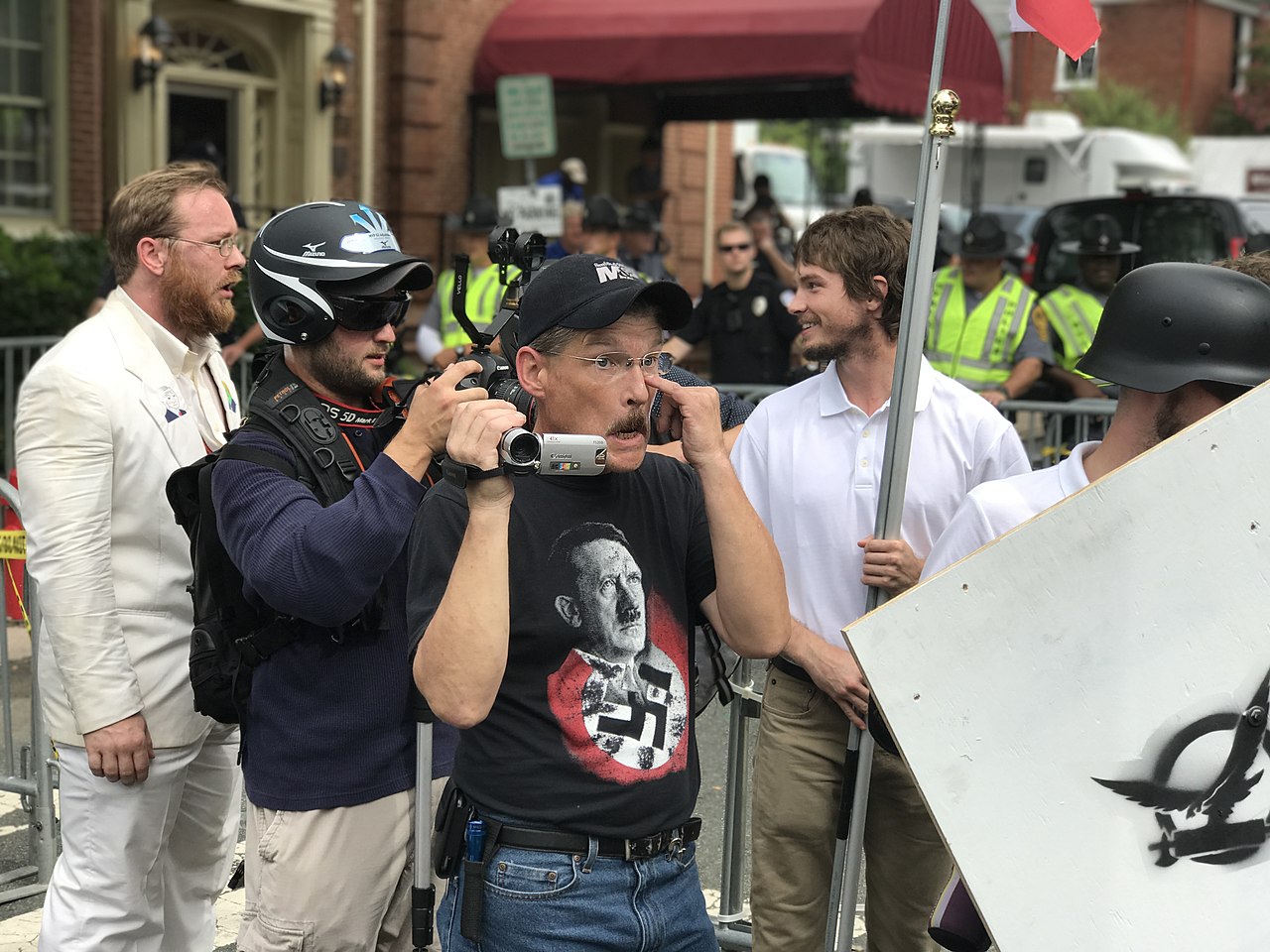


Characteristics and composition
Participants described as part of the alt‑right include a mix of movements and subcultures rather than a single ideology. Common elements that scholars and journalists have identified are a focus on identity politics for white people, rejection of multiculturalism, hostility to feminism, and use of provocative online culture. Groups and currents often associated with the alt‑right include white nationalists, certain strands of the online "manosphere" and men's rights movement, anti‑feminists, and some radical nationalists. Some individuals identified with the label have backgrounds in mainstream conservative politics or religious communities, though many conservative and religious organizations have explicitly rejected the label. Examples of these different constituencies are discussed in several sources: conservative contexts, religious contexts, and men's rights contexts.
Origins and early development
The alt‑right emerged primarily online during the 2010s. Its visibility increased through message boards and social media where memes, slogans, and recruitment tactics circulated. Early incubators of content and community included imageboards and forums; observers point to places such as 4chan, various Reddit communities (see examples), and other fringe corners of the internet where subcultural norms and trolling overlapped with politics (fringe platforms). Some accounts trace the coining and popularization of the label to particular individuals and organizations, and note the role of media coverage in amplifying it. For one influential actor and an associated think‑tank, see National Policy Institute and commentary on its leadership. Earlier internet episodes and online controversies, including the 2014 Gamergate controversy, helped shape networks and rhetorical styles that later became associated with the broader movement (Gamergate and culture wars).
Political influence and major events
The alt‑right gained attention during the 2016 United States presidential campaign when commentators and researchers debated its role in online political mobilization and messaging; some analysts argued it helped amplify particular candidates and narratives during that period (2016 election analyses). High‑profile public confrontations and rallies brought the movement into mainstream scrutiny. One watershed moment came in 2017, when violent clashes at a rally in Charlottesville, Virginia, prompted widespread condemnation and led to renewed debate about the alt‑right's tactics and goals (Charlottesville coverage).
Splintering, deplatforming, and legacy
After 2017 the movement experienced fragmentation. Internal disputes, public backlash, legal consequences for violent actions, and platform moderation resulted in some groups dispersing, others rebranding, and parts of the movement moving to lesser‑known platforms. Deplatforming by social networks and pushback from civil society altered how actors organized online. Academic and policy literature continues to examine how elements of the alt‑right migrated into other activist networks or influenced broader conversations about free speech, online harassment, and radicalization. For historical anecdotes and archival reflections, consult repositories and retrospective documentation (archival sites, encyclopedic discussions).
Distinctions, criticism, and ongoing debate
Analysts distinguish the alt‑right from traditional conservative movements on the basis of rhetoric, tactics, and openness to ethno‑nationalist positions. Critics argue that the label masks extremist and racist currents; defenders have sometimes argued it is an attempt to describe emergent identity‑based politics on the right. Because the terrain mixes online culture, political organizing, and subcultural provocation, scholars advise caution when applying the label and stress the need to analyze specific groups and statements rather than use the term as an all‑encompassing category. For further reading on membership claims and ideological debates, see discussions related to nationalism and identity politics (nationalist perspectives, related incidents).
- Online roots and meme culture: platforms and forums
- Key actors and institutions: National Policy Institute, notable personalities (profiles)
- Public impact: election analyses, Charlottesville
- Documentation and archives: media trackers, archival commentary, encyclopedic entries
- Related social movements: men's rights, religious communities, conservative actors
Because the alt‑right is a contested and evolving label, researchers emphasize studying concrete organizations, statements, and actions rather than relying solely on the label itself. Ongoing monitoring by scholars, journalists, and policy analysts continues to map how these networks change, including migration to new platforms and the ways in which ideas spread across political boundaries (social media studies, imageboard histories, incident case studies).
Questions and answers
Q: What is the alt-right?
A: The alt-right is a right-wing political movement originating in the United States.
Q: Who are some of the different types of people in the alt-right?
A: The alt-right includes white nationalists, antifeminists, manospherians, conservatives, Christians, nationalists and men's rights activists.
Q: Did the alt-right influence the 2016 United States presidential election?
A: Yes, the alt-right is said to have influenced the 2016 United States presidential election in favor of the winning candidate Donald Trump.
Q: Who coined the term "Alt-right"?
A: The term "Alt-right" is said to have been coined by Richard B. Spencer, who is a political writer and the current president of the nationalist think-tank National Policy Institute.
Q: Where did the alt-right originate?
A: The alt-right originated on 4chan and other fringe corners of the Internet, such as Reddit, Know Your Meme and Encyclopedia Dramatica.
Q: When did the alt-right begin to splinter?
A: The alt-right began to splinter in the years following Trump's victory in 2016, and its split accelerated following the 2017 Charlottesville incident.
Q: Do all of those associated with the alt-right still support President Trump?
A: No, those on the Internet associated with the alt-right have stated that they don't like Trump anymore.
Tags
Related articles
Author
AlegsaOnline.com Alt-right: origins, beliefs, influence, and controversies Leandro Alegsa
URL: https://en.alegsaonline.com/art/3012
Sources
- nytimes.com : "What the Alt-Right Really Means"
- abcnews.go.com : abcnews.go.com/US/documentary-alt-sheds-light-movements-alleged-roots/story?id=52420449
- theweek.com : "The rise of the alt-right" · web.archive.org
- nationalpolicy.institute : "About"
- theguardian.com : "What Gamergate should have taught us about the 'alt-right'"
- vice.com : "The Alt-Right's Love Affair with Trump Is Over. Here's Why"