
East Asian cultural sphere (Sinosphere)
Region of East Asia shaped by long-term cultural influence from Chinese civilization: shared writing practices, institutions, religions, arts, and transmission of technologies across China, Korea, Japan, Vietnam and others.
Overview
The East Asian cultural sphere, commonly called the Sinosphere, denotes a set of historical and cultural connections centered on the influence of Chinese civilization across parts of Asia. This influence spread across a broad region in Asia and took many forms of cultural influence: the use and adaptation of Chinese characters, dress and court attire traditions (traditional clothing), convergences in visual and performing arts, shared culinary elements (cuisines), important technological innovations (inventions), and comparable social hierarchies and administrative systems. Religious and philosophical currents—most notably Buddhist and Confucian ideas—helped shape education, family norms, and governance across the region (religions and philosophies, Confucian and Buddhist ideas).
Image gallery
10 Images
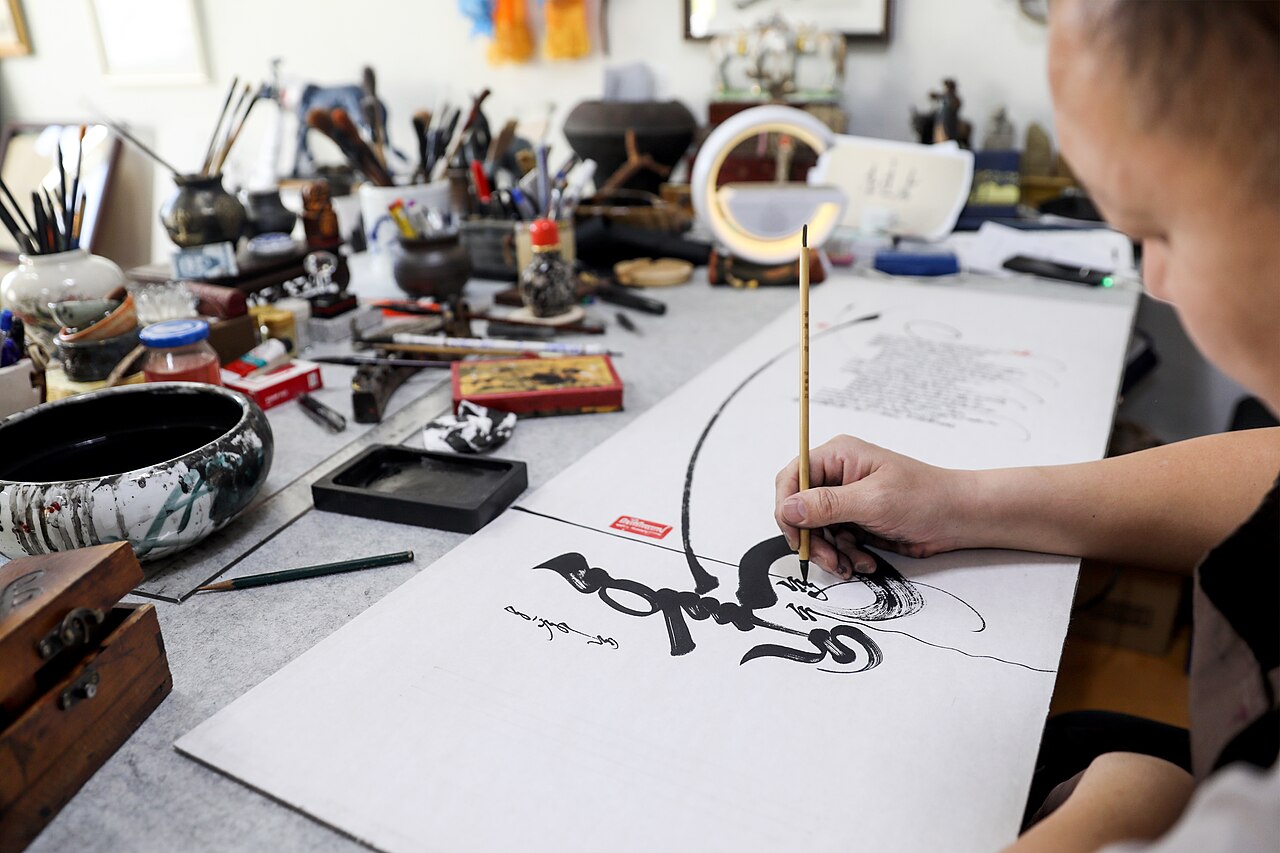


Geographic scope and major participants
The core area of influence commonly includes the territories often grouped as Greater China—including mainland China, Hong Kong, Macau, and Taiwan—as well as Japan and the two Koreas (Korea). Other polities with historic or cultural ties sometimes included are Singapore, Mongolia, and Vietnam, depending on the criteria used. The boundaries of the term are flexible and often reflect historical, linguistic, or cultural emphases rather than strict geography.
Historical development and mechanisms
China's large population, state institutions, and regional trade and diplomatic networks enabled the diffusion of institutions, texts, and goods across Eurasian routes and especially among neighboring polities (neighboring countries) in East Asia. Mechanisms of transmission included tributary diplomacy, the movement of scholars and monks, trade, migration, and the copying of texts. Centers of learning and religious institutions served as conduits for technology, administrative practices and literary forms. Local rulers and elites often adopted foreign models selectively, integrating them with preexisting institutions and cultural patterns.
Writing systems and lexical influence
The adoption of Chinese characters provided a shared written medium for official documents, scholarship and religious texts across much of the region. Over time there were divergent developments: some societies continued to use sinographic writing alongside native scripts; others developed new phonetic systems. Today, everyday use of Chinese writing persists in mainland China and Taiwan, and elements of Japanese writing incorporate Chinese characters. Korea and Vietnam undertook major script reforms that reduced or eliminated routine use of characters, while their vocabularies retain numerous Chinese loanwords that reflect long periods of contact and borrowing.
Regional adaptations and diversity
Although shared elements are recognizable, each society adapted imports in distinctive ways. In governance, some states adopted Chinese-style bureaucracy and examination ideas but modified them to local social structures. In religion and philosophy, Buddhist and Confucian teachings interacted with native beliefs and produced syncretic practices. Artistic genres—painting, calligraphy, garden design and performing arts—show common influences but also unique regional schools and innovations. Culinary exchange produced overlapping ingredients and techniques while preserving local tastes and specialties.
Modern relevance and contested meanings
Scholars use the concept of the Sinosphere as a heuristic to explain patterns of cultural convergence, but the term is disputed by those who emphasize indigenous agency, colonial histories, and political differences. Contemporary realities—modern nation-states, colonial legacies, industrialization, and global media—have altered earlier flows of influence. At the same time, historical ties continue to shape language, education, family norms, legal traditions and cultural self-understanding across the region.
Examples of transmission and legacy
- Technologies such as papermaking, printing, and specific agricultural techniques spread outward and were adapted locally.
- Buddhist scriptures and iconography moved along monastic networks and were translated into local languages.
- Confucian education and civil-service ideas influenced elite formation, schooling and bureaucratic rhetoric in several states.
- Calligraphic and painting traditions provided common aesthetic references while producing distinctive schools in different countries.
Critical perspectives and limits
The Sinosphere framework highlights significant historical connections but can understate resistance, reinterpretation, and the contributions of non-Chinese actors. Political appropriation of cultural links is a modern phenomenon: appealing to a shared cultural past may serve diplomatic or national narratives, but it does not erase the plural and contested nature of the region's history.
Further reading and resources
Introductory overviews, comparative studies, and digitized primary sources are available through university presses, libraries, and specialized research centers. Useful entry points include general region overviews, surveys of cultural influence, reference works on written languages, examinations of traditional dress, and studies of art and literature. For thematic approaches, consult materials on foodways, technological transmission, and social institutions. Comparative treatments often discuss the roles of administrative systems, religious exchange (religions, philosophies), and regional trade networks like those connecting Greater China, mainland China, Hong Kong, Macau and Taiwan with Japan, Korea, Singapore, Mongolia and Vietnam. Academic surveys of Eurasian exchange and studies of neighboring countries in East Asia provide broader context. For readers interested in language history, consult works on Chinese script, Japanese orthography, and the history of Sino-influenced vocabulary.
Questions and answers
Q: What is the East Asian cultural sphere?
A: The East Asian cultural sphere, also known as the Sinosphere or Chinese sphere of influence, is a region in Asia that has many influences from Chinese culture.
Q: What countries make up the East Asian cultural sphere?
A: The area consists of the Greater China region (mainland China, Hong Kong, Macau, and Taiwan), Japan, Korea, Singapore, and sometimes Mongolia and Vietnam (depending on who you ask).
Q: How did China share its goods and ideas across Eurasia?
A: Since China had a very large trade network, it was able to easily share its goods and ideas across Eurasia.
Q: Did all countries in the East Asian cultural sphere use Chinese characters at one point?
A: Yes. At one point, all the countries wrote only using Chinese characters.
Q: Do any of these countries still write using Chinese characters today?
A: Only Chinese and Japanese speakers write using Chinese characters in everyday life. All other countries either created a new writing system (Korea and Mongolia) or replaced Chinese characters with a different already existing writing system (Mongolia again and Vietnam).
Q: Are there still traces of Chinese language present in other languages within this region?
A: Yes. Despite not writing with traditional Chinese characters anymore, the languages of each country still have many Chinese loanwords.
Related articles
Author
AlegsaOnline.com East Asian cultural sphere (Sinosphere) Leandro Alegsa
URL: https://en.alegsaonline.com/art/29607