
Duodenal cancer: overview, causes, diagnosis and treatment
Duodenal cancer is a rare malignancy of the first portion of the small intestine. This article explains anatomy, risk factors, symptoms, diagnostic steps, treatment options and key distinctions.
Overview
Duodenal cancer is a malignant tumour arising in the duodenum, the first section of the small intestine. It is one type of small‑intestinal cancer and shares features with cancers of the stomach and colon. For general background on malignancy see cancer overview, and for the small intestine anatomy see small intestine. Duodenal tumours can be adenocarcinomas, neuroendocrine tumours or other histological types; clinical behaviour and treatment depend on the tumour type.
Image gallery
1 Image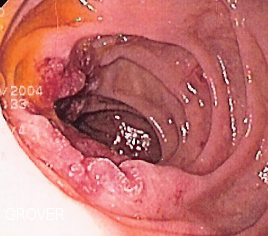
Anatomy and role of the duodenum
The duodenum lies immediately beyond the stomach and connects to the jejunum. It receives acidic stomach contents and mixes them with bile and pancreatic secretions to begin the main phase of digestion. See the organ pages: duodenum, stomach and jejunum. Bile from the liver and gall bladder and enzymes from the pancreas support nutrient breakdown; relevant references are bile, gall bladder and pancreas.
Risk factors and causes
Duodenal cancer is uncommon. Several inherited and acquired conditions increase risk. Important associations include:
- Inherited polyposis and mismatch‑repair syndromes (familial adenomatous polyposis, Lynch syndrome and related disorders).
- Specific hereditary syndromes such as Peutz–Jeghers and juvenile polyposis, and syndromes that overlap with skin findings like Muir‑Torre and Gardner syndrome.
- Chronic inflammatory or malabsorptive conditions such as celiac disease and Crohn's disease in some patients.
Symptoms, detection and diagnosis
Early disease may be asymptomatic or produce vague upper abdominal discomfort. More typical symptoms include unexplained weight loss, persistent abdominal pain, gastrointestinal bleeding, anaemia or an obstructive sensation after eating. Diagnosis relies on endoscopic examination with biopsy and imaging to stage the disease. Common diagnostic steps include upper endoscopy, cross‑sectional imaging and histopathological assessment.
Treatment and prognosis
Treatment depends on tumour type, location and stage. Surgical resection is the principal curative option for localized disease; the extent ranges from local excision to more extensive resections. Chemotherapy and radiation are used in selected situations, and targeted or hormonal therapies may apply for specific histologies. Prognosis varies widely by stage and pathology; early detection generally improves chances for a favourable outcome.
Key distinctions and clinical importance
Duodenal cancer is distinct from gastric and colorectal cancers in frequency, presentation and typical molecular features, though overlaps occur. Because it is rare, patient care often involves multidisciplinary teams and considerations of inherited cancer risk. Patients with syndromic predispositions may undergo surveillance to detect precancerous polyps or early malignancy. For related conditions and comparisons see gastric and colorectal cancer.
Questions and answers
Q: What is duodenal cancer?
A: Duodenal cancer is a type of cancer that occurs in the small intestine, specifically in the duodenum which is the first part of the small intestine.
Q: What are the risk factors for duodenal cancer?
A: Risk factors for duodenal cancer include Familial adenomatous polyposis (FAP), Gardner Syndrome, Lynch Syndrome, Muir-Torre syndrome, Celiac sprue, Puetz-Jeghers, Crohn's Disease and Juvenile Polyposis Syndrome.
Q: How is duodenal cancer similar to gastric cancer and colorectal cancer?
A: Duodenal cancer shares similarities with gastric cancer and colorectal cancer as they are all types of cancer that affect the digestive system.
Q: Where is the duodenum situated in the digestive system?
A: The duodenum is located between the stomach and the jejunum in the small intestine.
Q: What happens in the duodenum during digestion?
A: After food combines with stomach acid, it enters the duodenum where it mixes with bile from the gallbladder and digestive juices from the pancreas.
Q: What is Familial Adenomatous Polyposis?
A: Familial Adenomatous Polyposis (FAP) is a genetic disorder that causes the development of numerous polyps in the colon and rectum. It is also a risk factor for duodenal cancer.
Q: What is Celiac sprue?
A: Celiac sprue is a disease in which the small intestine is unable to properly digest gluten. It is also a risk factor for duodenal cancer.
Related articles
Author
AlegsaOnline.com Duodenal cancer: overview, causes, diagnosis and treatment Leandro Alegsa
URL: https://en.alegsaonline.com/art/29270
Sources
- biomedcentral.com : "Duodenal carcinoma at the ligament of Treitz. A molecular and clinical perspective"
- doi.org : 10.1186/1471-230X-10-109
- ncbi.nlm.nih.gov : 2949773
- pubmed.ncbi.nlm.nih.gov : 20849628