
Dungeons & Dragons
Dungeons & Dragons is a tabletop fantasy role‑playing game created in 1974; players take on characters, guided by a referee, using rules, storytelling and dice to resolve actions and adventures.
Dungeons & Dragons is a tabletop fantasy role‑playing game in which a group of players jointly creates a story by portraying individual characters and resolving uncertain outcomes with rules and dice. First published in 1974 by Gary Gygax and Dave Arneson, the game launched a new form of collaborative, improvisational play that differs from solitary computer games and from board games. Many discussions of the hobby distinguish traditional paper‑and‑pencil play from digital implementations; both forms now coexist and influence one another. New players usually learn a set of written rules and rely on a referee who adjudicates the fiction and enforces the mechanics, often called the dungeon master. Historical summaries and introductory guides can be found via many community and publisher resources here.
Image gallery
8 Images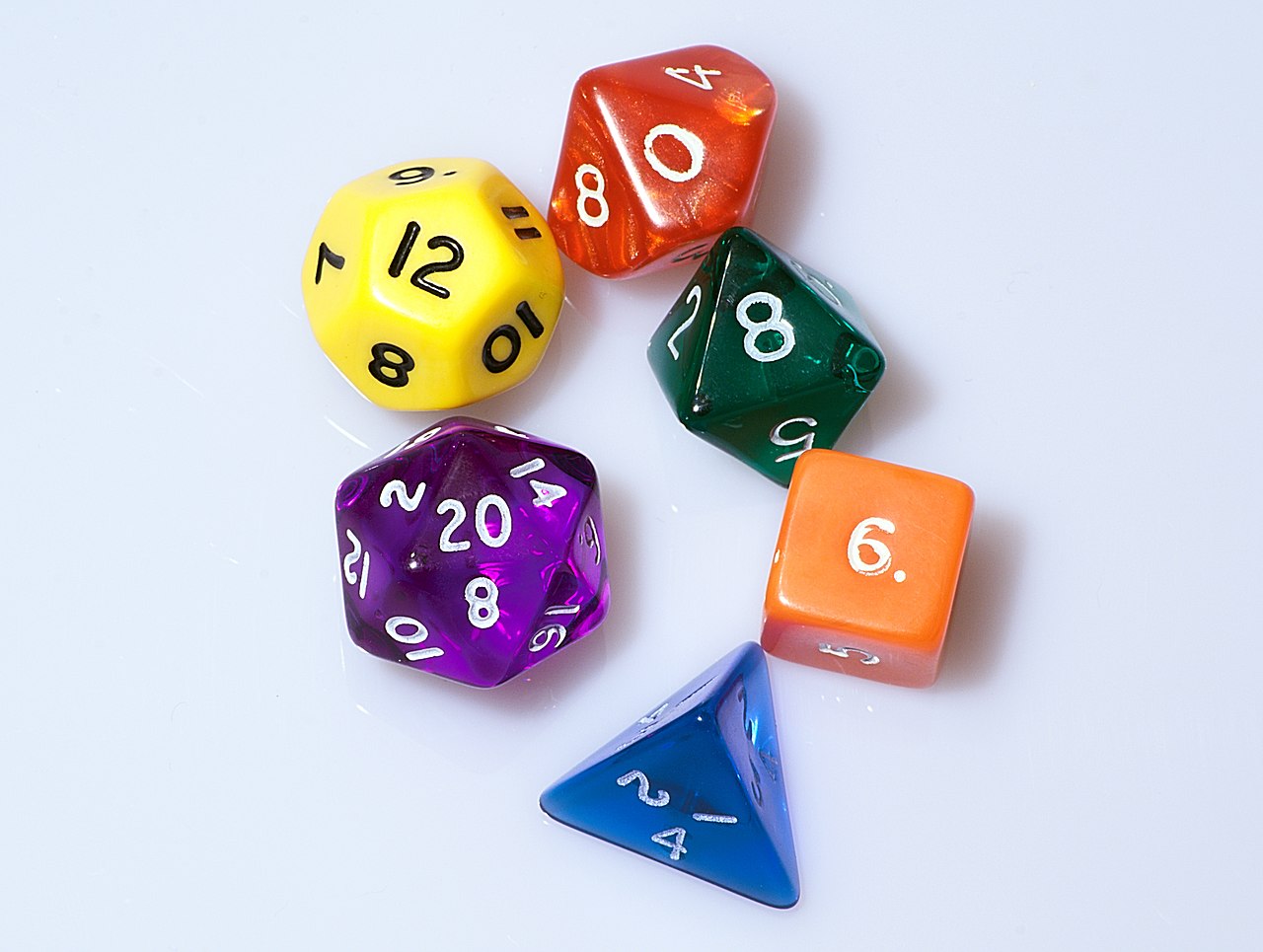



Core elements and game flow
At its heart Dungeons & Dragons combines roleplaying, tactics and chance. Participants create characters with attributes such as strength, intelligence and dexterity, select a race and class (for example fighter, wizard, or rogue), and gain experience to advance in levels. Play alternates between descriptive storytelling and mechanical resolution: when an outcome is uncertain players roll polyhedral dice to test skills or attacks. The most famous of these is the twenty‑sided die—commonly discussed in explanations of the d20 system—while a set of dice including a four‑sided, six‑sided, eight‑sided, ten‑sided, twelve‑sided and twenty‑sided is frequently used; introductory primers list them together detailed dice sets. The referee frames scenes, controls non‑player characters and presents challenges, balancing rules with improvisation referee tips.
Mechanical components and typical session items
- Character sheets: written summaries of abilities, equipment and background, often supported by electronic tools character tools.
- Rulebooks: core manuals that describe character creation, combat, magic and adjudication core rules.
- Dice: polyhedral dice used to generate random results and introduce uncertainty dice types.
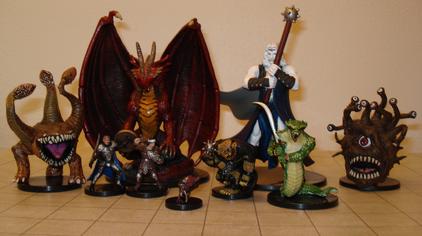
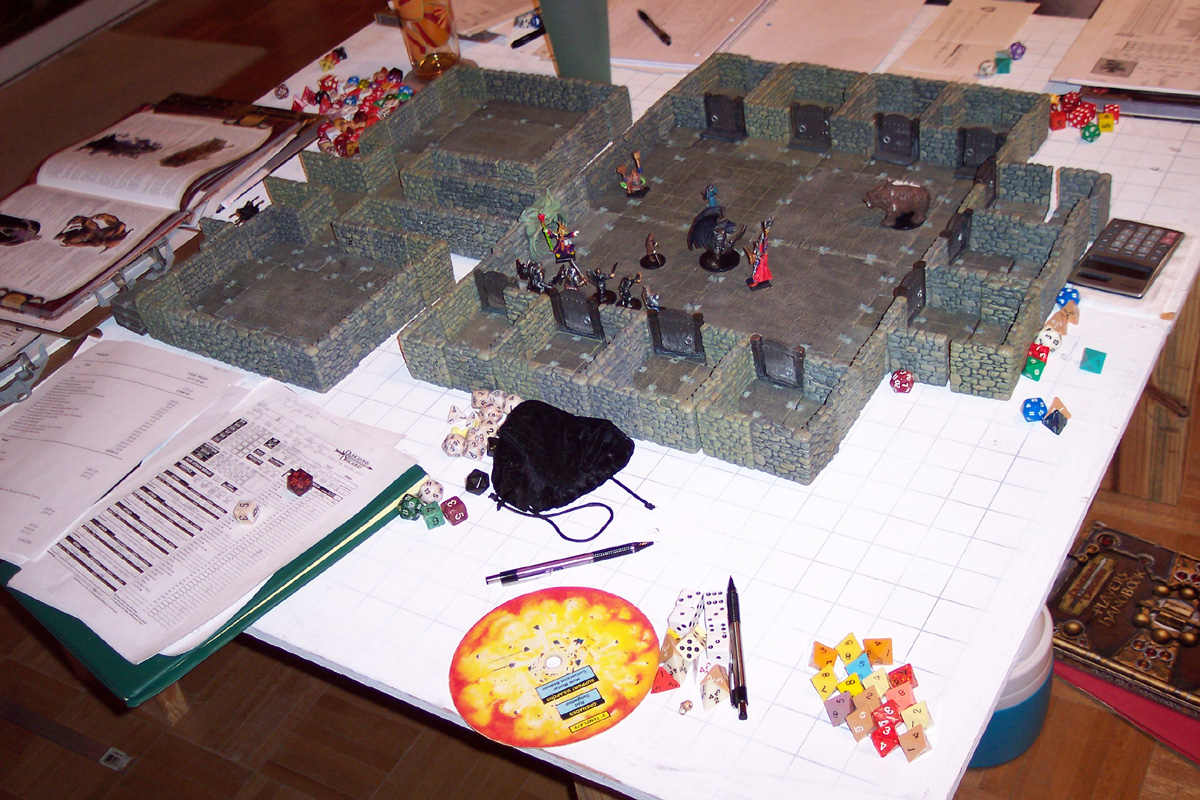
- Maps and miniatures: optional aids for tactical combat and visualization miniature play.
- Adventures and modules: prewritten scenarios that a referee can run with minimal preparation adventure modules.
Many groups mix modes: improvisational roleplay, tactical combat, exploration, and social negotiation. A session can be a single one‑off adventure or part of a longer campaign that runs for months or years. Different groups emphasize different elements—some prize narrative drama, others favor strategic combat or puzzle solving—so Dungeons & Dragons supports a broad variety of play styles play styles.
History and editions
After its 1974 debut the game was expanded through supplements and new boxed sets, and the original publisher, TSR, produced multiple editions and variations. In the late 1990s the brand was acquired by Wizards of the Coast, which later released revised editions that modernized presentation and mechanics. Major revision cycles introduced new character options, clarified rules, and responded to community feedback; one of the most widely used modern revisions arrived in the mid‑2010s and emphasized streamlined rules and accessibility. Official and third‑party products continue to evolve; collectors and historians track differences among editions and notable releases edition guides and legal ownership histories publisher histories.
Uses, community and cultural impact
Beyond entertainment, Dungeons & Dragons functions as a tool for social bonding, creative writing, collaborative problem solving, and learning negotiation and empathy. It has influenced video and tabletop game design, fantasy literature, and popular media; numerous modern role‑playing systems borrowed concepts and mechanics first popularized in Dungeons & Dragons. The hobby expanded with online tools—virtual tabletops, streaming actual play shows, and digital character managers—that make play accessible to remote groups virtual tools. The community is diverse and organizes conventions, local game nights, teaching programs, and charity events community events. Discussions about representation, safety at the table, and inclusive practices are now common in official guidance and fan resources safety and inclusivity.
Notable facts include early public controversies in the 1980s that prompted debates about the hobby, an enduring set of conventions and competitive events, and a rich ecosystem of third‑party creators who publish adventures, settings and tools under various license terms third‑party resources. For new players the best approach is to find a welcoming group or an introductory adventure, read a concise rules summary, and try a single session in which the emphasis is on shared fun and storytelling.
Questions and answers
Q: What is Dungeons & Dragons?
A: Dungeons & Dragons is a paper-and-pencil roleplaying game created by Gary Gygax and Dave Arneson in 1974.
Q: Are all role-playing games played on a computer?
A: No, from the early 1970s, role-playing games have been played by people sitting together at the same table using their imaginations and written rules of the game to play (as well as dice to generate random numbers when needed).
Q: What type of characters do players take on in this type of game?
A: Players take on imaginary characters that go on heroic adventures. The characters can be many types such as a strong warrior, wise wizard or skilled thief.
Q: Who is responsible for making sure there is fair use of the rules?
A: One person in the group acts as a moderator or referee (called the "dungeon master" or DM in Dungeons and Dragons and "game master" or GM in other games) and they are responsible for making sure there is fair use of the rules.
Q: Is there more than one genre of these types of games?
A: Yes, there are now many types of fantasy role-playing games both traditional paper-and-pencil games and computer games. Many genres are played such as fantasy, science fiction, horror, war etc., and there are hundreds of companies that produce their own written rules systems and software products.
Q: How many people usually play these types of RPGs?
A: Typically these types of RPGs involve several players sitting together at one table with one person acting as a moderator/referee who makes sure everyone follows the rules fairly.
Author
AlegsaOnline.com Dungeons & Dragons Leandro Alegsa
URL: https://en.alegsaonline.com/art/29246