
Dumont d'Urville Station — French Antarctic research base
French scientific station on Île des Pétrels in Adélie Land, Antarctica. Operated by the French Polar Institute, it supports meteorology, glaciology, biology and long‑term environmental monitoring.
Overview
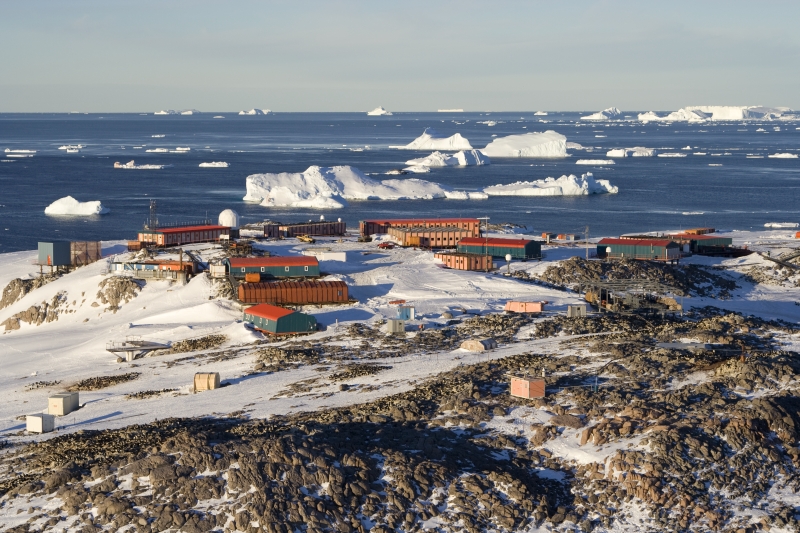
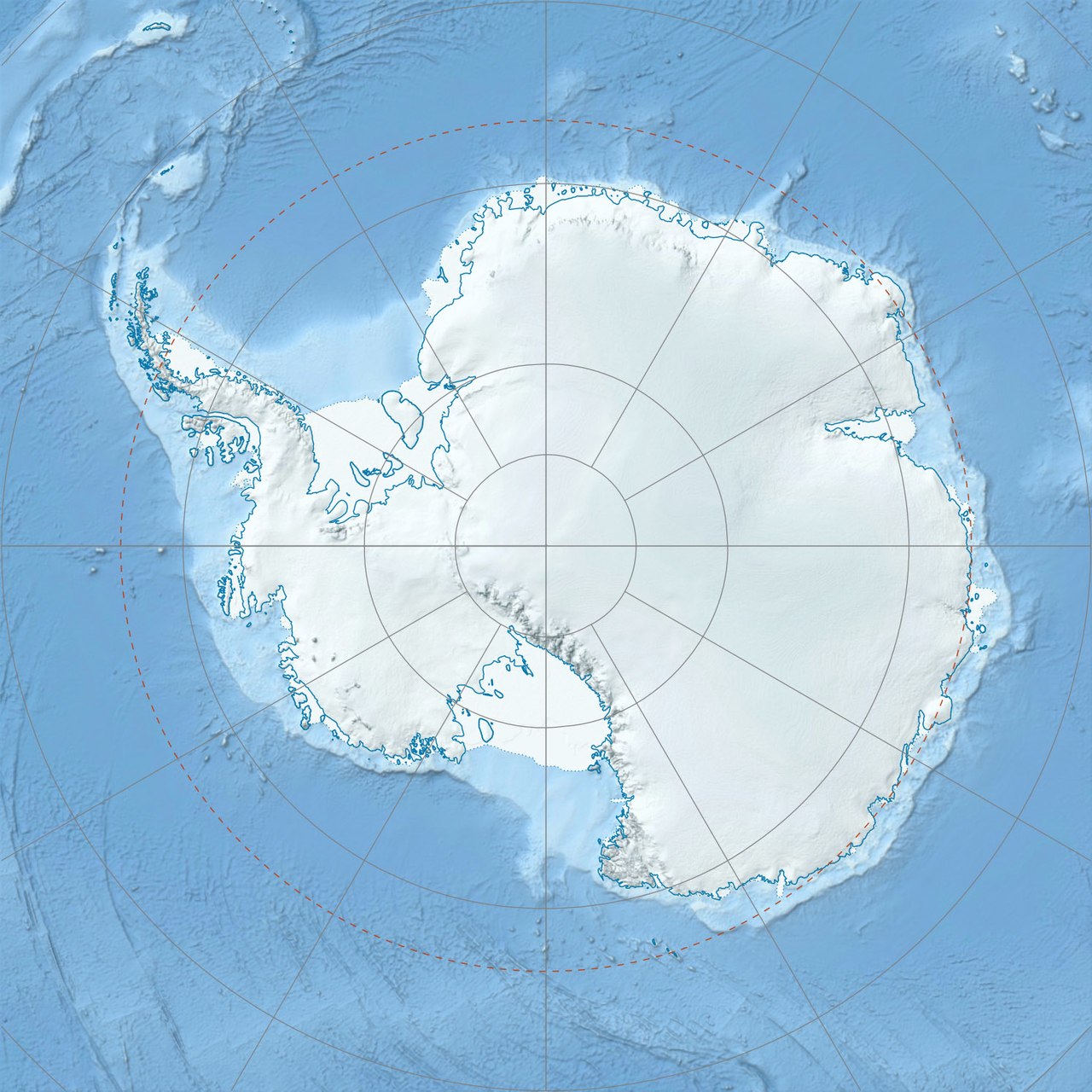
The Dumont d'Urville Station, known in French as the Base antarctique Dumont-d'Urville, is a permanent coastal research facility in Antarctica. It is located on Île des Pétrels within the Pointe-Géologie archipelago, off the coast of Adélie Land. The base serves as the principal hub for French scientific work in this sector and is administered by the French Polar Institute Paul-Émile Victor.
Image gallery
7 Images




Facilities and characteristics
The station comprises living quarters, laboratory space, communications and navigation equipment, storage for fuel and supplies, and landing areas for helicopters and small fixed-wing aircraft during the summer season. Support infrastructure is designed to operate year-round despite extreme cold, katabatic winds and sea-ice variability. Typical on-site services include medical support, meteorological observations, and logistics for field parties.
Research programs and activities
Dumont d'Urville supports a broad range of scientific disciplines. Common research topics include:
- meteorology and atmospheric chemistry;
- glaciology and snow‑ice interactions;
- marine biology and ecosystem studies, notably seabirds and penguins;
- geology, geomagnetism and oceanography.
Long-term environmental monitoring carried out at the base contributes to international climate and ecological datasets and often involves collaboration with other national Antarctic programs.
History and name
The station takes its name from the French navigator Jules Dumont d'Urville, whose expedition made landings in the area in the 19th century, including a recorded visit to Débarquement Rock. The modern research facility was established by France in the mid-20th century to replace earlier coastal installations and to support concerted scientific effort in East Antarctica.
Environment, logistics and protection
Situated near colonies of seabirds and Adélie penguins, the site lies within a sensitive polar environment. Operations are governed by measures to minimize human impact under the Antarctic Treaty System and national regulations. Access is typically by ice-strengthened vessel or by air during the austral summer; sea-ice and weather conditions can restrict resupply and personnel rotations.
Notable facts
As one of France's main Antarctic stations, Dumont d'Urville plays a key role in regional science and international cooperation. Its proximity to historic landing sites and its contribution to multi-decadal scientific records make it important both for heritage and for contemporary studies of climate and ecosystems in Adélie Land and the wider Antarctic region.
Administration and logistical support are provided by the national polar institute; for program details and visitor information see the institute's resources. French Polar Institute.
Questions and answers
Q: What is the Dumont d'Urville Station?
A: The Dumont d'Urville Station is a French scientific station located on Île des Pétrels in Adélie Land, Antarctica.
Q: Who was Jules Dumont d'Urville?
A: Jules Dumont d'Urville was an explorer after whom the Dumont d'Urville Station is named.
Q: When did Dumont d'Urville's expedition land on Débarquement Rock?
A: Dumont d'Urville's expedition landed on Débarquement Rock on January 21, 1840.
Q: Where is the Dumont d'Urville Station located?
A: The Dumont d'Urville Station is located on Île des Pétrels, which is part of the Pointe-Géologie archipelago in Adélie Land, Antarctica.
Q: Who runs the Dumont d'Urville Station?
A: The Dumont d'Urville Station is run by the "French Polar Institute Paul-Émile Victor".
Q: Why is the Dumont d'Urville Station named after Jules Dumont d'Urville?
A: The Dumont d'Urville Station is named after Jules Dumont d'Urville, who led an expedition that landed on Débarquement Rock in the Dumoulin Islands at the northeast end of the Pointe-Géologie archipelago.
Q: What type of station is the Dumont d'Urville Station?
A: The Dumont d'Urville Station is a scientific station.
Related articles
Author
AlegsaOnline.com Dumont d'Urville Station — French Antarctic research base Leandro Alegsa
URL: https://en.alegsaonline.com/art/29202