
Dumbo (1941) — Disney Animated Film and Legacy
Comprehensive overview of Dumbo (1941): origins, production, plot, characters, music, reception, controversies, and the film’s cultural legacy within animation history.
Overview
Dumbo is a 1941 American animated feature produced by Walt Disney Productions and released by RKO Radio Pictures. Based on a short story by Helen Aberson with illustrations by Harold Perl, the film tells the concise, emotionally direct tale of a baby circus elephant nicknamed "Dumbo" because of his oversized ears. At roughly 64 minutes, it is one of Disney's shortest classic features. The picture was conceived during a financially difficult period for the studio and was produced with economical storytelling and designs.
Image gallery
2 Images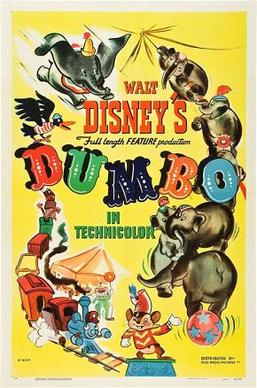

Origins and source material
The film is adapted from a brief children's book about a young elephant who is mocked for his ears and ultimately finds a surprising ability that transforms his life. The decision to adapt a small, simple story allowed Disney to make a low-cost feature that emphasized character emotion, mood, and pacing rather than spectacle. Elements of the original story were expanded for cinematic structure and to create sequences suitable for animation and musical accompaniment.
Production and style
Produced in the early 1940s, Dumbo reflects a more streamlined production approach compared with Disney's previous lavish features. The studio reduced the number of principal characters and settings, concentrating resources on moments of strong expression and clear narrative beats. Backgrounds and layouts support the narrative without overwhelming it, and the animation emphasizes readable acting and timing. The efficient production helped the studio recover from earlier costly projects.
Animation, music, and technical notes
Though modest in length and scope, Dumbo features careful character animation, expressive key poses, and a score that reinforces the film’s emotional tone. Songs and instrumental cues underscore themes such as maternal love, belonging, and transformation. Animators used contrasts in scale and movement—between the small, vulnerable elephant and the large circus environment—to heighten the story's dramatic tension.
Plot and principal characters
The narrative follows Jumbo Jr., separated from his mother and ridiculed for his large ears. He is cared for by his mother, who protects him from the circus world’s cruelty, and he forms a close friendship with Timothy Q. Mouse, a circus mouse who becomes his champion and guide. Initially a figure of taunts and ostracism, Dumbo discovers that his ears enable him to fly, turning a liability into a wonder that alters his destiny and his place in the world.
Themes and interpretation
Dumbo addresses ideas of otherness, resilience, parental devotion, and the overturning of prejudice. Its simple structure allows emotional clarity: humiliation and separation give way to self-discovery and acceptance. The film is often discussed for how it represents outsiders and for its use of circus life as a setting where social hierarchies and entertainment intersect.
Reception and critical standing
Upon release Dumbo received praise for its warmth and storytelling economy. Over decades it has been regarded as a durable classic of American animation, often singled out for the emotional directness of certain sequences and its memorable musical moments. The film has been reissued theatrically, released on home video in multiple formats, and referenced across popular culture and Disney parks.
Controversies and modern reappraisal
In recent years Dumbo has been re-evaluated in light of changing cultural standards. A group of crows in the film, including a lead figure whose early production materials bore a name associated with segregation-era terminology, has attracted criticism for racial stereotyping. Disney and commentators have noted the film’s historical context while acknowledging that some elements are now understood as insensitive. These discussions have informed contemporary presentations of the film, contextual notes on releases, and broader conversations about how older media are interpreted today.
Legacy and adaptations
Dumbo’s influence is visible in later stories about outsiders who find unexpected strengths. The property has been adapted and reimagined in different media, including a live-action reinterpretation released in 2019. The character and certain scenes have been referenced in theme-park attractions, merchandise, and popular culture. Because of its short runtime and focused narrative, Dumbo is often studied as an example of concise feature storytelling in animation.
Home media, preservation, and further study
The film has appeared in multiple home-video and digital releases and is part of discussions about film preservation and contextual presentation of historical works. Scholarly and critical writing examines its production history, visual design, music, and the cultural conversations it continues to provoke. For readers seeking primary sources and more detailed production notes, studio histories and archival collections provide fuller background.
Further information
- Production overview and credits
- Walt Disney Productions history
- Original story and illustrations
- Design and character notes
- Animation techniques used
- Music and soundtrack details
- Character analyses and Timothy the mouse
- Cultural context and discussions of stereotype
- Studio finances and film strategy in the 1940s
- Release history and reissues
- Scholarly reassessments and criticism
Questions and answers
Q: What is the title of the movie?
A: The movie is called Dumbo.
Q: Who produced the movie?
A: The movie was produced by Walt Disney Productions.
Q: When was it first released?
A: It was first released on October 23, 1941 by RKO Radio Pictures.
Q: What is the main character's name?
A: The main character's name is Jumbo Jr., but he is cruelly nicknamed Dumbo.
Q: How does Dumbo fly?
A: He flies by using his big ears as wings.
Q: Who is Dumbo's only true friend in the movie aside from his mother?
A: His only true friend aside from his mother is a mouse named Timothy.
Q: Why has the movie been criticized in recent years?
A: The movie has been criticized for its portrayal of "Jim Crow", a leader crow in the film, which some people consider to be racist.
Related articles
Author
AlegsaOnline.com Dumbo (1941) — Disney Animated Film and Legacy Leandro Alegsa
URL: https://en.alegsaonline.com/art/29195
Sources
- disneyworld.disney.go.com : Disney World's Dumbo the Flying Elephant Page
- disneyland.disney.go.com : Disneyland California's Dumbo the Flying Elephant Page
- tokyodisneyresort.co.jp : Tokyo Disney's Dumbo the Flying Elephant Page
- park.hongkongdisneyland.com : Hong Kong Disneyland's Fantasyland Attractions Page
- na.square-enix.com : Official Kingdom Hearts Page