
Duke of Noailles
French peerage and noble family originating in Limousin; holders served as diplomats, military leaders and courtiers from the 16th century onward, with the dukedom created in 1663.
The title Duke of Noailles is a hereditary French peerage associated with one of France’s most prominent noble houses. The family took its name from the medieval castle of Noailles in the territory of Ayen, in the Limousin region, and rose to national prominence through military, naval and diplomatic service. The dukedom itself was created in the 17th century for a leading member of the family and became an important marker of status within the Ancien Régime.
Image gallery
5 Images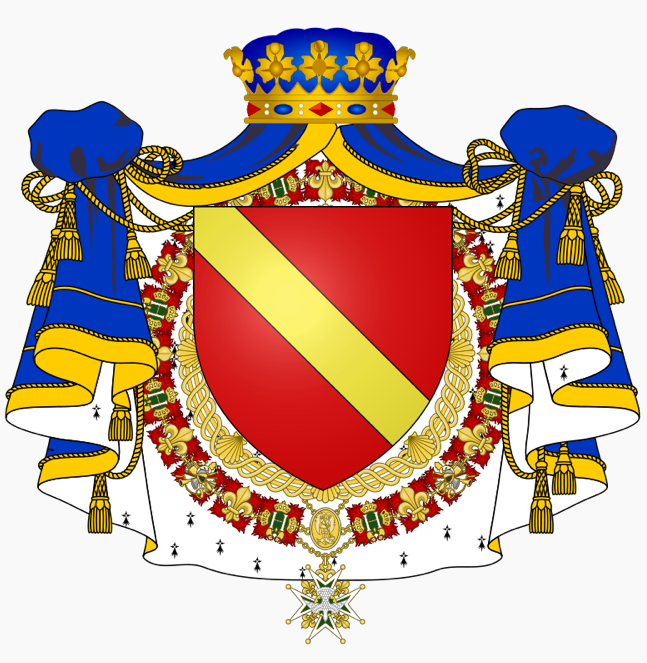


Origins and geographical roots
The Noailles clan traces its name to a locality in the commune of Ayen, situated between Brive and Turenne in the Limousin. While the family claims a very old lineage, it first appears repeatedly in historical records from the later Middle Ages and attained wider public notice in the 16th century. Its territorial identity—tied to castle and seigneury—helped shape the family’s social and political role in the provinces and later in Paris.
Notable members and services
During the 16th century the family produced figures who served the crown in high office. Antoine de Noailles (1504–1562) became admiral of France and represented the French king abroad as ambassador to England in the mid-1500s, a sensitive diplomatic assignment in an era of shifting alliances. His son Henri (1554–1623) took up military commands during the Wars of Religion and was elevated to the title Count of Ayen by King Henry IV in 1593, reflecting the family’s growing prestige.
- Antoine de Noailles — naval commander and ambassador active in the 1550s.
- Henri de Noailles — military leader and Count of Ayen by royal grant.
- Anne de Noailles — created Duke of Noailles when the peerage was raised in 1663.
Titles, succession and courtesy dignities
The Noailles family accumulated several noble designations over time. Alongside the dukedom created in 1663, other forms such as Count of Ayen and the related title Duke of Ayen appear in the family’s titulature. Customarily, the heir to the main dukedom bore the courtesy title Prince of Poix, a practice common among great noble houses that used subsidiary titles to distinguish generations and heirs.
Residences, patronage and public presence
As an established high noble family, the Noailles maintained urban and provincial residences. In Paris they owned the Hôtel de Noailles, a grand townhouse that testified to their status at court and in society. Beyond real estate, family members engaged in patronage, military command, diplomacy and court offices, giving them a sustained public presence in royal affairs and regional administration.
Historical role and legacy
Over several centuries the House of Noailles exemplified the path of French aristocratic families: local landed origins, service to the crown in war and diplomacy, accumulation of honors and integration into court life. Like many great noble houses, the Noailles saw their fortunes and roles evolve with political change; their name survives as a marker of historical prominence in studies of France’s nobility. For further reading on the family’s sites and regional connections see local histories around Brive and Turenne, and sources on royal patronage and peerage law such as material linked by Henry IV period studies and archives relating to Parisian townhouses including the Hôtel de Noailles.
Questions and answers
Q: Who was the first person to receive the title of Duke of Noailles?
A: Anne de Noailles, Count of Ayen was the first person to receive the title of Duke of Noailles.
Q: What is Noailles?
A: Noailles is the name of a great French family derived from the castle of Noailles in the territory of Ayen, between Brive and Turenne in the Limousin.
Q: When did the Noailles family become famous?
A: The Noailles family became famous in the 16th century when Antoine de Noailles became admiral of France and was ambassador in England during three important years, 1553-1556.
Q: What title was given to Henri, son of Antoine?
A: Henri, son of Antoine, was made Count of Ayen by Henry IV of France in 1593.
Q: What was the title typically given to the heir to the Noailles dukedom?
A: The heir to the Noailles dukedom was typically called the Prince of Poix.
Q: Did the Noailles family own a house in Paris?
A: Yes, the Noailles family owned a lavish townhouse in Paris called the Hôtel de Noailles.
Q: When is the Noailles family claimed to date back to?
A: The Noailles family is claimed to date back to the 11th century.
Related articles
Author
AlegsaOnline.com Duke of Noailles Leandro Alegsa
URL: https://en.alegsaonline.com/art/29162