
Duchy of Saxe-Coburg and Gotha
A 19th–20th century German dual duchy ruled by the Ernestine branch of the House of Wettin, notable for dynastic ties across Europe and dissolution after World War I.
Overview
The Duchy of Saxe-Coburg and Gotha was a personal union of two small German duchies that existed from 1826 until the end of the German monarchies in 1918. Governed by the Ernestine line of the House of Wettin, the arrangement joined the duchies of Coburg and Gotha under one sovereign while each retained its separate institutions and identities. The name reflects the German custom of identifying smaller states by their historical Saxon origins; in German the duchy is known as Sachsen-Coburg und Gotha.
Image gallery
10 Images


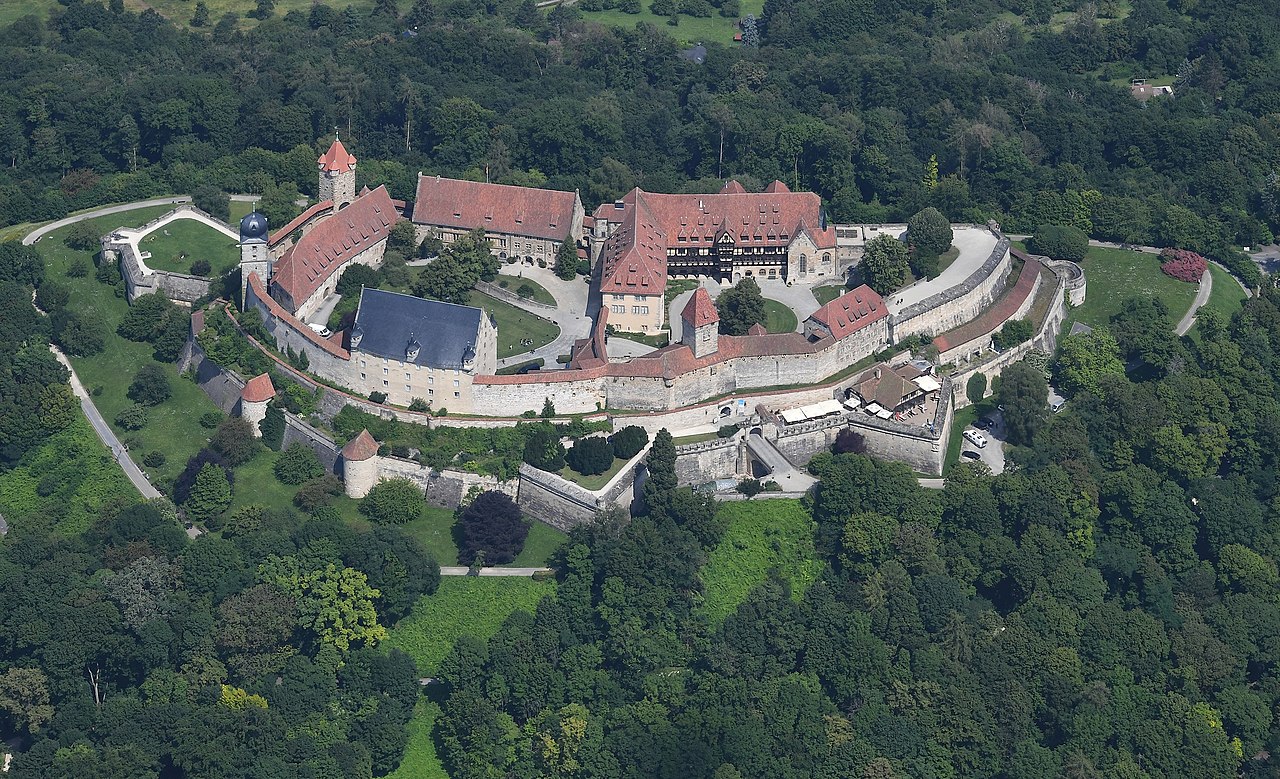


Formation and dynastic background
The duchy was created during the reorganisation of the Ernestine duchies in the early 19th century after several lines became extinct or exchanged territories. A redistribution of lands among the Ernestine princes led to the union of Coburg and Gotha under one duke. This rearrangement was part of a long-running pattern in Germany in which partitions, inheritances and treaties reshaped the political map of Thuringia and neighboring regions.
Rulers and political structure
Like other personal unions, Saxe-Coburg and Gotha had a single duke who simultaneously held the separate crowns of Coburg and Gotha. The duchy's rulers belonged to the Ernestine branch of the House of Wettin. The first duke under the new arrangement adopted the combined title in 1826; he and his successors retained traditional princely prerogatives but operated within the changing constitutional framework of 19th-century Germany, including membership in the German Confederation and later the North German Confederation and German Empire.
Territory, economy and culture
The two principal territories were geographically distinct: Gotha lay among the Thuringian states, while Coburg sat to the south, closer to Bavarian lands. Both duchies were relatively small but culturally active, with courtly patronage of the arts, local industry, and modernising reforms typical of many compact German states. Gotha was known for intellectual and publishing activity, whereas Coburg had strategic trade links and an active political life at the ducal court.
European connections and dynastic importance
The ruling family became one of Europe’s most connected dynasties by marriage and appointment. Most famously, Prince Albert of Saxe-Coburg and Gotha married Queen Victoria of the United Kingdom, and their descendants used the family name until it was changed in Britain during World War I. Other family members became monarchs or consorts in states such as Belgium, Portugal and Bulgaria, making the house an influential actor in 19th-century European diplomacy and dynastic politics. Prominent individuals from the house are often treated in separate biographies; see, for example, entries on Ernst I and Prince Albert.
Decline and legacy
The end of World War I brought revolutionary change across Germany. In 1918 the duke abdicated along with other German monarchs, and the two duchies ceased to exist as sovereign entities. In the immediate postwar settlement the territories followed different paths: Coburg eventually joined the Free State of Bavaria, while Gotha became part of the newly formed Free State of Thuringia. The dynastic legacy survives in architecture, civic institutions and the wide network of royal descendants, and the name Saxe-Coburg and Gotha remains important for studies of European royal genealogy and 19th-century state formation.
- Established: 1826 (reorganisation of Ernestine duchies)
- End of monarchy: 1918 (abdications following World War I)
- Legacy: dynastic connections across Europe; regional integration into Weimar-era states
Questions and answers
Q: What is the Duchy of Saxe-Coburg and Gotha?
A: The Duchy of Saxe-Coburg and Gotha was a dual monarchy in Germany, meaning one ruler ruled over two countries - the duchies of Coburg and Gotha.
Q: What does "Saxe" mean?
A: "Saxe" means of Saxony, because there were many small countries but all were ruled by members of the royal house of Saxony. Usually this refers to the rulers of the Kingdom of Saxony.
Q: Who was Ernst I Duke of Saxe-Coburg and Gotha?
A: Ernst I Duke of Saxe-Coburg and Gotha was Ernst III from the House of Wettin (the Dukes of Saxe-Gotha-Altenburg). He became Duke on 12 November 1826, with titles including Duke Jülich (Juelich), Cleves and Berg, Engern and Westphalia, Prince Lichtenberg, Landgrave Thuringia, Markgrave Meißen (Meissen), Count Hennerberg, Count Mark Ravensburg, Lord Ravenstein Tonna.
Q: Who did his son Albert marry?
A: His son Albert married his cousin Queen Victoria from the United Kingdom.
Q: How did the name change to Windsor in World War I?
A: The name changed to Windsor during World War I due to hatred for anything German during that time period.
Q: Why did Saalfeld become part of another country?
A: Saalfeld became part of another country because it's previous ruler had no male children left to inherit it so it went to another member family who divided their lands between them - thus Saalfeld becoming part of Saxe-Meiningen which also took Hildburghausen when its former ruler became Duke or Saxe-Altenburg.
Related articles
Author
AlegsaOnline.com Duchy of Saxe-Coburg and Gotha Leandro Alegsa
URL: https://en.alegsaonline.com/art/29115
Sources
- gazettes-online.co.uk : "The Titles Deprivation Act, 1917"
- memory.loc.gov : memory.loc.gov/ll/llcc/005/0400/04240422.gif