
Duchy of Parma
Small Italian duchy centred on Parma (est. 1545). Created for the Farnese family by Pope Paul III, later inherited by a Bourbon line; part of the Holy Roman Empire until 1806 and abolished during Italian unification.
Overview
The Duchy of Parma was a small, independent state in northern Italy centered on the city of Parma. It was established in the mid‑16th century as a papal fief and became known for its distinctive regional administration, court culture and artistic patronage. The foundation of the duchy reflected the close ties between the papacy and powerful Italian families: it was created by Pope Paul III and granted to his son Pier Luigi Farnese, who became the first duke. Politically the duchy occupied a middle position between larger powers and maintained formal ties to the Holy Roman Empire until the empire's dissolution in 1806.
Image gallery
5 Images


Territory, government and economy
Territorially the duchy comprised the city of Parma and surrounding countryside south of the Po River, carved out of previous Milanese and papal possessions. Its government was a hereditary duchy: authority combined the court and local administrative structures under the ruling family. Economically the region relied on agriculture, artisanal manufacture and trade along regional routes. Parma and its environs became noted for foodstuffs, textiles and for supporting workshops and courts that commissioned architecture and painting.
Historical development
The territories that formed the duchy had been contested during the Italian wars; papal forces took control in the early 16th century. In 1545 the papacy elevated these lands into a hereditary duchy to secure a durable power base for the Farnese dynasty. The Farnese dukes ruled for generations, consolidating their authority through marriages, military action and patronage of the arts. In the 18th century the Farnese line ended and the duchy passed by inheritance to a branch of the House of Bourbon, after which its rulers had connections with other Bourbon domains in Spain and southern Italy. The duchy experienced occupation and reorganization during the Napoleonic era; the wider collapse of old imperial structures in 1806 altered its formal status within central Europe. In the course of the 19th‑century Risorgimento, the duchy ceased to exist as an independent polity and was incorporated into the emerging Kingdom of Italy after 1859, when the Italian states were reorganized during unification (see state of Italy).
Culture, institutions and notable features
Although modest in size, the duchy was a vibrant cultural center. The ducal court sponsored architecture, painting and music; notable institutions and buildings in Parma reflect this patronage. The Farnese family amassed collections and commissioned public works that shaped the city's identity. The duchy's administrative and judicial bodies reflected contemporary Italian princely government, combining local elites with ducal officials. Relations with neighbouring states, including the Grand Duchy of Tuscany, were defined by diplomacy, dynastic ties and occasional rivalry.
Legacy and notable facts
- Founded as a papal fief in 1545 for Pier Luigi Farnese, linking the papacy with dynastic rule.
- Long dominated by the Farnese family; later inherited by a Bourbon line in the 18th century.
- Remained a constituent state of the Holy Roman imperial framework until the empire's end in 1806.
- Its institutions, art commissions and architectural landmarks continue to shape Parma's cultural heritage.
For further general reading on the duchy's history and institutions, consult regional historical surveys and museum guides. The Duchy of Parma illustrates how relatively small Italian states combined dynastic rule, artistic patronage and regional administration to exert influence disproportionate to their size.
Parma · Pope Paul III · Pier Luigi Farnese · Italian unification · Holy Roman Empire · Grand Duchy of Tuscany

Flag
· 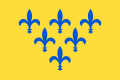
Flag of the Duchy of Parma (1545-1731)
· 
Flag of the Duchy of Parma (1815-1847)
· 
Flag of the Duchy of Parma (1848-1849)
· 
Flag of the Duchy of Parma (1850-1851)
· 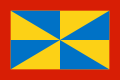
Flag of the Duchy of Parma (1851-1859)
See also
- List of the rulers of Parma
Questions and answers
Q: When was the Duchy of Parma created and what was its origin?
A: The Duchy of Parma was created in 1545 from the territory south of the Po River that was previously part of the Duchy of Milan and which had been conquered by the State of the Church in 1512.
Q: Who was given the Duchy of Parma as a fief and when?
A: The Duchy of Parma was given as a fief to Pope Paul III's illegitimate son, Pier Luigi Farnese.
Q: Who ruled the Duchy of Parma originally and who eventually claimed the rule?
A: The Duchy of Parma was originally ruled by the Farnese family before eventually falling to the House of Bourbon by inheritance.
Q: When was the Duchy abolished and why?
A: The Duchy of Parma was abolished following the creation of the state of Italy in 1859.
Q: What was the status of the Duchy of Parma in the Holy Roman Empire?
A: The Duchy of Parma was a state of the Holy Roman Empire till 1806.
Q: Did the Duchy of Parma have any association with the Grand Duchy of Tuscany?
A: Yes, the Duchy of Parma had various links with its neighbour, the Grand Duchy of Tuscany.
Q: What was the main city in the Duchy of Parma?
A: The main city in the Duchy of Parma was Parma.
Related articles
Author
AlegsaOnline.com Duchy of Parma Leandro Alegsa
URL: https://en.alegsaonline.com/art/29113