
Dubliners: James Joyce’s collection of short stories
Overview of Dubliners, James Joyce’s 1914 collection of 15 short stories, its themes, structure, publication history, and lasting influence on modern fiction.
Dubliners is a linked collection of fifteen short stories by the Irish author James Joyce. First published in 1914, the book presents a realistic, often unsentimental portrait of everyday life in and around Dublin. It was Joyce's first major short fiction collection and is commonly described as his first book to reach a wide readership. The stories move from the viewpoint of children and adolescents to the experiences of adults, culminating in the celebrated final tale, "The Dead."
Image gallery
1 Image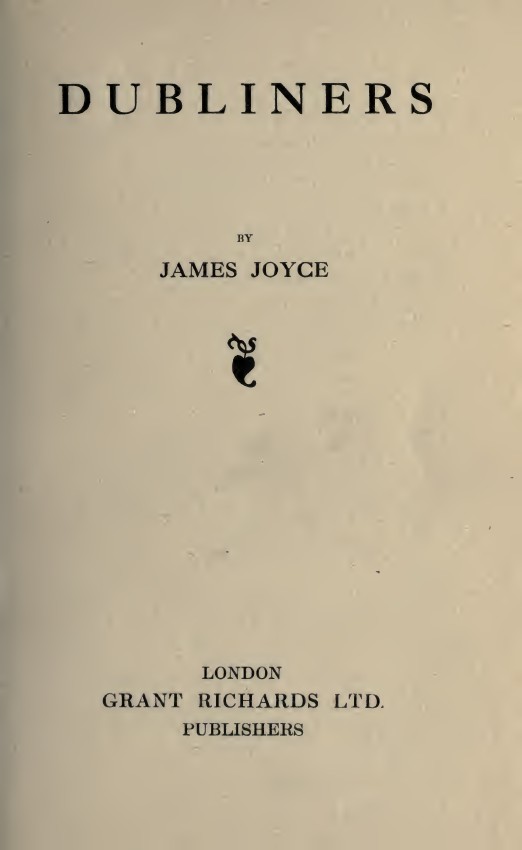
Themes and style
The collection is noted for its concern with social paralysis, religious and moral pressure, economic constraints, and the disappointments of private life. Joyce employs clear, controlled prose, close observation, and an economy of detail that trades melodrama for realism. Many characters experience a sudden, clarifying moment—an "epiphany"—that reveals their situation and limits. The tone across the book tends toward restraint and ironic sympathy, allowing small incidents to illuminate broader patterns of feeling and social life.
Publication and background
Joyce composed the stories over several years during the first decade of the twentieth century. He faced difficulty placing some pieces because publishers objected to frank depictions of clergy, sexuality, and awkward domestic scenes. After revisions and the passage of time, the collection appeared in print and quickly attracted critical attention for its technical control and moral seriousness. Joyce, an Irish-born writer and expatriate, would go on to greater experimental work, but Dubliners established his reputation as a major literary talent.
Structure and the stories
The arrangement of the fifteen stories is deliberate: early pieces treat childhood and youthful experience, middle stories describe private and public ambitions, and later tales examine adult relationships and public life. The stories, in their traditional order, are:
- The Sisters
- An Encounter
- Araby
- Eveline
- After the Race
- Two Gallants
- The Boarding House
- A Little Cloud
- Counterparts
- Clay
- A Painful Case
- Ivy Day in the Committee Room
- A Mother
- Grace
- The Dead
Among these, "Araby" is frequently anthologized for its tight focalization and episode of disappointed desire, while "The Dead" is celebrated for its emotional range and concluding meditation on life, memory, and mortality. Teachers often assign these stories to illustrate narrative compression, point of view, and psychological realism.
Reception and legacy
At the time of publication the book gained mixed responses, but within a few decades it was recognized as a classic of modern short fiction. Critics and readers praise its formal restraint, its unified vision of city life, and its influence on the development of 20th-century narrative technique. Joyce's use of ordinary episodes to produce moments of insight helped to expand what short fiction could accomplish.
Today Dublin and Ireland continue to be central to scholarly discussion of the book, and writers, students, and general readers return to the collection for its clarity of vision and moral subtlety. For further reading and editions of the text, reference resources and scholarly introductions provide context and commentary useful to both newcomers and specialists.
Questions and answers
Q: Who is James Joyce?
A: James Joyce is an Irish writer who wrote the collection of 15 short stories called Dubliners.
Q: When was Dubliners first published?
A: Dubliners was first published in 1914.
Q: How many short stories are in Dubliners?
A: There are 15 short stories in Dubliners.
Q: What is the purpose of Dubliners?
A: The purpose of Dubliners is to describe the life of Irish people living in and around Dublin in the early 20th century.
Q: Who are the main characters in Dubliners?
A: The main characters in Dubliners are the Irish people living in and around Dublin in the early years of the 20th century.
Q: How old are the storytellers in Dubliners?
A: The storytellers in Dubliners start off as children, and as the stories continue, they deal with the lives of older people.
Q: Which is the longest and most famous story in Dubliners?
A: The longest and most famous story in Dubliners is "The Dead."
Related articles
Author
AlegsaOnline.com Dubliners: James Joyce’s collection of short stories Leandro Alegsa
URL: https://en.alegsaonline.com/art/29094