
Dsungaripterus: the upturned-beaked pterosaur of the Junggar Basin
Dsungaripterus, a dsungaripterid pterosaur from China, had an upturned, toothless front beak, robust rear crushing teeth and a distinctive bony crest—adaptations for feeding on hard-shelled prey.
Overview
Dsungaripterus is a genus of pterosaur best known from fossil remains found in the Junggar Basin region of northwestern China. Classified within the family Dsungaripteridae, it lived during the Early Cretaceous and is recognized by a distinctive long, narrow skull and an unusually upcurved snout. As a flying reptile, it belonged to the broader group of Mesozoic pterosaurs rather than to dinosaurs or birds; for more on pterosaurs generally see pterosaur.
Image gallery
10 Images


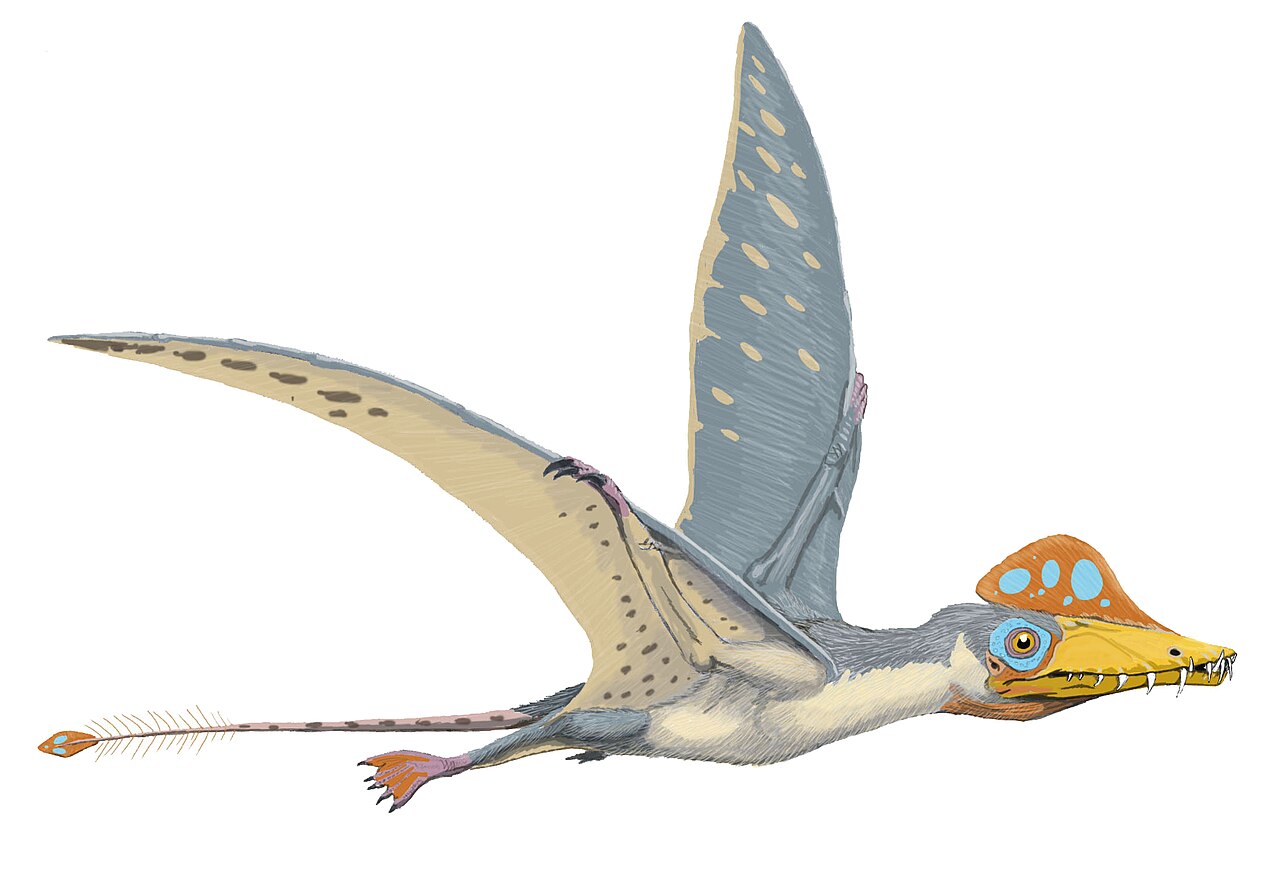

Distinctive anatomy
The head and neck of Dsungaripterus together could measure close to a metre in some specimens. Its jaws were elongated and curved upward, producing a ‘tweezer‑like’ profile. The anterior portion of the beak lacked teeth and was relatively narrow and pointed, while farther back the jaws bore robust, knobbed teeth adapted for crushing. A low bony crest ran along the top of the snout, forming a noticeable ridge that is one of the genus’s most striking features.
Feeding adaptations and diet
The combination of an edentulous (toothless) tip and stout posterior teeth suggests a specialized feeding style. The toothless front may have been used to probe, pick or pry prey items such as shellfish, crustaceans, worms or other invertebrates from rock crevices, tidal flats or soft sediment. The rear teeth, set on broad tooth plates, were well suited to crush hard shells. This inferred ecology is supported by jaw and tooth morphology and comparisons with modern animals that feed on similar resources; related discussions of shell‑crushing feeding strategies appear at diet and feeding.
Possible functions of the crest
The low, elongate rostral crest of Dsungaripterus has attracted several interpretations. It may have acted as an aerodynamic aid or rudder during flight or while maneuvering close to the surface, helping to stabilize the head and snout. Alternatively, the crest could have served a display role in social or reproductive contexts, as a secondary sexual characteristic. These hypotheses are explored in broader literature on pterosaur crests and display structures; see crest function and sexual display resources for examples.
Fossils, discovery and historical context
Specimens of Dsungaripterus were described from sediments in Xinjiang’s Junggar Basin and nearby formations. The genus has been important in defining the family Dsungaripteridae, a group of pterosaurs with similar tooth and skull adaptations. Fossil finds have provided information not only about skull anatomy but also about life habits and niche partitioning among contemporaneous pterosaurs in the Early Cretaceous landscapes of East Asia.
Key features and notable facts
- Upturned, toothless anterior beak: adapted for probing or picking.
- Robust posterior teeth: used for crushing hard‑shelled prey.
- Rostral crest: possible aerodynamic or display function.
- Geographic association: fossils primarily from the Junggar Basin region of China.
Dsungaripterus represents a clear example of ecological specialization among pterosaurs: its skull and teeth show adaptations distinct from fish‑catching or insectivorous species, pointing instead to a shore‑line or nearshore lifestyle focused on hard prey items. Ongoing fossil discoveries and comparative studies continue to refine our understanding of how this genus lived and interacted with its environment.
Questions and answers
Q: What is Dsungaripterus?
A: Dsungaripterus is a type of pterosaur with a wingspan of 10 feet and an unusual bony crest on its snout.
Q: What was the purpose of the bony crest on Dsungaripterus's snout?
A: The purpose of the bony crest on Dsungaripterus's snout is not entirely clear, but it may have acted as a rudder when flying or may have been a secondary sex characteristic.
Q: How long was Dsungaripterus's head and neck together?
A: Dsungaripterus's head and neck together were almost a metre long.
Q: What is notable about Dsungaripterus's jaws?
A: Dsungaripterus's jaws are long, narrow, upcurved, and have a pointed tip, making the animal look like a pair of flying tweezers.
Q: Did Dsungaripterus have teeth in the front part of its jaws?
A: No, Dsungaripterus did not have teeth in the front part of its jaws.
Q: What were the front parts of Dsungaripterus's jaws used for?
A: The front part of Dsungaripterus's jaws were probably used to remove shellfish and worms from cracks in rocks or from sandy, muddy beaches.
Q: What kind of teeth did Dsungaripterus have in the back of its jaw?
A: Dsungaripterus had knobbly flat teeth more to the back of the jaw that were well suited for crushing shellfish.
Related articles
Author
AlegsaOnline.com Dsungaripterus: the upturned-beaked pterosaur of the Junggar Basin Leandro Alegsa
URL: https://en.alegsaonline.com/art/29064