
Drosophilidae: the fruit fly family and its scientific importance
Drosophilidae is a cosmopolitan family of small flies with over 4,000 species. Best known for Drosophila melanogaster, they are foundational in genetics, development and ageing research and distinct from Tephritidae.
Overview
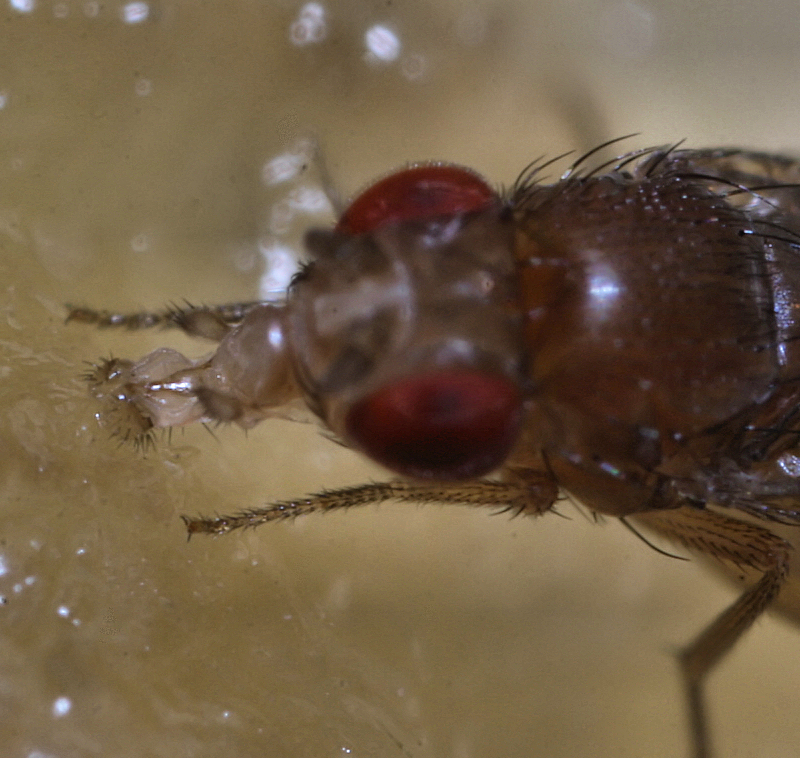
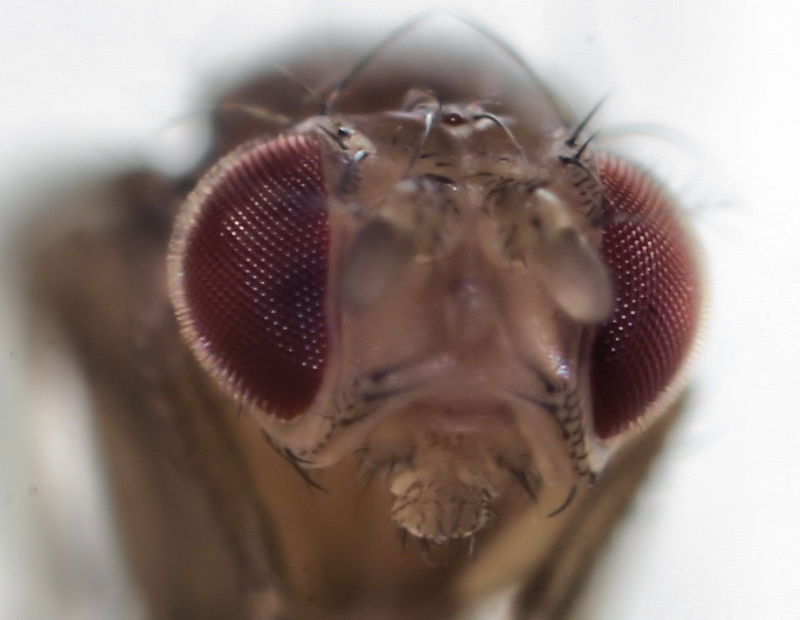
The Drosophilidae are a large, widespread family of small flies commonly called fruit flies. Members of this family occur across the globe and are often associated with decaying plant material, fermenting fruit and other moist, nutrient-rich microhabitats. The family contains more than 4,000 described species arranged in roughly 75 genera, and it is broadly considered cosmopolitan. When referring to the family in taxonomic lists or summaries, authors commonly use the name Drosophilidae and place it within the order Diptera (true flies).
Image gallery
5 Images


Taxonomy and diversity
Drosophilidae is conventionally divided into two principal subfamilies: the Drosophilinae and the Steganinae. Within these groups are a variety of genera, including the large and familiar genus Drosophila. Checklists and catalogues report the family-level totals and recent revisions; many resources summarize the species count as over 4,000 species. Taxonomic work continues to refine relationships among genera and to describe new species, especially from tropical regions.
Appearance and life cycle
Typical drosophilids are small flies often measuring a few millimetres in length with rounded bodies, red or dark eyes, and patterned wings in some species. Their life cycle follows the familiar dipteran stages: egg, larva (maggot), pupa and adult. Many laboratory and field studies note that adult drosophilids are largely composed of post-mitotic tissues: after metamorphosis most adult cells stop dividing, a fact often described by the term post-mitotic. Lifespan is short relative to many insects and is strongly influenced by temperature—colder conditions typically extend longevity while warmer conditions shorten it.
Ecology, behaviour and distinctions
In nature, drosophilids exploit fermenting fruit, sap runs, fungi and other decomposing organic matter. Their behaviour includes niche specializations such as host preference, courtship displays and substrate choice for oviposition. It is important to distinguish Drosophilidae from the unrelated family Tephritidae, which are also sometimes called "fruit flies" but differ in ecology and often in economic importance; many tephritids attack healthy fruit and are agricultural pests, whereas many drosophilids feed on already-fermenting material.
Role in research and notable studies
The best known member of the family is Drosophila melanogaster, a model organism used extensively in studies of genetics, development, physiology and behaviour. Work with Drosophila in the laboratory has produced foundational discoveries about heredity, gene function and developmental pathways. Classic ecological and evolutionary field work was carried out by Theodosius Dobzhansky and colleagues on Drosophila pseudoobscura, with Dobzhansky himself discussed in historical accounts and collected writings (Dobzhansky). These studies helped link laboratory genetics to natural populations.
Lifespan, ageing and experimental manipulation
Because of their short generations and well-developed genetic tools, drosophilids are widely used in ageing research. Researchers have shown that environmental factors such as temperature and diet affect life history traits, and a number of genes can be experimentally modified to alter lifespan and patterns of ageing. These experiments exploit the ease of breeding and genetic manipulation in laboratory populations to explore conserved mechanisms of physiology and longevity.
Uses, examples and further resources
- Model organism: D. melanogaster for genetics and development studies.
- Evolutionary studies: field work on D. pseudoobscura and related species.
- Comparative biology: distinguishing Drosophilidae from pest families like Tephritidae.
- Reference materials: taxonomic lists and species catalogues often cited under species lists and family summaries.
For readers seeking more detail, general overviews and taxonomic treatments can be found via entomological resources and specialist monographs; many online and print sources provide keys, species lists and ecological summaries (distribution, fly biology). Additional background on experimental methods and historical studies is available in collected papers and reviews (Dobzhansky, pseudoobscura work), and databases compiling genes, life-history data and ageing experiments often cross-reference physiological and behavioural studies (genetics, physiology, behaviour).
Questions and answers
Q: What is the Drosophilidae family?
A: The Drosophilidae is a huge, widespread family of flies that includes the famous fruit flies. It has over 4000 species in 75 genera.
Q: What species is best known from this family?
A: The best known species of the Drosophilidae is Drosophila melanogaster.
Q: How are these insects studied?
A: These species and their relatives are often used for studies on genetics, development, physiology, and behaviour. They are mostly studied in laboratories rather than in natural environments.
Q: Who conducted research on Drosophila pseudoobscura in a natural environment?
A: The best-known studies of Drosophila in a natural environment was done by Dobzhansky and colleagues from the early 1930s to 1970. Reprints and discussions are in Lewontin et al 2003, and theoretical discussions in Dobzhansky, 1970.
Q: How long do fruit fly cells usually divide after hatching?
A: Fruit fly cells usually do not divide after the imago (adult) is hatched; they are mostly composed of post-mitotic cells.
Q: What affects the life history of these animals?
A: Temperature influences the life history of fruit flies; they live longer in colder weather. Several genes can be manipulated to extend their lifespan as well.
Q: How many subfamilies does the Drosophilidae have?
A: The Drosophilidae has two subfamilies -the Drosophilinae and Steganinae-.
Related articles
Author
AlegsaOnline.com Drosophilidae: the fruit fly family and its scientific importance Leandro Alegsa
URL: https://en.alegsaonline.com/art/29000