
Drosophila subobscura — a Palearctic fruit fly used in evolutionary studies
A species of fruit fly in the family Drosophilidae, originally Mediterranean; now widespread in Europe and introduced to western North and South America. Important in studies of chromosomal inversion and rapid evolution.
Overview
Drosophila subobscura is a species of small fruit fly belonging to the family Drosophilidae. It is a member of a group of flies commonly used in ecology and genetics research because of its natural variation and ease of collection. Although often called a "fruit fly," it is distinct in behavior and genetics from the laboratory model Drosophila melanogaster. For general reference on fly families see Drosophilidae and related groups.
Image gallery
7 Images


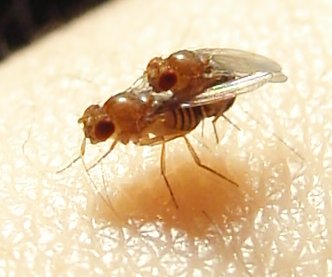
Taxonomy and distribution
The species is placed in the subgenus Sophophora and was first recorded from the Mediterranean region. Over the 20th century it expanded its range across most of Europe and into parts of the Near East. In recent decades human activity has introduced populations to other continents: established populations occur on the west coast of Canada (west coast of Canada), the western United States (United States), and in parts of Chile (Chile).
Biology and ecology
D. subobscura breeds in fermenting plant matter and fruit, where larvae develop in moist, decaying substrates. Adults are typically active in temperate habitats, from coastal lowlands to upland sites within its native range. The species shows seasonal and geographic variation in abundance and is sensitive to temperature and habitat changes, which makes it useful for ecological monitoring.
Research significance
This species is notable in evolutionary biology for its rich chromosomal inversion polymorphisms and clear latitude-linked patterns (clines) in genetic variation. Because introduced populations have been tracked over time, D. subobscura provides practical examples of rapid evolutionary change following range expansion. Researchers sample natural populations to study adaptation, gene flow, and the genetic effects of climate change.
Distinguishing features and identification
Adult D. subobscura are small, brownish flies with wing venation and body characters used by entomologists to separate them from related species. Identification in the field often requires close examination by a specialist or laboratory confirmation. Cytogenetic analysis of salivary-gland chromosomes is a common method in research contexts to document inversion types.
Key points and uses
- Model for studies of natural selection, chromosomal inversions, and clinal variation.
- Originally Mediterranean; now widespread in Europe and introduced to North and South America.
- Feeds and breeds in fermenting fruit and similar substrates in temperate habitats.
- Valuable for monitoring ecological responses to environmental change.
Questions and answers
Q: What is Drosophila subobscura?
A: Drosophila subobscura is a kind of fruit fly in the Drosophilidae family.
Q: Where was Drosophila subobscura first discovered?
A: Drosophila subobscura was initially found around the Mediterranean.
Q: To which subgenus does Drosophila subobscura belong?
A: Drosophila subobscura belongs to the Sophophora subgenus.
Q: Has Drosophila subobscura spread beyond its original habitat?
A: Yes, it has. Drosophila subobscura has spread to most parts of Europe and the Near East.
Q: Where else has Drosophila subobscura been introduced?
A: Drosophila subobscura has been introduced to the west coasts of Canada, the United States, and Chile.
Q: What family does Drosophila subobscura belong to?
A: Drosophila subobscura belongs to the Drosophilidae family.
Q: Is Drosophila subobscura a common species?
A: It is not clear if Drosophila subobscura is a common species or not. The text does not provide us with enough information to answer this question.
Related articles
Author
AlegsaOnline.com Drosophila subobscura — a Palearctic fruit fly used in evolutionary studies Leandro Alegsa
URL: https://en.alegsaonline.com/art/28998
Sources
- doi.org : 10.1139/g89-042
- doi.org : 10.1111/j.1420-9101.2004.00721.x
- pubmed.ncbi.nlm.nih.gov : 15271084
- jstor.org : 3449375
- doi.org : 10.1111/j.1558-5646.2008.00423.x
- pubmed.ncbi.nlm.nih.gov : 18489721
- ncbi.nlm.nih.gov : "Zivanovic G, Mestres F. Changes in chromosomal polymorphism and global warming: The case of Drosophila subobscura from Apatin (Serbia) Genet Mol Biol. 2011;34:489–95"
- doi.org : 10.1590/S1415-47572011000300020
- pubmed.ncbi.nlm.nih.gov : 21931524
- ncbi.nlm.nih.gov : "Dolgova O, Rego C, Calabria G, Balanyà J, Pascual M, Rezende EL, et al. Genetic constraints for thermal coadaptation in Drosophila subobscura. BMC Evol Biol. 2010;10:363"
- doi.org : 10.1186/1471-2148-10-363
- pubmed.ncbi.nlm.nih.gov : 21108788
- books.google.com : Dobzhansky T, Powell JR: Drosophila pseudoobscura and its American relatives, D. persimilis and D. miranda. Hand Book of Genetics. Edited by: King RC. 1975, New York: Plenum, 3: 537-587