
Dromaeosaurus
Dromaeosaurus, a Late Cretaceous North American dromaeosaurid, is known for a robust skull, recurved serrated teeth and a stockier build than some relatives; fossils come from western US and Alberta, Canada.
Dromaeosaurus is a genus of small to medium-sized genus within the dromaeosaurid family of dinosaurs. It lived in the Upper Cretaceous and its fossils have been recovered from sediments in the western United States and in Alberta, Canada. Known mainly from relatively complete skulls and some postcranial elements, Dromaeosaurus is notable for a proportionally deep, robust skull and blade-like, serrated teeth adapted for a predatory diet.
Image gallery
10 Images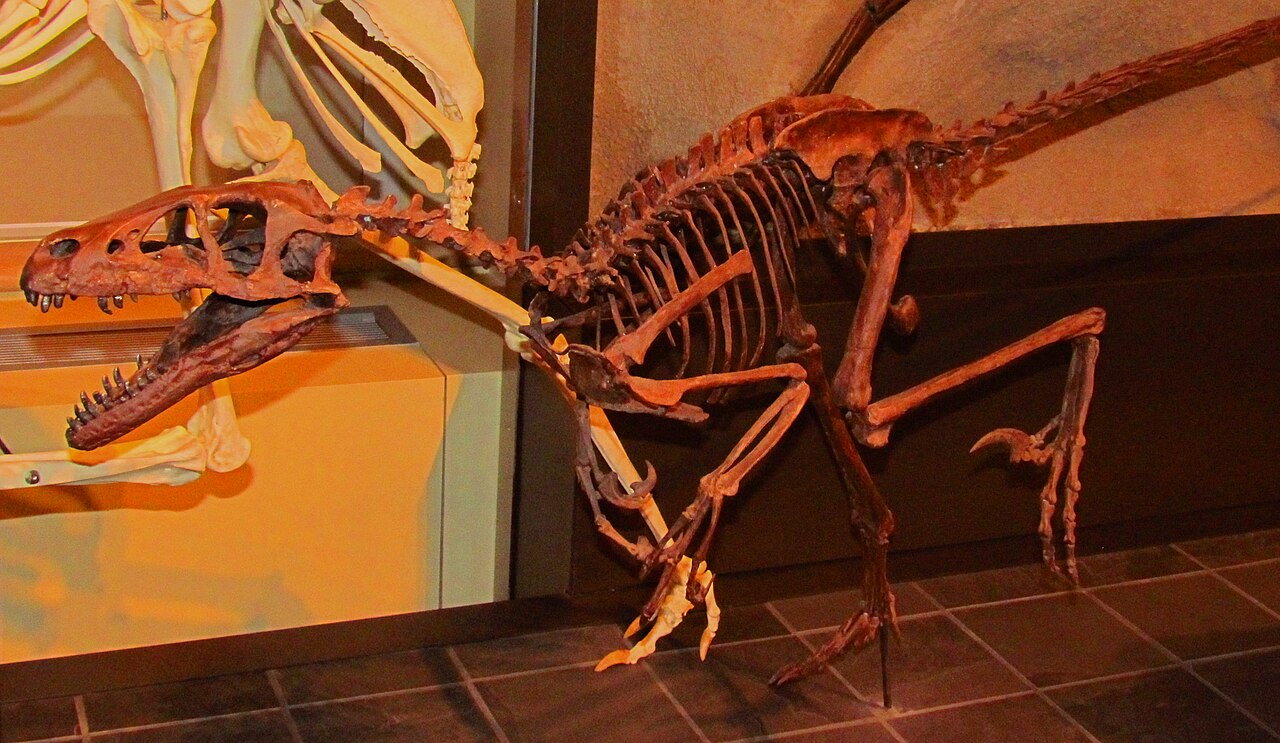


Physical characteristics
Dromaeosaurus combined typical dromaeosaurid features with a heavier build. The skull is deeper and more powerfully constructed than in some gracile relatives; the dentition is laterally compressed and finely serrated, suitable for slicing flesh. As with other members of its family it had a hypertrophied second toe bearing a recurved ungual and a long, stiffened tail to aid balance and maneuverability. Feathers are inferred by phylogenetic bracketing from better-known relatives.
Size and appearance
This animal was compact and muscular rather than lightly built. Reconstructions emphasize a short, powerful neck and jaws capable of delivering strong bites. Compared with genera like Velociraptor, Dromaeosaurus appears stockier and may have relied more on bite force than slashing alone when subduing prey.
Discovery and name
First described in the early 20th century, the genus name derives from Greek roots meaning a running lizard. The type species is described from material collected in North American Late Cretaceous strata; additional finds have refined understanding of its anatomy and variation within the genus.
Fossil record and distribution
Fossils attributed to Dromaeosaurus come from terrestrial, often floodplain or coastal plain deposits. The material is relatively rare compared with some contemporaries, but well-preserved cranial remains provide key anatomical information. Ongoing study of specimens helps clarify its geographic and stratigraphic range.
Behavior and ecology
As a carnivore it likely hunted small to medium-sized vertebrates and may have scavenged opportunistically. Its robust skull suggests a feeding style that included grappling and bone contact, differing from more gracile, lightly built dromaeosaurids. The stiff tail and grasping feet indicate an active, agile predator well adapted to a forested or mixed-environment landscape.
Classification and significance
Dromaeosaurus is important for illustrating ecological diversity within Dromaeosauridae. By emphasizing cranial robustness and different feeding mechanics, it shows that members of the clade occupied a variety of niches. Its anatomy continues to inform discussions of dromaeosaurid evolution, biomechanics and paleoecology.
Questions and answers
Q: What is Dromaeosaurus?
A: Dromaeosaurus is a genus of dromaeosaurid dinosaur.
Q: When did Dromaeosaurus live?
A: Dromaeosaurus lived during the Upper Cretaceous period, around 75 million years ago.
Q: Where were the remains of Dromaeosaurus found?
A: The remains of Dromaeosaurus were found in the western United States and Alberta, Canada.
Q: What type of dinosaur was Dromaeosaurus?
A: Dromaeosaurus was a dromaeosaurid dinosaur.
Q: How long ago did Dromaeosaurus exist?
A: Dromaeosaurus existed about 75 million years ago.
Q: In which parts of the world were the remains of Dromaeosaurus found?
A: The remains of Dromaeosaurus were found in the western United States and Alberta, Canada.
Q: During which period did Dromaeosaurus live?
A: Dromaeosaurus lived during the Upper Cretaceous period.
Related articles
Author
AlegsaOnline.com Dromaeosaurus Leandro Alegsa
URL: https://en.alegsaonline.com/art/28972