
Dragonfly: Overview, Anatomy, Life Cycle, Habitat and Evolution
Dragonflies are fast, predatory insects of the order Odonata. This article covers their anatomy, life cycle, habitats, ecological role, and ancient history, with clear distinctions and notable facts.
Overview
Dragonflies are agile flying insects belonging to the order Odonata. They are widespread and diverse: there are roughly 5,300 species described worldwide. Adult dragonflies are carnivorous, catching other insects on the wing with impressive speed and maneuverability.
Image gallery
10 Images




Physical characteristics
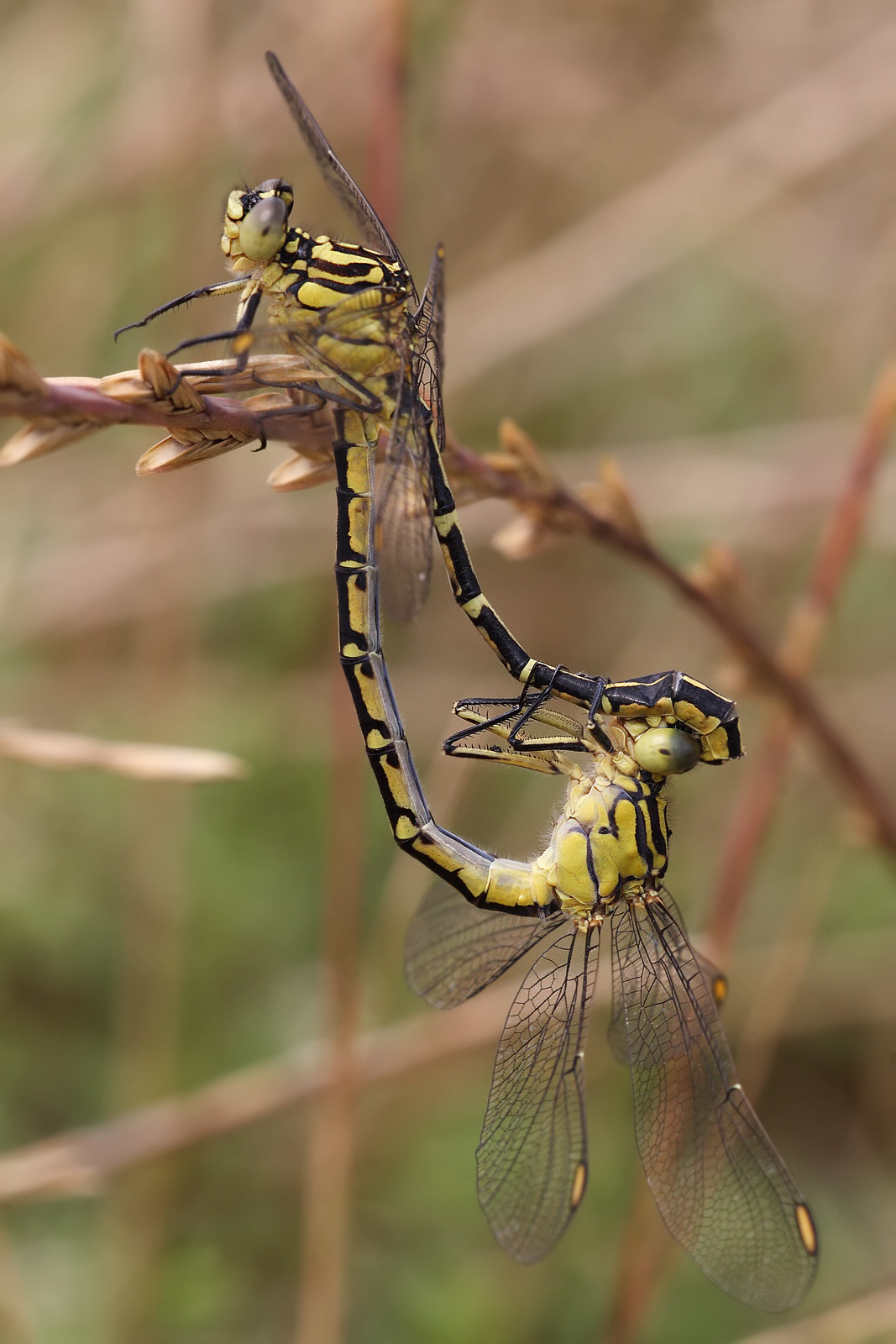
Dragonflies are recognizable by several consistent features. They have very large compound eyes that dominate the head and function as their main sense organ, giving nearly panoramic vision. Two pairs of long, usually transparent wings attach to a robust thorax and allow independent motion of each wing, enabling hovering, rapid acceleration and sudden changes of direction. The abdomen is elongated and segmented. Their legs form a basket-like arrangement that helps them seize prey in flight; as a result, many species rarely use their legs for walking and are awkward on the ground.
Life cycle and development
Dragonflies undergo incomplete metamorphosis. Females lay eggs in or near water; the eggs hatch into aquatic nymphs or larvae, commonly called nymphs. Nymphs are predatory and live beneath the water surface for months to several years depending on species, molting multiple times as they grow. At the final molt, a nymph climbs a reed or rock and emerges as a winged adult. Adults typically live a few weeks to several months, during which time they mate and disperse.
Habitat and diet
Most dragonflies are associated with freshwater habitats such as lakes, ponds, streams and wetlands. Their role as aerial predators makes them important controllers of insect populations: adults commonly eat mosquitoes, other flies, and sometimes small bees or ants that are airborne. Nymphs feed on aquatic invertebrates and even small fish or tadpoles in some species.
Evolution and fossil record
Dragonflies are an ancient lineage, with ancestors present in the late Paleozoic. Fossil relatives from the Carboniferous and Permian periods indicate that early odonates, often called griffinflies by researchers, could reach very large sizes. Specimens from those eras show wingspans reported as over 2 ft (about 61 cm) and are associated with high atmospheric oxygen in the Carboniferous and early Permian landscapes. Modern dragonflies are much smaller but retain many primitive features.
Ecological importance and distinctions
Dragonflies are indicators of healthy freshwater systems and contribute to natural pest control. They are often confused with damselflies, another group within Odonata; dragonflies typically hold their wings open and flat at rest and have stouter bodies, whereas damselflies fold their wings over the back and are generally more delicate. Beyond ecology, dragonflies feature in art and folklore across many cultures and continue to be subjects of scientific study for flight mechanics, vision and aquatic ecology.
Questions and answers
Q: What order do dragonflies belong to?
A: Dragonflies belong to the order Odonata.
Q: How many species of dragonfly are there?
A: There are about 5,300 species of dragonfly.
Q: What do adult dragonflies eat?
A: Adult dragonflies eat other flying insects.
Q: What is the main sense organ of a dragonfly?
A: The main sense organ of a dragonfly is its large compound eyes.
Q: Where can you usually find dragonflies?
A: Dragonflies are usually found around lakes, ponds, streams and wetlands.
Q: What kind of prey do their larvae feed on?
A: Their larvae, known as 'nymphs', feed on mosquitoes and other small insects such as flies, bees, ants and butterflies.
Q: How long have dragonflies been around for?
A: Dragonflies have been around for 300 million years.
Related articles
Author
AlegsaOnline.com Dragonfly: Overview, Anatomy, Life Cycle, Habitat and Evolution Leandro Alegsa
URL: https://en.alegsaonline.com/art/28848
Sources
- dnr.state.wi.us : "Dragonflies, Wisconsin's aerial acrobats"
- 2.bp.blogspot.com : Head, mandibles, and unusual labium of dragonfly nymph (viewed from below)
- youtube.com : Dragonfly Nymph Zoology
- youtube.com : Dragonfly nymph eats guppy.
- luresext.edu : Dragon fly larvae labium extended to capture prey
- doi.org : 10.1007/BF00631969
- jstor.org : "Thermoregulation and adaptation to temperature in dragonflies (Odonata: Anisoptera)"
- doi.org : 10.2307/1942392