
Douglas County, Kansas
Douglas County in northeastern Kansas is centered on Lawrence; known for its colleges, role in territorial-era conflicts, regional government services, and a mix of urban and rural communities.
Douglas County is a county in the U.S. state of Kansas. It is centered on the city of Lawrence, the county's largest city and principal cultural and economic hub. As recorded by the 2010 census, there were 110,826 people living in the county, making it one of the more populous counties in the state.
Image gallery
5 Images
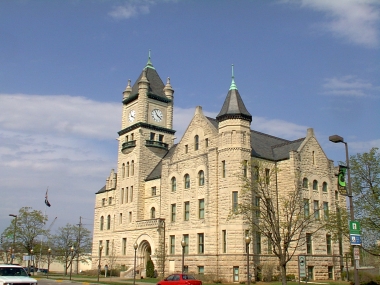


Overview and geography
Douglas County includes a mix of small-city neighborhoods, suburban areas, and agricultural land. The county's landscape is typical of northeast Kansas with rolling plains, streams, and patches of woodlands. Local parks, trails and river access support outdoor recreation for residents and visitors.
History
The county emerged during the mid-19th century territorial era and was a focal point in the period known as "Bleeding Kansas," when pro-slavery and anti-slavery forces clashed over whether Kansas would enter the Union as a free or slave state. Several towns in the county, notably Lawrence and Lecompton, are associated with those territorial controversies and with violence that continued into the Civil War years.
Education and culture
Higher education shapes much of the county's identity and economy. The city of Lawrence is home to major institutions that attract students, faculty and cultural programming, and other towns in the county host private colleges with long local ties. These institutions support museums, public lectures, arts festivals and athletic events that are regional draws.
Government, economy and services
County government provides courts, property and public records, public safety coordination, road maintenance and social services. The local economy is broadly diversified: education and related research and health care are major employers, alongside retail, professional services, light manufacturing and agriculture. Community organizations and libraries contribute to civic life.
Communities and points of interest
- Lawrence — county seat and principal city with universities, cultural venues and historic districts.
- Baldwin City, Eudora and Lecompton — smaller municipalities with distinct local histories and institutions.
- Historic sites, parks and annual events that reflect the county's territorial-era heritage and contemporary community life.
Transportation is provided by regional road networks and public routes linking to larger metropolitan areas nearby. Visitors and residents use local parks, riverfronts and preserved historic sites to explore the county's landscape and history.
Questions and answers
Q: What is Douglas County?
A: Douglas County is a county in the U.S. state of Kansas.
Q: How many people were living in Douglas County during the 2010 Census?
A: According to the 2010 Census, 110,826 people were living in Douglas County.
Q: Where does Douglas County rank in terms of population among all counties in Kansas?
A: Douglas County is the fifth-most populous county in Kansas.
Q: Which city in Douglas County has the most people?
A: Lawrence is the city in Douglas County with the most people.
Q: What was the latest census that recorded the population of Douglas County?
A: The latest census that recorded the population of Douglas County was the 2010 Census.
Q: What is the importance of the population count in any county?
A: The population count is important as it enables authorities to plan and allocate resources effectively.
Q: How does knowing the population of a county help in its development and growth?
A: Knowing the population of a county helps in its development and growth by aiding in the planning and execution of infrastructure projects, social welfare schemes, and other initiatives that aim for the betterment of residents.
Related articles
Author
AlegsaOnline.com Douglas County, Kansas Leandro Alegsa
URL: https://en.alegsaonline.com/art/28687
Sources
- quickfacts.census.gov : "State & County QuickFacts"
- naco.org : "Find a County"
- ic.galegroup.com : "Paris, Treaty of (1763)"
- books.google.com : The Origin of Certain Place Names in the United States
- livelawrencelife.com : "Discover Lecompton, KS"
- eyewitnesstohistory.com : "The Sack of Lawrence, Kansas, 1856"
- civilwaronthewesternborder.org : "Black Jack Battleground in Douglas County, Kansas"
- books.google.com : Kansas: A Cyclopedia of State History, Embracing Events, Institutions, Industries, Counties, Cities, Towns, Prominent Persons, Etc
- census.gov : "US Gazetteer files: 2010, 2000, and 1990"
- kansastravel.org : "Bowersock Mills & Power Company"
- census.gov : "Population and Housing Unit Estimates"
- census.gov : "U.S. Decennial Census"
- mapserver.lib.virginia.edu : "Historical Census Browser"
- census.gov : "Population of Counties by Decennial Census: 1900 to 1990"