
Double stopping — technique for playing two notes on string instruments
Double stopping is the technique of sounding two notes simultaneously on a string instrument. This article explains the technique, challenges, history, common uses, and related multiple-stopping practices.
Double stopping refers to sounding two pitches at once on a stringed instrument by stopping (finger‑pressing) two strings and drawing the bow or plucking across them simultaneously. While the term is most often used for bowed instruments such as the violin, it applies broadly to many string instruments. Producing a clean double stop requires precise intonation and coordinated left‑hand fingering together with careful bow control.
Image gallery
1 Image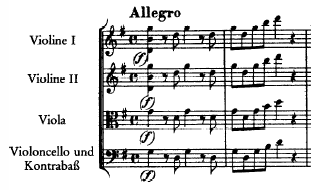
Technique and practical aspects
On instruments with a curved bridge, like the violin family, the player must angle the bow to contact two adjacent strings at once. Open strings are easier to sound together because no left‑hand fingering is required, but many musical passages require stopped double stops in which each string is pressed at a different place on the fingerboard. Challenges include maintaining exact pitch on both notes, balancing their volumes, and adapting hand shape when the required finger positions do not fit a single natural hand position. Teachers commonly recommend slow practice, isolation of each voice, and exercises that combine scales and simple double‑stop patterns to develop reliability.
Multiple stopping and limitations
When composers ask for three or four notes at once, players refer to this as triple or quadruple stopping or, more generally, multiple stopping. Because of the curved bridge, true simultaneous sounding of three or four strings with full sustain is mechanically difficult on instruments like the violin; performers often break such chords into rapid arpeggiated strokes (two strings followed immediately by the others) so the ear perceives the harmony. Some instruments with flatter bridges or fretted fingerboards (for example guitars) can sustain multiple strings more readily, and so double and multiple stops are used differently across instrument families.
Historical development
Music for bowed strings has used multiple stopping since the Renaissance and became a standard part of solo and ensemble writing in later eras. Players of the viol and other early bowed instruments exploited open-string combinations and simple polyphony. In the Baroque era composers required more frequent use of double stops to imply harmony on a single instrument: examples include the solo works of Johann Sebastian Bach in Germany and the concerted sonatas of Arcangelo Corelli in Italy. Later, composers of the Romantic period and virtuoso performers such as Niccolò Paganini pushed double‑stop and multiple‑stop technique to more dramatic and technically demanding extremes.
Uses, repertoire, and styles
Double stopping serves several musical roles: it creates harmonic support for a melodic line, adds color and richness to solo passages, and enables contrapuntal textures on a single instrument. In classical repertoire it appears in solo sonatas, concertos, chamber music and orchestral writing. In folk and popular styles, fiddlers and guitarists use double stops for rhythmic drive and to outline harmony. On fretted instruments the fixed finger positions of the fretboard make intonation of double stops simpler, which is why they are common in many popular genres.
Pedagogy, variations and notable points
Students usually encounter double stops after mastering single‑note intonation and basic bow control. Pedagogical materials include etudes that progress from simple intervals (sixths, thirds, octaves) to awkward fingerings and shifting double stops. Specialized techniques related to double stopping include chordal bowing (arpeggiation of multiple stops), double‑harmonics (playing natural or artificial harmonics on two strings), and the coordinated use of open strings with stopped strings for resonance. Because creating clear, in‑tune double stops demands subtle coordination, they remain a hallmark of intermediate and advanced string playing.
- See also: basic bowing, fingerboard geography, and arpeggiation practice.
- Related terms: multiple stopping, triple stopping, chordal playing.
- Further reading and examples can be found in pedagogical methods and solo works by Baroque and Romantic composers.
References and demonstrations are available from instrument method books and online resources; for quick reference on specific composers, instrument families, and technique guides visit pages linked below or consult conservatory syllabuses. Virtuoso repertoire often showcases advanced multiple‑stop passages, and many study pieces remain central to training in double stops.
For more historical context and scores, see source collections related to Renaissance music and Baroque repertoire; many libraries and editions discuss how double stopping evolved across regions and schools.
Questions and answers
Q: What is double stopping?
A: Double stopping is a technique used on bowed string instruments where two notes are played at once by pressing the fingers down on the fingerboard and drawing the bow across two strings.
Q: Is it difficult to play two open strings at once?
A: No, it is not difficult to play two open strings at once.
Q: What is multiple stopping?
A: Multiple stopping, sometimes called triple or quadruple stopping, is when three or four notes are played at once on a violin. It is done by playing first two strings and then quickly playing the other two strings while still letting the sound from these two ring.
Q: When was multiple stopping used a lot?
A: Multiple stopping was used a lot in Renaissance music when playing the viol.
Q: Who were some composers who often required double stopping in their music?
A: Baroque composers such as Johann Sebastian Bach in Germany or Arcangelo Corelli in Italy often require double stopping when writing for solo string instruments. It was also used a lot in virtuoso music of composers in the Romantic period such as Niccolò Paganini.
Related articles
Author
AlegsaOnline.com Double stopping — technique for playing two notes on string instruments Leandro Alegsa
URL: https://en.alegsaonline.com/art/28645