
Dordogne (river)
A major river of south-central and southwest France, the Dordogne flows from the Massif Central to the Gironde estuary and is noted for its landscapes, heritage and UNESCO biosphere recognition.
Overview
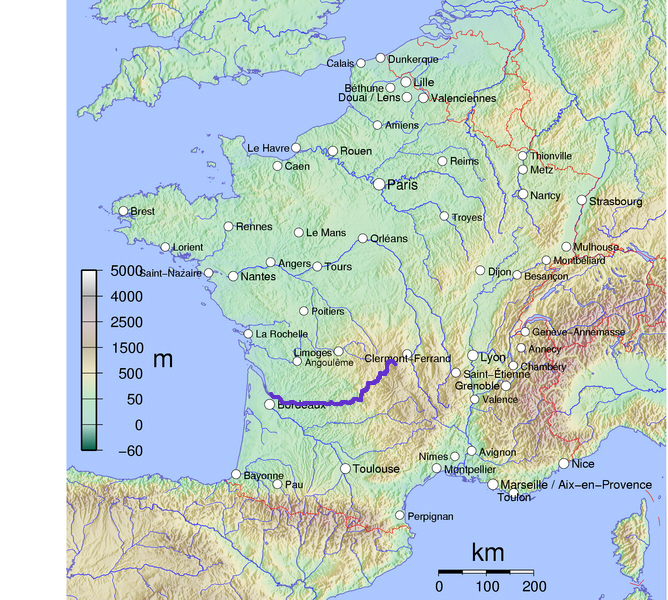
The Dordogne is a principal river in south-central and southwest France. It arises in the Massif Central and runs generally westward for about 483 kilometres before contributing to the estuary that leads to the Atlantic. In Occitan the river is known as Dordonha. The Dordogne basin supports a mix of rural landscapes, historic towns and agricultural plains.
Image gallery
10 Images




Course and characteristics
The river descends from upland plateaus and passes through a succession of valleys and limestone gorges. Its flow is fed by numerous smaller streams and several well-known tributaries, notably the Vézère and the Isle. Near its lower reaches the Dordogne joins the Garonne to form the Gironde estuary, one of the largest estuaries on the French Atlantic coast.
Human uses and cultural importance
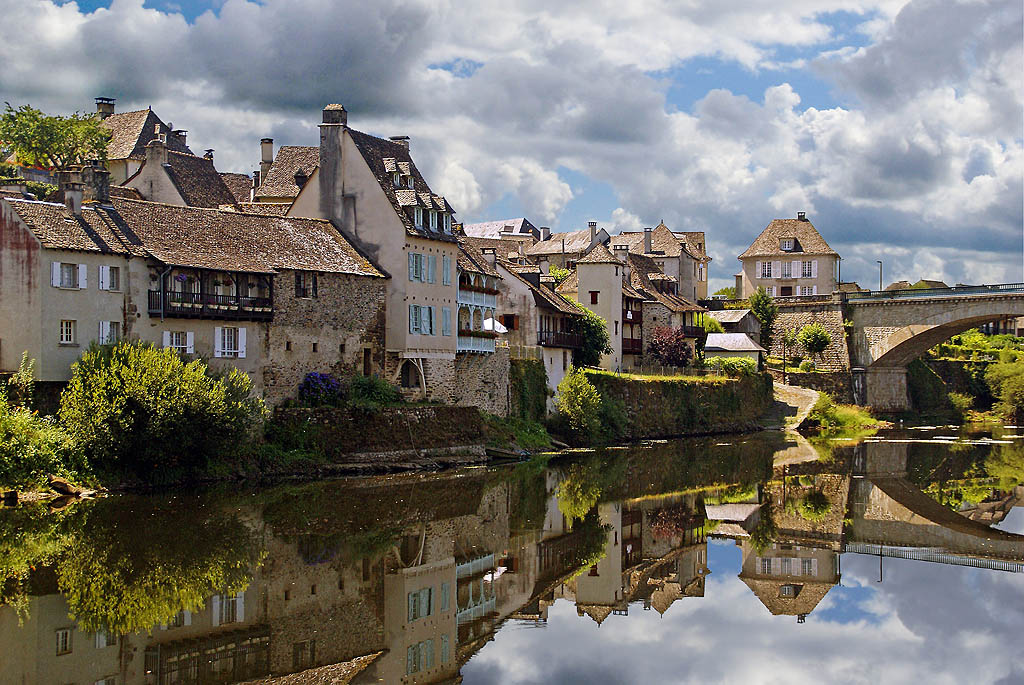
For centuries the Dordogne was a corridor for timber, trade and local transport; today its economic role is a blend of agriculture, viticulture and tourism. The valley is dotted with medieval towns, fortified villages and châteaux that attract visitors for canoeing, sightseeing and culinary tourism. Typical regional products include walnuts, duck and goose specialties, and wines from vineyards along the lower course.
Ecology and protection
The Dordogne drainage area supports diverse wildlife and habitats, from upland streams to riparian woodlands and estuarine marshes. Recognising the interaction between people and nature, the river and its basin were designated a UNESCO Biosphere Reserve on 11 July 2012 (UNESCO), a status that highlights sustainable development alongside conservation. For more on the basin's scope see the drainage basin overview.
Notable features and visitor information
- Scenic gorges and canoe routes popular with holidaymakers.
- Numerous medieval castles and riverside villages illustrating regional history.
- Rich archaeological and prehistoric landscapes nearby, attracting cultural tourism.
The Dordogne remains both a working river and a valued cultural landscape: its combination of natural variety, historical sites and modern conservation efforts makes it a prominent feature of the French interior and a focus of regional identity and tourism.
Questions and answers
Q: Where is the Dordogne river located?
A: The Dordogne river is located in south-central and southwest France.
Q: What is the Occitan name for the Dordogne river?
A: The Occitan name for the Dordogne river is Dordonha.
Q: When was the Dordogne river named as a Biosphere Reserve by UNESCO?
A: The Dordogne river and its drainage basin was named as a Biosphere Reserve by UNESCO on 11 July 2012.
Q: What is a Biosphere Reserve?
A: A Biosphere Reserve is an area designated by UNESCO to promote and demonstrate human and ecological sustainability.
Q: What is the significance of the Dordogne river's designation as a Biosphere Reserve?
A: The designation of the Dordogne river as a Biosphere Reserve highlights its ecological importance and promotes sustainable use and protection of the river and its environs.
Q: What is the drainage basin of the Dordogne river?
A: The drainage basin of the Dordogne river includes the area from the Massif Central in the east to the Atlantic Ocean in the west, and from the foothills of the Pyrenees in the south to the Limousin plateau in the north.
Q: Why was the Dordogne river designated as a Biosphere Reserve?
A: The Dordogne river was designated as a Biosphere Reserve due to its rich biodiversity and cultural heritage, and to promote sustainable development and conservation efforts in the region.
Related articles
Author
AlegsaOnline.com Dordogne (river) Leandro Alegsa
URL: https://en.alegsaonline.com/art/28539
Sources
- unesco.org : "Bassin de la Dordogne (France)"
- services.sandre.eaufrance.fr : "La Dordogne (P---0000)"
- hydro.eaufrance.fr : "La Dordogne à Bergerac"
- geoportail.gouv.fr : "Source de la Dordogne"
- geoportail.gouv.fr : "Confluence de la Dordogne"
- services.sandre.eaufrance.fr : "Rivière La Rhue (P0--0250)"
- services.sandre.eaufrance.fr : "La Maronne (P1--0250)"
- services.sandre.eaufrance.fr : "La Cère (P1--0290)"
- services.sandre.eaufrance.fr : "Le Céou (P24-0400)"
- services.sandre.eaufrance.fr : "Le Chavanon (P00-0400)"
- services.sandre.eaufrance.fr : "La Diège (P07-0400)"
- services.sandre.eaufrance.fr : "La Triouzoune (P09-0400)"
- services.sandre.eaufrance.fr : "La Luzège (P11-0400)"
- services.sandre.eaufrance.fr : "Le Doustre (P13-0400)"
- services.sandre.eaufrance.fr : "La Vézère (P---0100)"