
Don't Worry, Be Happy
1988 a cappella single by Bobby McFerrin, inspired by Meher Baba; a global No. 1 hit from Simple Pleasures, noted for layered vocal arrangement, Grammy recognition and broad cultural influence.
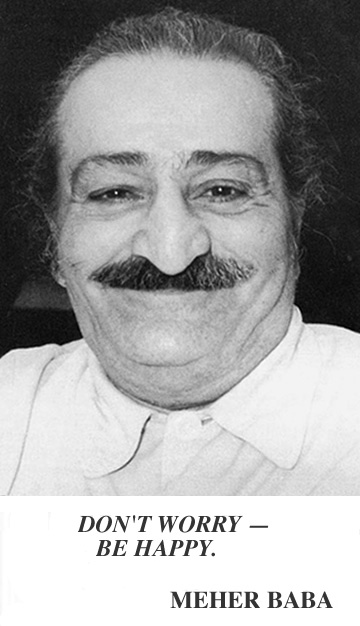
"Don't Worry, Be Happy" is a short, upbeat popular song written and recorded by American vocalist Bobby McFerrin. Issued as a single in September 1988 from his album Simple Pleasures, the recording became an international hit and remains closely identified with McFerrin's inventive use of the human voice as a full musical ensemble. The phrase and mood of the song reflect an aphorism attributed to the Indian spiritual teacher Meher Baba; McFerrin acknowledged that influence when presenting the tune.
Image gallery
3 Images

Composition and recording
The track is best known for its a cappella arrangement. McFerrin constructed the recording by overdubbing many vocal parts: lead line, harmonies, basslike vocal parts and percussive effects were all produced with the voice rather than conventional instruments. The lyrics are brief and conversational, centred on the repeating refrain and simple bits of advice. Musically, the song emphasizes rhythmic phrasing, clear melodic hooks and McFerrin's facility for spontaneous ornamentation and vocal textures.
Release, reception and awards
Upon release the single climbed to the top of several national charts, including No. 1 on the Billboard Hot 100 in the United States. It was featured on the soundtrack of the 1988 feature film Cocktail, which helped expose the song to a wider audience, and it boosted sales of Simple Pleasures. The recording brought McFerrin broad mainstream recognition and received major accolades at the time, including awards from the recording industry.
Legacy and cultural impact
Beyond its chart success, "Don't Worry, Be Happy" entered the public imagination as both a song and a slogan. The short, affirmative message has been used widely in advertising, television, greeting cards and casual conversation. The song inspired numerous cover versions, parodies and references across popular media, and its title phrase has been quoted independently of the musical work. Reactions to the song's cheerful outlook have been mixed: many listeners embrace its optimistic simplicity, while others have critiqued it for appearing to minimize genuine personal or social difficulties.
Notable facts and controversies
- Source and credit: The title and sentiment trace to Meher Baba; McFerrin acknowledged the connection and the phrase's prior circulation.
- Performance style: In concert, McFerrin frequently recreated the piece using live overdubbing techniques or by simulating multiple parts with solo vocal techniques and improvisation.
- Public use: McFerrin has objected to unauthorized political or commercial uses of the song and has taken steps to prevent associations he did not endorse.
- Enduring presence: The tune remains a recognizable example of mainstream a cappella pop and a case study in how a minimal arrangement and an insistently positive hook can achieve broad cultural penetration.
Decades after its release, "Don't Worry, Be Happy" continues to be remembered both for its musical novelty—layered human voices forming a complete pop arrangement—and for the simple, memorable maxim it popularized. While interpretations of the song's message vary, its status as a late-1980s cultural touchstone is well established.
History
"Don't worry, be happy! "(Don't worry, be happy!) were the words of the Indian guru Meher Baba. He criticized, among other things, that people shouted at each other, and therefore kept silent from July 10, 1925, for the remaining 44 years of his life. From then on, he used alphabetic tablets and hand signs to communicate.
In his song Don't Worry, Be Happy, McFerrin elaborated on Baba's words. His song, performed in the manner of a calypso, begins as follows:
Here's a little song I wroteYou
might want to sing it note for noteDon
't worry, be happy.
In every life we have some troubleBut
when you worry you make it doubleDon'
t worry, be happy.
Don't worry, be happy now.
By means of overdubbing, McFerrin himself sang all the voices of the song arranged in a cappella style (as with the other tracks on the accompanying album Simple Pleasures). The supposed instruments in this piece McFerrin imitated all with his voice or the rhythm with finger snaps.

Successes
The song reached #1 in the US, Germany and Austria in 1988, and #2 in the UK and Switzerland.
The song became the first ever a cappella number one hit on the Billboard Hot 100, where it spent two weeks at the top. It also became the first a cappella number one in other countries. In Germany, the single spent ten weeks at number one.
For Don't Worry, Be Happy, McFerrin won three Grammy Awards at the 1989 Grammy Awards. The music video featured Robin Williams and Bill Irwin.
Related articles
Author
AlegsaOnline.com Don't Worry, Be Happy Leandro Alegsa
URL: https://en.alegsaonline.com/art/28496
Sources
- althouse.blogspot.com : "Is Hillary Clinton Too Dependent on Stuffed Animals"