
Donkey Kong Country (1994 video game)
1994 platformer developed by Rare for the Super Nintendo. Noted for pre-rendered 3D visuals, memorable soundtrack and enduring influence; spawned sequels, remakes and many re-releases.
Overview
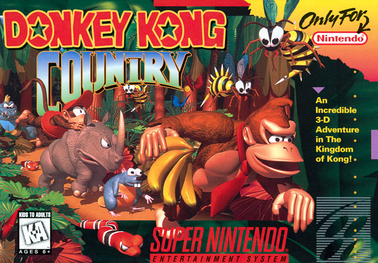
Donkey Kong Country is a side-scrolling platform game first released in 1994 for the Super Nintendo Entertainment System. Created by the British studio Rare and published by Nintendo, it introduced a modernized take on the classic Donkey Kong character and launched the Donkey Kong Country series. Players control Donkey Kong and his companion Diddy Kong across themed worlds, navigating hazards, defeating enemies and collecting items to recover their stolen hoard.
Image gallery
8 Images




Gameplay and features
The game combines fast-paced platforming with exploration and hidden content. Typical level elements include moving platforms, barrel cannons, rope swings and enemy patterns that reward timing and memorization. A few distinctive features are:
- Two-character duo: the player can switch between Donkey and Diddy, each with different strengths.
- Animal buddies and special abilities that open alternative routes.
- Collectibles and secret areas—letters, extra lives and bonus stages encourage replay.
The mechanics emphasize pattern recognition and precision, while many stages include memorable set pieces—from jungle vines to underwater caves—that vary the pacing.
Development and presentation
Donkey Kong Country became notable for its visual style: Rare used pre-rendered 3D models converted into detailed 2D sprites, producing a level of graphical polish unusual for 16-bit consoles. The sound design and music, composed for the cartridge format, were widely praised for atmosphere and variety. Together these elements helped the title stand out commercially and critically at launch.
Release history and ports
Following the original game, Rare produced two direct sequels that continued the series' popularity. Donkey Kong Country has been reissued and adapted across Nintendo platforms over decades, including handheld and virtual services. Key releases and re-releases include:
- A Game Boy Color version released in 2000.
- A port for the Game Boy Advance in 2003.
- Availability on the Wii through the Virtual Console in 2006 and 2007.
- Temporary delisting on November 25, 2012 from some storefronts, with exceptions such as South Korea.
- Relisting and further releases around October 30, 2014, plus availability on the Wii U, with North American Virtual Console dates including February 26, 2015.
- A handheld re-release for the New Nintendo 3DS Virtual Console in March 2016.
- Inclusion on hardware and subscription services such as the Super NES Classic Edition and the Nintendo Switch Online service on July 15, 2020.
Legacy and significance
Donkey Kong Country is remembered for reinvigorating a legacy character and demonstrating how technical ingenuity could refresh 16-bit-era visuals. It helped cement Rare's reputation as a leading developer and influenced the design and production values of subsequent platformers. The game's combination of tight level design, audiovisual presentation and hidden content has kept it in circulation through ports, compilations and digital services, where new players continue to discover its stages and soundtrack.
For players interested in exploration and mastered challenges, Donkey Kong Country remains an instructive example of how presentation and level variety can elevate a platform game beyond its core mechanics.
Questions and answers
Q: What is Donkey Kong Country?
A: Donkey Kong Country is a platformer video game developed by Rare and published by Nintendo.
Q: When was Donkey Kong Country released?
A: Donkey Kong Country was released in 1994 for the Super Nintendo Entertainment System.
Q: Who are the playable characters in Donkey Kong Country?
A: The playable characters in Donkey Kong Country are Donkey Kong and Diddy Kong.
Q: How many sequels did Donkey Kong Country have?
A: Donkey Kong Country had two sequels: Donkey Kong Country 2: Diddy's Kong Quest and Donkey Kong Country 3: Dixie Kong's Double Trouble!
Q: When was Donkey Kong Country remade for the Game Boy Color?
A: Donkey Kong Country was remade for the Game Boy Color in 2000.
Q: When was Donkey Kong Country ported over to the Wii's Virtual Console?
A: Donkey Kong Country was ported over to the Wii's Virtual Console in 2006 and 2007.
Q: When was Donkey Kong Country made available for the Nintendo Switch Online?
A: Donkey Kong Country was made available for the Nintendo Switch Online on July 15, 2020.
Related articles
Author
AlegsaOnline.com Donkey Kong Country (1994 video game) Leandro Alegsa
URL: https://en.alegsaonline.com/art/28449