
Donetsk Oblast: geography, history, economy and recent developments
Donetsk Oblast is a major industrial region in eastern Ukraine, historically centred on coal and steel. Since 2014 parts have been contested, causing displacement, economic disruption and administrative changes.
Overview
Donetsk Oblast (Ukrainian: Донецька область) is an administrative region commonly described as an oblast or province of eastern Ukraine. The city that served as the administrative centre is Donetsk (Donetsk city), and the oblast had a population of about 4,321,000 in 2014. That figure has changed since due to migration, economic shifts and conflict-related displacement. The region is often described as the core of the Donbas industrial area.
Image gallery
10 Images





Geography and environment
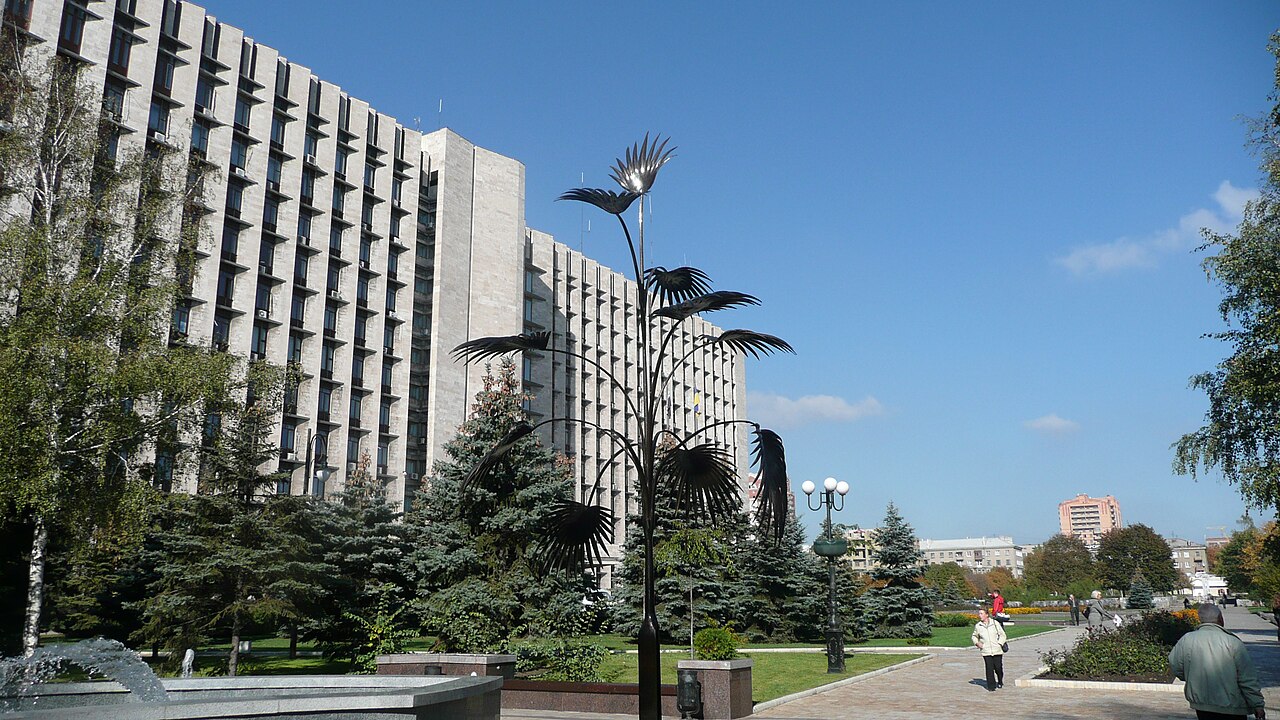
The oblast lies on a largely flat steppe plain with coal seams and other mineral resources. Its landscape includes extensive urbanised industrial zones, open-pit and underground mines, and sections of coastline on the Sea of Azov around the port city of Mariupol. Soils and small river valleys support limited agriculture where industry and urban development have not dominated. Environmental concerns include legacy industrial pollution, subsidence above mine workings and damaged infrastructure in conflict-affected areas.
Urban network and transport
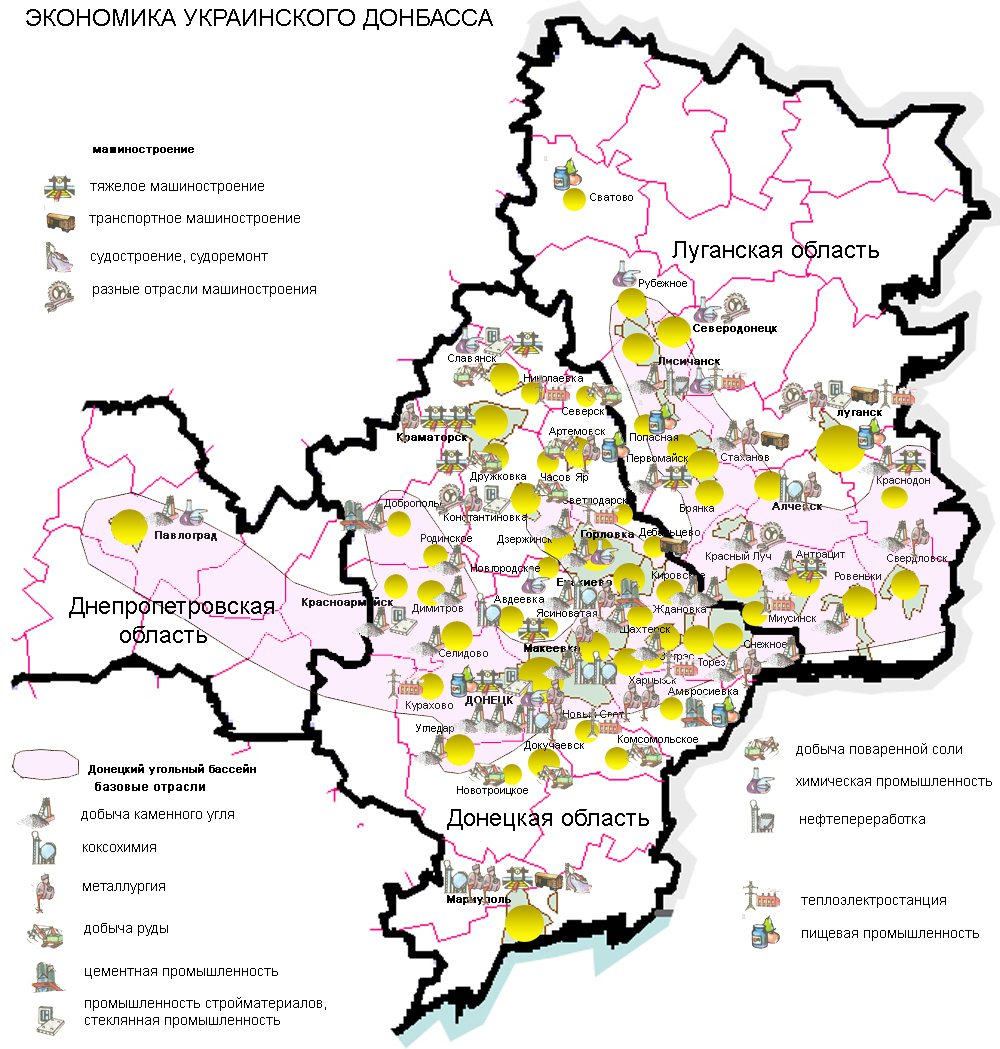
Major cities and towns developed around mines and factories; notable urban centres include Donetsk, Mariupol, Makiivka, Horlivka, Kramatorsk and Sloviansk. The region historically had a dense transport network of railways and roads linking mines, plants and ports, enabling heavy freight and export. Port access on the Sea of Azov connected local industry to maritime trade routes.
Economy
For much of the 19th and 20th centuries Donetsk Oblast evolved as a centre for coal mining, metallurgy, machine building and heavy industry. Steel production, coking, mineral extraction and related engineering formed the backbone of regional employment. Since the early 21st century, market transitions and the disruption from armed conflict have led to factory closures, shifts in ownership and a reorientation of some activity toward services and smaller enterprises where possible.
History and recent developments
The area experienced rapid urban and industrial growth during the Russian Empire and Soviet periods, becoming one of the most heavily industrialised parts of Eastern Europe. Since 2014 parts of the oblast have been affected by armed conflict and competing claims of authority. This has resulted in changes to local administration, periods of interrupted services, population movements and humanitarian needs. Ceasefire agreements and international diplomacy have repeatedly sought to reduce violence, with varying success.
Administration and demographics
Administratively the oblast has been subdivided into raions (districts) and municipalities; local governance varies depending on control of territory. The population historically consisted of ethnic Ukrainians, Russians and other groups, with a predominantly urban workforce shaped by industrial labour traditions. Demographic trends since 2014 include internal displacement, emigration and altered settlement patterns.
Cultural and strategic significance
Institutions from the region — cultural organisations, universities and sports clubs — have had national prominence, although many were disrupted or relocated due to conflict. Strategically, Donetsk Oblast remains important for Ukraine's economy because of its industrial capacity, transport links and Azov Sea ports.
Further reading and resources
- Overview and administrative details: oblast, province.
- Regional nomenclature and language: Ukrainian name and city references: Donetsk, Donetsk.
- Population reference and statistics: 2014 figure.
- Geographic context: eastern Ukraine.
This article summarises broadly known aspects of Donetsk Oblast, emphasising its industrial heritage, urban structure and the significant changes that have affected the region in recent years. Where control of territory or specific statistics have varied, descriptions are cautious to reflect uncertainty and ongoing developments.


Largest cities
| City | Ukrainian name | Russian name | Residents |
| Донецьк | Донецк | 993.519 | |
| Mariupol | Маріуполь | Мариуполь | 479.959 |
| Makiyivka (Makeyevka) | Макіївка | Макеевка | 372.778 |
| Horliwka (Gorlowka) | Горлівка | Горловка | 275.452 |
| Kramatorsk | Краматорськ | Краматорск | 173.310 |
| Slowjansk (Slavyansk) | Словьянськ | Славянск | 121.394 |
| Yenakiyevo (Yenakiyevo) | Єнакієве | Енакиево | 94.408 |
| Kostyantynivka (Konstantinovka) | Костянтинівка | Константиновка | 86.828 |
| Bachmut | Бахмут | Бахмут | 80.227 |
| Pokrovsk | Покровськ | Покровск | 66.912 |
| Tores | Торез | Торез | 64.789 |
| Druschkiwka (Druzhkovka) | Дружківка | Дружковка | 62.766 |
| Charzysk (Charzyssk) | Харцизьк | Харцызск | 61.773 |
| Shakhtarsk (Shakhtyorsk) | Шахтарськ | Шахтёрск | 55.043 |
| Snishne (Sneschnoje) | Сніжне | Снежное | 52.999 |
| Myrnohrad (Mirnograd) | Мирноград | Мирноград | 52.241 |
| Torezk | Торецьк | Торецк | 39.491 |
| Jassynuwata (Jassinowataja) | Ясинувата | Ясиноватая | 36.918 |
| Avdiivka (Avdeevka) | Авдіївка | Авдеевка | 36.243 |
| Dobropillja (Dobropolje) | Добропілля | Доброполье | 33.375 |
| Kirovskoye | Кіровське | Кировское | 29.367 |
| Debaltsev (Debaltsevo) | Дебальцеве | Дебальцево | 28.160 |
| Lyman (Liman) | Лиман | Лиман | 25.314 |
| Selydowe (Selidowo) | Селидове | Селидово | 25.139 |
| Wolnowacha | Волноваха | Волноваха | 23.830 |
| Dokuchayivsk (Dokuchayevsk) | Докучаївськ | Докучаевск | 23.736 |
| Kurachowe (Kurachowo) | Курахове | Курахово | 20.746 |
| Amvrossiivka (Amvrossiyevka) | Амвросіївка | Амвросиевка | 20.705 |
Administration breakdown
Donetsk oblast is administratively divided into 18 rajons and 28 cities directly under the oblast administration. These are the cities of Avdiivka, Bakhmut, Kharzysk, Debaltseve, Dobropillya, Dokuchayivsk, Druzhkivka, Horlivka, Yasynuvata, Yenakiyev, Kirovsk, Kostyantynivka, Kramatorsk, Pokrovsk, Lyman, Makiyivka, Mariupol, Myrnohrad, Novohrodivka, Shakhtarsk, Zhdanivka, Selydov, Slavyansk, Snishne, Tores, Toretsk, Vuhledar, and the oblast's eponymous administrative center, the city of Donetsk.
Donetsk oblast rajons with their administrative centres
Donetsk oblast is divided into 18 rajons:
| Rajon | Administrative headquarters | Area | |
| German designation | Ukrainian name | Transcription | km² |
| Amvrosiyevka Rajon | Амвросіївський район. | Amvrosiyivka | 1.455 |
| Rajon Bachmut | Бахмутський район. | Bachmut | 1.687 |
| Dobropillja Rajon | Добропільський район. | Dobropillja | 949 |
| Rajon Jassynuwata | Ясинуватський район. | Jassynuwata | 809 |
| Kostyantynivka Rajon | Костянтинівський район. | Kostyantynivka | 1.172 |
| Rajon Lyman | Лиманський район. | Lyman | 1.018 |
| Marjinka Rajon | Мар'їнський район. | Marjinka | 1.350 |
| Nikolske rayon | Нікольський район. | Nikolske | 1.221 |
| Novoazovsk rayon | Новоазовський район. | Novoazovsk | 1.000 |
| Oleksandriwka Rajon | Олександрівський район. | Oleksandriwka | 1.010 |
| Rajon Manhush | Мангушський район | Manhush | 792 |
| Pokrovsk rayon | Покровський район. | Pokrovsk | 1.316 |
| Shakhtarsk district | Шахтарський район. | Shakhtarsk | 1.194 |
| Slovyansk oblast | Слов'янський район | Slowyansk | 1.274 |
| Starobeshev Rajon | Старобешівський район. | Starobeschewe | 1.255 |
| Telmanov Rajon | Тельманівський район. | Telmanowe | 1.340 |
| Velyka Novosilka Rajon | Великоновосілківський район. | Velyka Novosilka | 1.901 |
| Volnovakha Rajon | Волноваський район. | Wolnowacha | 1.848 |


Related articles
Author
AlegsaOnline.com Donetsk Oblast: geography, history, economy and recent developments Leandro Alegsa
URL: https://en.alegsaonline.com/art/28432
Sources
- ukrainetrek.com : "Donetsk Oblast"