
Doner kebab (döner)
A Turkish-origin vertical-rotisserie meat dish, thinly sliced and served in bread or on a plate. A widespread fast-food item with many regional variations, sauces and serving styles, notably popular in Germany.
Doner kebab (often written döner) is a style of seasoned meat cooked on a vertical rotisserie and shaved into thin slices for serving. The word comes from the Turkish verb dönmek, meaning "to turn" or "to rotate," referencing the slowly turning stack of meat. For pronunciation guides see UK, US and Turkish.
Image gallery
10 Images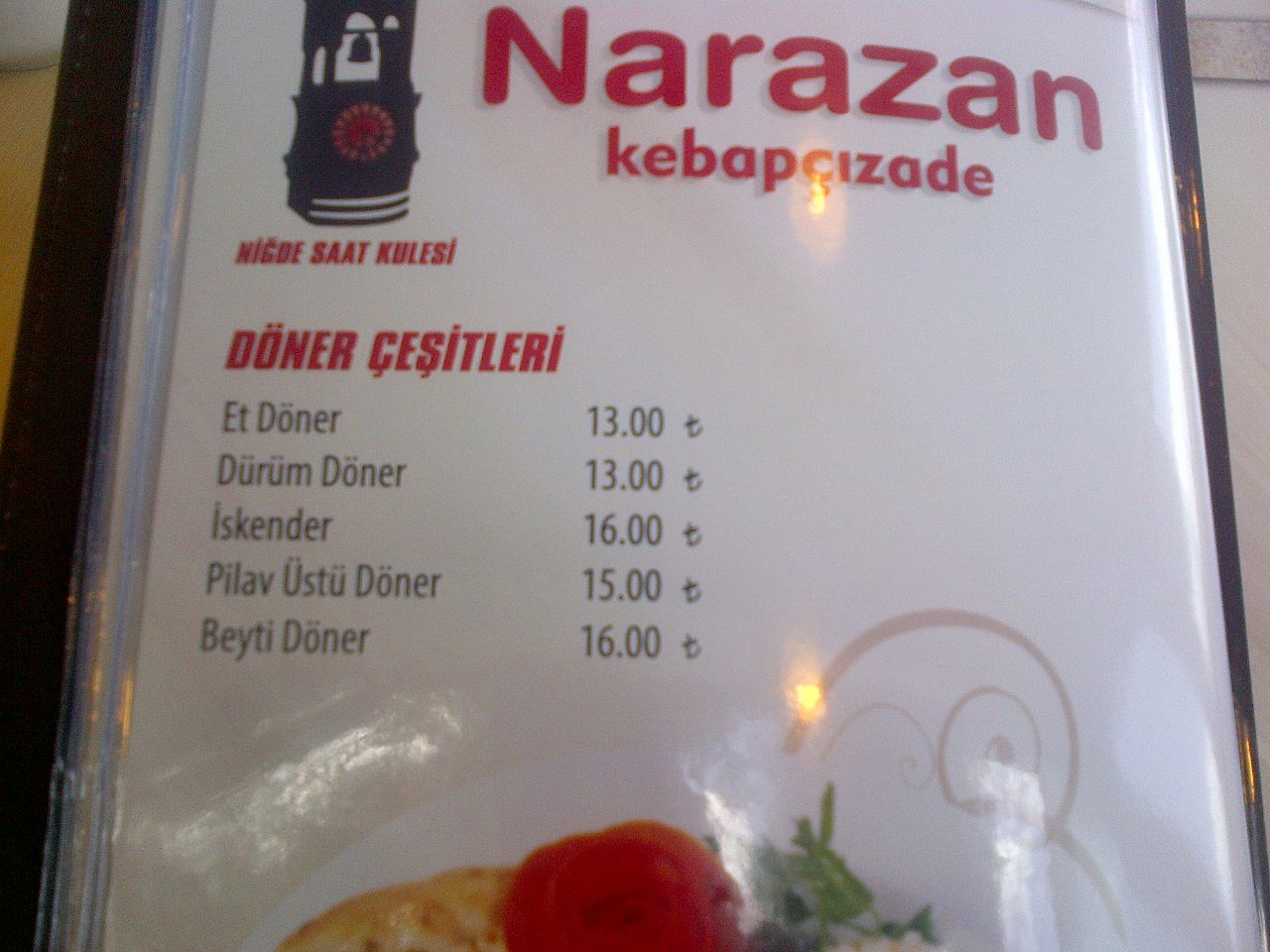



Ingredients and preparation
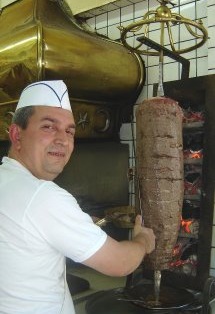
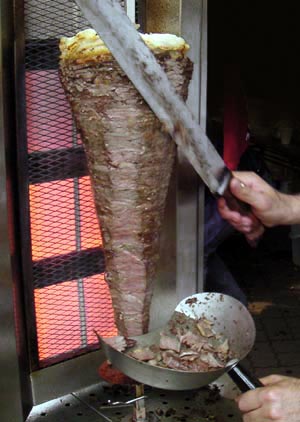
The core element is a large, often cone-shaped stack of meat—sliced, layered or formed from minced meat mixed with spices and sometimes fat. Common proteins are chicken, beef and lamb or blends of these. The stack is cooked vertically by a heat source at the side; as the outer layer browns it is carved into thin strips. This method produces a contrast between crisp, browned edges and tender inner meat. Many vendors marinate the meat or add spices and herbs before stacking to develop flavor during the long slow cook.
Common servings and accompaniments
Doner is sold in several familiar forms. The most common street-food format wraps meat, salad and sauces in flatbread, most often pita or similar breads. It can also be served on top of bread, as a plated dish with salad, rice or fries, or presented as a mixed plate with slices of doner meat and side dishes. Typical accompaniments include chopped salad components and pickles, and a range of sauces: garlic-yogurt style sauces, hot chili, mint-based sauces, mayonnaise, and tomato-based condiments are all frequent choices. In many parts of Europe, particularly in Germany, restaurants and stalls will offer hot chili sauce and a garlic-yogurt or tzatziki-like sauce as standard options.
History and cultural spread
Vertical-rotisserie cooking has long roots across the Middle East and Mediterranean. The modern sandwich-style doner as a portable fast meal developed in Turkey and spread internationally during the 20th century with migration and commercial adaptation. It became particularly widespread in Germany from the 1970s onward and has since become one of the country's most recognizable fast-food staples, available both from small kebab shops and large chains. The dish occupies a role in urban nightlife and takeaway culture, frequently consumed as a late-night meal.
Variants and related dishes
Doner belongs to a family of vertical-rotisserie dishes that includes shawarma in the Levant and gyros in Greece. While the cooking method is similar across these foods, regional spice blends, marinades, breads and typical garnishes create distinct local profiles. Variants of doner can include different fillings, addition of cheese, or use of alternative breads such as flatbreads and wraps; some shops offer vegetarian or plant-based alternatives that imitate the texture and flavor of sliced rotisserie meat.
Consumption, hygiene and selection tips
Because doner is sold as a ready-to-eat meat product, vendors must maintain appropriate food hygiene and temperature control to keep carved meat safe for consumption. When choosing a shop or stall, look for freshly carved slices with browned edges, busy counters (which indicate turnover), and clearly offered sauce or salad options. Typical side items include fries or chips and salads; in many places a choice of sauces and chili condiments is standard. For general information on accompaniments and regional preferences see resources about salad choices salad and fries fries.
Practical notes
- Specify the meat type (chicken, beef, lamb or mixed) and preferred sauces when ordering.
- Common serving styles: wrapped in flatbread, served on bread, or plated with sides.
- Regional habits shape the final dish—many German shops, for example, have their own house sauces and customs; see notes on the dish's role in Germany.
- When exploring varieties, expect differences in spice, marination and accompaniments across countries and shops.
Doner kebab remains a flexible and widely enjoyed fast-food format with deep connections to regional culinary traditions. For further practical guides and pronunciation references consult materials on the pronunciations listed above and on rotisserie cooking techniques rotisserie, common proteins such as chicken and beef, and bread options like pita.
Questions and answers
Q: What is a doner kebab?
A: A doner kebab is a type of kebab made from lamb, chicken, or beef cooked on a vertical rotisserie and thinly sliced.
Q: What sauces are commonly served with doner kebabs in German restaurants?
A: Hot chili sauce and garlic yoghurt-style sauce are commonly served with doner kebabs in German restaurants, as well as barbecue sauce, burger sauce, lemon juice, or a mint sauce similar to raita.
Q: What is the typical way to eat a doner kebab?
A: Doner kebabs are often eaten as take-away food on the way home after a night out. They can be wrapped in pita bread, served on pita bread, or served as a dish of "doner meat," typically including salad.
Q: What is the history of the doner kebab in Germany?
A: The doner kebab was introduced to Germans in the 1970s and has since become a very popular fast food.
Q: What types of meat can be used to make a doner kebab?
A: Doner kebabs can be made from lamb, chicken, or beef.
Q: What is the difference between a doner kebab wrapped in pita bread and a doner kebab served on pita bread?
A: A doner kebab wrapped in pita bread is typically rolled up, while a doner kebab served on pita bread is usually cut into pieces and served as a sandwich.
Q: What are some popular garnishes for doner kebabs?
A: Doner kebabs are often garnished with a range of sauces such as tomato ketchup, mayonnaise, chili sauce, mint, or garlic sauce.
Related articles
Author
AlegsaOnline.com Doner kebab (döner) Leandro Alegsa
URL: https://en.alegsaonline.com/art/28431