
Don (river)
Major Russian river rising near Novomoskovsk and flowing about 1,870 km to the Sea of Azov; historically and economically important, with notable tributaries and a distinct cultural legacy.
The Don is one of the principal rivers of western Russia. It rises in the highlands of the Central Russian Upland near the town of Novomoskovsk, roughly southeast of Moscow, and travels about 1,870 km before reaching the Sea of Azov. Its long course shapes varied landscapes from forested uplands to broad plains and a marshy delta at its mouth.
Image gallery
10 Images
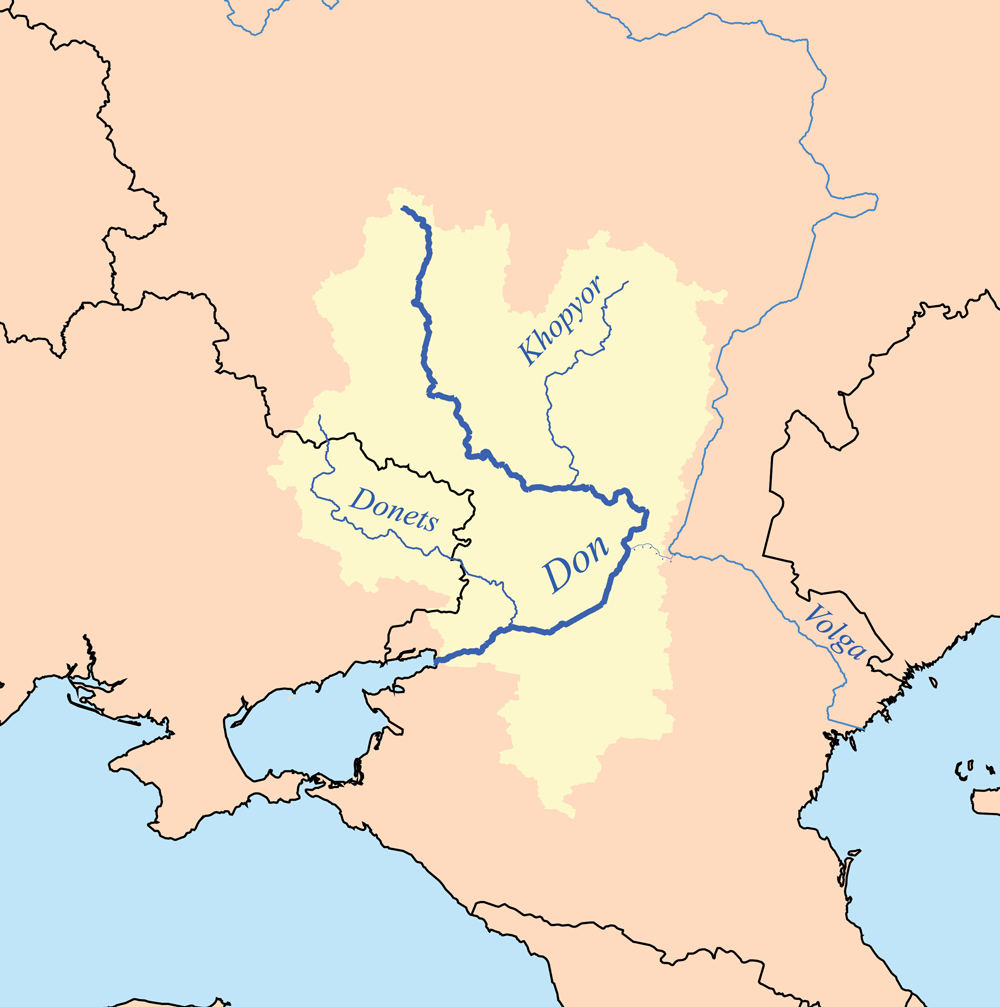


Course and characteristics
From its source the Don initially flows southeast toward the city of Voronezh, then swings southwest for its lower reaches. The river receives several significant tributaries, carries seasonal variations in flow, and has been modified by reservoirs and navigation works. The lower Don is navigable for commercial vessels, and the river's delta features shallow channels, wetlands and important fish habitats.
- Main tributaries: Donets, Khoper, Medveditsa and others, with the Donets among the largest.
- Human modifications: dams and reservoirs regulate flow and support irrigation, power and shipping.
History and cultural significance
The Don has been a geographic frontier and a corridor of contact since antiquity. Ancient Greek writers called its lower reaches Tanais, and the river later marked a boundary between forested Russian lands and the Eurasian steppe. From the early modern period the Don basin is especially associated with the Don Cossacks, a semi-autonomous military and farming community whose culture and history remain closely tied to the river.
Uses, ecology and modern importance
The river supports fisheries, agriculture and industry in its basin and provides inland navigation that links regional centers such as Rostov-on-Don with the Sea of Azov. In the mid-20th century engineering works—including a canal connection to the Volga—improved transport and water management in the region. At the same time, reservoirs, pollution and land use change have affected habitats, making sections of the Don a focus for regional conservation efforts.
Notable facts and distinctions
The Don is distinct from other major East European rivers by its southwesterly turn and its historical role as both a trade route and a cultural boundary. Its name appears in classical sources, and its basin remains an important economic and ecological zone in modern Russia.
Questions and answers
Q: What is the Don river?
A: The Don river is one of the major rivers of Russia.
Q: Where does the Don river start?
A: The Don river starts in the town of Novomoskovsk 60 km southeast from Tula, southeast of Moscow.
Q: How long is the Don river?
A: The Don river flows for a distance of about 1,870 km (1,162 miles) to the Sea of Azov.
Q: In which direction does the Don river first flow from its source?
A: From its source, the Don river first flows southeast to Voronezh.
Q: Which is the main city on the Don river?
A: Rostov on Don is the main city on the Don river.
Q: What is the main tributary of the Don river?
A: The main tributary of the Don river is the Donets.
Q: How does the Don river flow to its mouth after Voronezh?
A: The Don river flows southwest to its mouth after Voronezh.
Related articles
Author
AlegsaOnline.com Don (river) Leandro Alegsa
URL: https://en.alegsaonline.com/art/28373
Sources
- commons.wikimedia.org : Don River