
Doctor Zhivago (1965 film) — overview, production, reception, and legacy
David Lean's 1965 cinematic adaptation of Boris Pasternak's novel: an epic romantic drama set in Russia during World War I and the Russian Civil War, noted for its score, controversy, and awards.
Overview
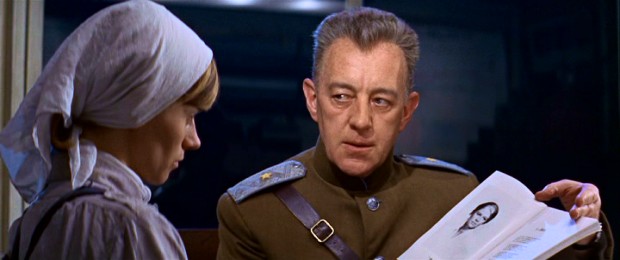
Doctor Zhivago is a 1965 cinematic adaptation of Boris Pasternak's novel that blends sweeping personal drama with the upheavals of early 20th-century Russia. Directed by David Lean, the film is commonly described as an epic romance and a drama. It follows the life of Yuri Zhivago, a physician and poet, whose intimate relationships and moral choices are shaped by the political storms around him. The movie version sought to translate Pasternak's sprawling narrative into a single, visually ambitious work of cinema that emphasizes character, music and landscape over compact biography.
Image gallery
5 Images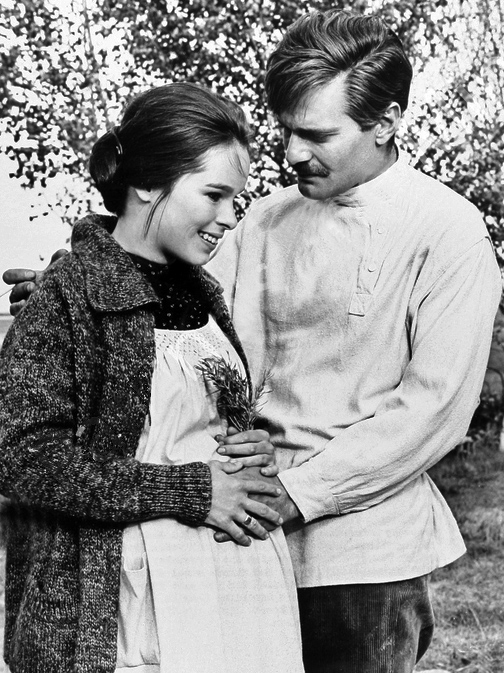


Setting, plot and themes
The story is set in Russia across the period immediately before and during World War I and the subsequent Russian Civil War. At its core is Zhivago's complicated attachment to Lara, a woman whose life intersects his in ways that expose the strain between private loyalty and public turmoil. Themes include the endurance of individual feeling amid social collapse, the role of artists in times of violence, and how historical events can both sweep up and fracture ordinary lives.
Source material and adaptation
The screenplay drew on Boris Pasternak's novel, first published in the late 1950s. Pasternak, the author, had become an international figure by virtue of his book and its controversial reception; his name is closely associated with the work's political and literary context. The film condenses the novel's many episodes and inner monologues into visual set pieces and a central narrative line while keeping the poetic sensibility of the original as a guiding quality.
Production, censorship and release
Although the film was produced in the West and employed international cast and crew, it encountered political resistance. The novel had been suppressed in the Soviet Union and the movie was likewise banned from distribution there; Soviet authorities did not permit its production within the country and it could not be screened in the Soviet Union's cinemas. After the film's initial release, it was also barred from many local theatres behind the Iron Curtain, and it did not receive an official Russian theatrical showing until 1994. The film was entered in the 1966 Cannes Film Festival and stirred debate over how accurately it presented the history it depicts.
Critical response and accolades
Upon release, some critics objected to the film's extended running time and to perceived simplifications of complex historical realities. Over subsequent decades, however, many viewers and critics reassessed the picture, praising its cinematography, musical score and emotional scope. The motion picture earned several major awards and nominations, including five Academy Awards. In a later measure of its place in American film culture, the American Film Institute placed Doctor Zhivago on a list of the greatest American films, ranking it at number 39 in 1998 according to AFI.
Legacy and notable facts
- The story remains widely read in its original literary form and continues to be discussed for its blend of poetry and politics; readers often return to Pasternak's novel as a primary source for the film adaptation, with the author himself remaining a central figure in discussions of both works (novel, Boris Pasternak).
- The movie's epic scale and memorable themes—both musical and visual—helped secure its place among David Lean's best-known films; it is routinely cited in retrospectives of his career and of mid-20th-century historical cinema (movie).
- The cultural controversy surrounding the book and film, including the official ban and later limited showings, underlines how artistic works can become focal points for wider political struggles over memory and representation.
Doctor Zhivago endures as a work that is often encountered both as a cinematic spectacle and as an entry point into discussions about artists under pressure, the responsibilities of adaptation, and the ways personal stories are shaped by historical change.
Questions and answers
Q: What is Doctor Zhivago?
A: Doctor Zhivago is a 1965 epic romantic drama movie.
Q: What is the movie about?
A: The movie is about life in Russia before and during World War I and during the Russian Civil War from 1917 to 1922.
Q: Who wrote the novel that Doctor Zhivago is based on?
A: The movie is based on a novel of the same name. It was written by Boris Pasternak.
Q: Was the movie banned in the Soviet Union?
A: Yes, the movie was banned in the Soviet Union. It could not be made there and also could not be shown in theatres after it was released.
Q: How did critics initially receive Doctor Zhivago?
A: Critics complained when the movie was released because its running time was over three hours. Also, critics thought that the history in the movie was not told correctly.
Q: How is the movie now regarded by the public and critics?
A: Over time, opinions changed. Now it is thought by the public to be one of David Lean's best movies.
Q: Did Doctor Zhivago win any awards?
A: Yes, the movie won five Academy Awards. It was entered into the 1966 Cannes Film Festival.
Related articles
Author
AlegsaOnline.com Doctor Zhivago (1965 film) — overview, production, reception, and legacy Leandro Alegsa
URL: https://en.alegsaonline.com/art/28135
Sources
- ranker.com : "David Lean Movies"
- afi.com : AFI's 100 Years...100 Movies
- festival-cannes.com : "Doctor Zhivago"
- boxofficemojo.com : "All Time Box Office"
- movies.nytimes.com : "Movie Review, Doctor Zhivago (1965)"