
Division of Stirling (Australian federal electoral division)
Australian federal electorate in Perth's inner northern and beachside suburbs, created 1955 and named for Sir James Stirling; historically marginal and subject to boundary redistributions.
The Division of Stirling was a federal electoral division in the metropolitan area of Perth, Western Australia. Located on the city's inner northern coast, the division combined residential suburbs, coastal communities and commercial centres. It was created in 1955 and named for Sir James Stirling, the first Governor of Western Australia, and for decades played a notable role in federal politics as a seat contested by both major parties. For an official profile see the electoral division profile.
Image gallery
9 Images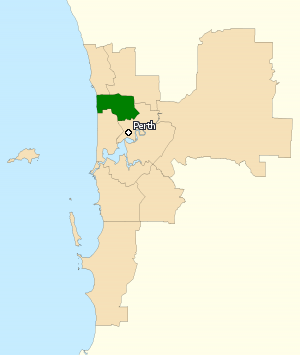




Geography and communities
Stirling covered a mix of beachside and inner suburban neighbourhoods, giving it a varied local character. The division's boundaries changed several times through redistributions, but its core generally included established suburbs and newer residential pockets. Typical components included:
- Balcatta
- Balga
- Carine
- Innaloo
- Nollamara
- North Beach
- Scarborough
- Stirling
- Trigg
- Yokine
Maps and current boundary information are provided by local authorities and mapping services; consult the Western Australian resources for regional context at state electoral resources and municipal planning pages for detailed neighbourhood data via local maps and guides.
History and political profile
From its establishment in the mid-20th century, Stirling experienced shifts in political allegiance and demographic change. Its mix of coastal suburbs and inner-city areas produced a diverse electorate in socioeconomic terms, and that diversity contributed to its reputation as a marginal seat in many federal elections. Redistributions over time altered its composition, sometimes making the seat more favourable to one party or the other. The division remained an important bellwether in Western Australian federal politics until its boundaries were substantially reorganised.
The name commemorated Sir James Stirling; for historical context about the figure after whom the division was named see a concise biography entry at Sir James Stirling biography. Electoral divisions like Stirling illustrate how geographic growth, urban development and redistributions interact with political representation in Australia's House of Representatives.
Although specific officeholders and electoral results have varied, the Division of Stirling served as a useful example of how suburban coastal electorates can influence federal outcomes. Redistributed boundaries and demographic trends continue to reshape representation in the Perth area, and Stirling's history is often cited in discussions about redistribution, urban change and party competition in metropolitan Australia.
Questions and answers
Q: What is the Division of Stirling?
A: The Division of Stirling is an electoral division in Perth, Western Australia.
Q: What are the areas included in the Division of Stirling?
A: The Division of Stirling includes the inner northern and beachside suburbs of Perth such as Balcatta, Balga, Carine, Innaloo, Nollamara, North Beach, Scarborough, Stirling, Trigg and Yokine.
Q: Who is the Division of Stirling named after?
A: The Division of Stirling is named after Sir James Stirling, the first Governor of Western Australia.
Q: When was the Division of Stirling set up?
A: The Division of Stirling was set up in 1955.
Q: What is the significance of Sir James Stirling in Western Australia's history?
A: Sir James Stirling is significant in Western Australia's history as he was the first Governor of Western Australia.
Q: What is the purpose of the Division of Stirling?
A: The purpose of the Division of Stirling is to elect a representative to the Australian Parliament who will represent the interests of the people living in the division.
Q: What types of areas are included in the Division of Stirling?
A: The Division of Stirling includes both inner northern and beachside suburbs of Perth.
Related articles
Author
AlegsaOnline.com Division of Stirling (Australian federal electoral division) Leandro Alegsa
URL: https://en.alegsaonline.com/art/27975
Sources
- aec.gov.au : "Profile of the electoral division of Stirling (WA)"