
Division of McMillan (Australian federal electoral division)
Former Australian federal electorate in western Gippsland, Victoria (1949–2019); rural coastal-to-inland seat named for Angus McMillan and notable for a record-low winning primary vote in 1972.
Overview
The Division of McMillan was an Australian federal electoral division in the state of Victoria. Created ahead of the 1949 federal election, it covered much of western Gippsland and extended from inland agricultural districts to the Bass Strait coast. The division existed until a redistribution that took effect at the 2019 federal election, when its area was largely reconstituted as the Division of Monash.
Image gallery
9 Images





Geography and communities
McMillan encompassed a mix of small regional towns, farming districts and coastal communities. It was the southernmost electoral division on the Australian continental mainland. Major population centres within its boundaries included a range of towns such as:
- Drouin
- Moe and Newborough
- Warragul and Trafalgar
- Leongatha, Korumburra and Mirboo North
- Wonthaggi, Inverloch and Foster
- Walhalla, Yallourn North and Pakenham
These communities reflected diverse local economies including dairy and beef agriculture, timber and forestry, coal and power generation in parts of the Latrobe Valley, and coastal tourism.
History and name
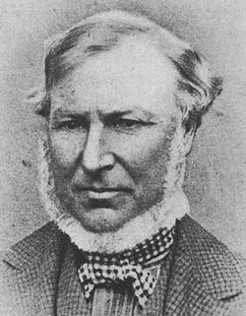
The division was named for Angus McMillan, an early European explorer of the Gippsland region. McMillan's legacy is contested: while historically commemorated for exploration, his role in frontier violence and conflict with Indigenous people has been the subject of later scrutiny and debate. The Australian Electoral Commission assigns and periodically reviews division names and boundaries; following a redistribution process, the Division of McMillan was abolished and replaced by the Division of Monash for the 2019 election.
Political character and notable events
McMillan was a predominantly rural seat with electoral behaviour influenced by local industry and demographic change. Over its history it was represented at various times by members from the major non-Labor rural-aligned parties and by Labor, reflecting shifts in local concerns and national trends. A particularly notable electoral event occurred at the 1972 federal election when the Country Party candidate Arthur Hewson won the seat on a primary vote of only 16.6%, the lowest recorded primary vote for a successful House of Representatives candidate in Australian federal elections. The seat's margins and party control changed over time as boundaries and populations evolved.
Redistribution and legacy
Federal electoral boundaries in Australia are regularly redrawn by independent redistribution committees to reflect population changes. The abolition of McMillan was part of such a redistribution. The successor seat, named Monash, inherited much of McMillan's territory and population. The story of McMillan illustrates how place names, electoral geography and local economies intersect within Australia's representative system.
Further information
For formal definitions and maps the Australian Electoral Division framework provides technical details: see Australian Electoral Division resources. For state context consult material on the state of Victoria and the Gippsland region via general reference pages such as regional summaries. Historical information about parties involved in key contests can be found through materials covering the Country Party and its successors.
Questions and answers
Q: What was the Division of McMillan?
A: The Division of McMillan was an Australian Electoral Division in the state of Victoria. It covered the western part of the Gippsland region.
Q: What areas did it include?
A: The Division of McMillan included Drouin, Erica, Foster, Inverloch, Korumburra, Leongatha, Mirboo North, Moe, Neerim South, Newborough, Nyora, Pakenham, Trafalgar, Walhalla Warragul Wonthaggi Yallourn North and Yarragon.
Q: When was it set up?
A: The Division of McMillan was set up in 1949.
Q: Who is it named after?
A: The Division of McMillan is named after Angus McMillan who was one of the first Europeans to explore the Gippsland region.
Q: When did it get replaced by Monash?
A: The Division of McMillan got replaced by the Division of Monash in 2019.
Q: Who won the seat with a primary vote in 1972?
A: In 1972 Country Party candidate Arthur Hewson won the seat with a primary vote of 16.6%.
Q: What is this record for?
A: This is the lowest primary vote for a winning candidate in any federal election.
Related articles
Author
AlegsaOnline.com Division of McMillan (Australian federal electoral division) Leandro Alegsa
URL: https://en.alegsaonline.com/art/27934
Sources
- aec.gov.au : "Profile of the electoral division of McMillan (Vic)"
- psephos.adam-carr.net : "1972 results - Victoria"