
Division of Korea (1945–present)
Summary of how Korea was partitioned after World War II, the emergence of two states, the Korean War and DMZ, and the long-term political, social, and economic impacts.
Overview
The division of Korea is the political, territorial and ideological separation of the Korean Peninsula into two states: North Korea and South Korea. It originated in the closing days of World War II when the victorious Allied powers imposed arrangements that ended Japanese colonial rule. The split became durable during the early Cold War era as global competition between the Soviet Union and the United States shaped Korean institutions, governments and alignments. The division remains one of the most enduring legacies of mid‑20th century geopolitics.
Image gallery
10 Images


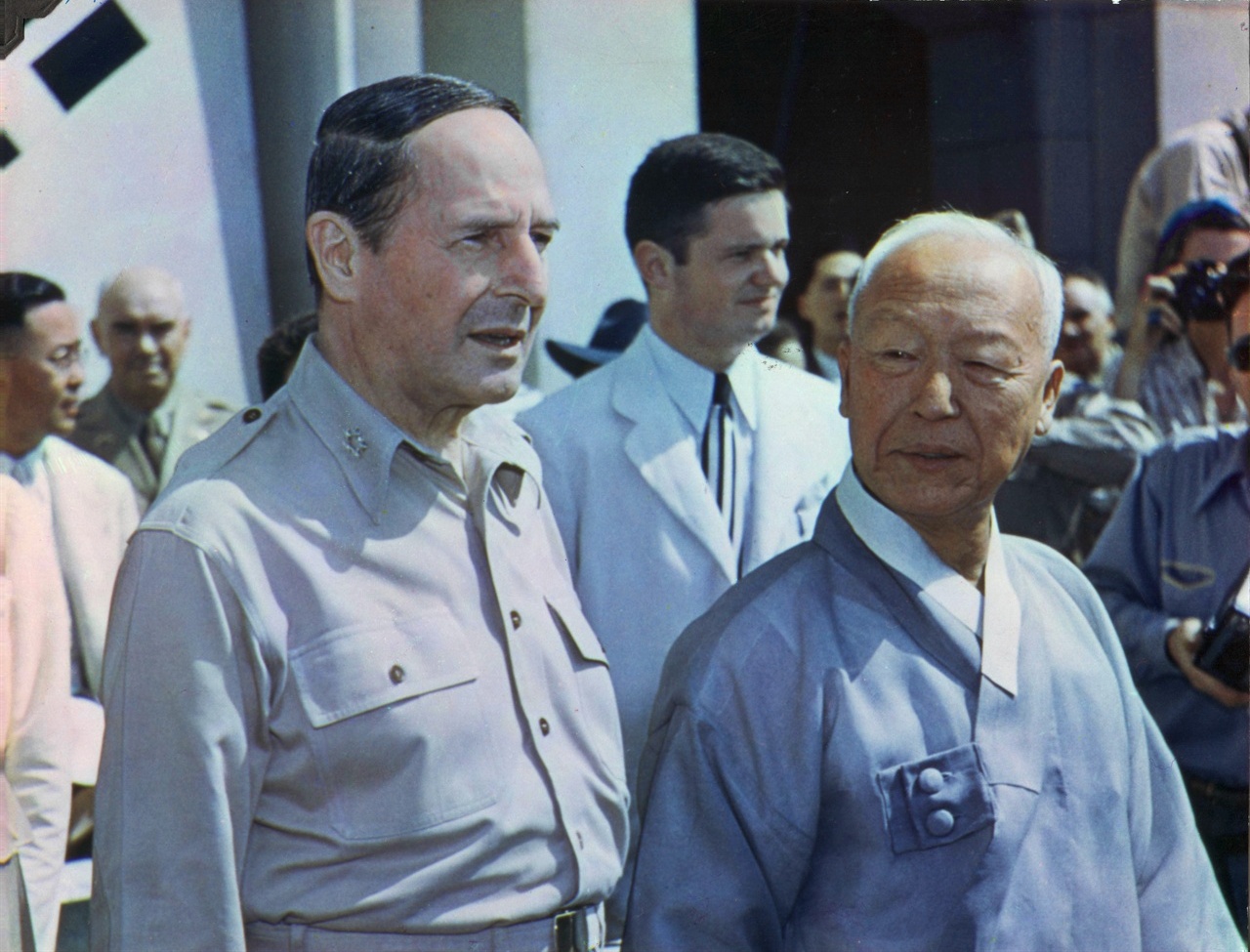


Origins and immediate aftermath (1945–1948)
Japan's defeat in 1945 required it to relinquish control of territories it had seized, including the Korean Peninsula, which had been under Japanese rule for decades. On the day of surrender, Soviet forces moved into the north while American forces landed in the south. Those occupations were intended as temporary military arrangements: two zones of control were provisionally separated at the 38th parallel. The Soviet occupation of the north followed advances from Northeast China, while American forces occupied the south and began supervising demobilization and administration. Plans for a unified, independent Korea faltered as the emerging rivalry of the Cold War hard‑ened positions and complicated multinational negotiations.
Two states, competing claims (1948)
As cooperation between the occupying powers broke down, separate political processes produced two governments in 1948. Elections organized in the south with UN involvement led to the establishment of the Republic of Korea, while a northern regime proclaimed the Democratic People's Republic of Korea with backing from the Soviet Union. Each declared itself the legitimate government of the whole peninsula and each drew support from different international patrons: the south from the United States and the north from the Soviet bloc. Issues of sovereignty, security, and reconstruction were tangled with ideological competition between communist and non‑communist models.
The Korean War and the Demilitarized Zone (1950–1953)
In 1950 open conflict erupted when forces from the north crossed the border to the south, initiating the Korean War. International intervention rapidly expanded the contest: a US‑led coalition countered the invasion and pushed northward, then intervening Chinese forces entered on the side of the DPRK. The fighting devastated large parts of the peninsula and produced enormous civilian suffering. When active combat ended in 1953, the frontlines had largely returned to the area of the 38th parallel and the armistice created the Korean Demilitarized Zone (DMZ), a fortified buffer that remains the de facto border despite the absence of a formal peace treaty. The armistice concluded in a military, not a political, settlement and is often described as a stalemate that froze the division.
Consequences and continuing differences
The division produced two societies that have evolved in markedly different directions. The DPRK developed a centralized, planned economy and an authoritarian political system supported by close ties to other communist states such as China and the Soviet bloc; the ROK built a market economy with democratic institutions and evolving relations with Western nations. Over decades divergences widened in areas as varied as culture, language usage, public health and economic performance (health), governance and international policy (politics). Despite occasional diplomatic engagements and family‑reunion programs, the peninsula remains divided, with the DMZ among the most heavily militarized borders in the world.
Key points and related terms
- North Korea
- South Korea
- Allied
- World War II
- Japan
- colonies
- military
- Korea
- Empire of Japan
- Soviet Union
- occupied
- Northeast China
- United States
- 38th parallel
- Korean Peninsula
- Cold War
- negotiations
- sovereignty
- Korean War
- China
- stalemate
- DMZ
- cultures
- health
- politics
Note: This article summarizes broadly known historical developments surrounding the division of Korea and highlights the main phases and consequences. It avoids contentious claims that are the subject of ongoing historical and political debate, and it emphasizes the long‑term institutional and human effects of a split that has endured since 1945.
Questions and answers
Q: What caused the division of Korea between North and South?
A: The Allied victory in World War II in 1945 caused the division of Korea between North and South. After Japan surrendered, the Allies made them give up all colonies they took through military force, including Korea which was a colony before WWII. This led to negotiations between the United States and Soviet Union that failed to create an independent, unified Korea, resulting in two separate countries.
Q: How did Japan acquire control over Korea?
A: Japan acquired control over Korea by using military force to take it over.
Q: What is the significance of the 38th parallel?
A: The 38th parallel is significant because it marks the border between zones of control occupied by the United States and Soviet Union after Japan surrendered. It later became known as the Korean Demilitarized Zone (DMZ) after the Korean War ended in 1953 with a stalemate.
Q: Who supported North and South Korea during negotiations for unification?
A: During negotiations for unification, the United States supported South Korea while Soviet Union supported North Korea.
Q: Why did China become involved in Korean War?
A: China became involved in Korean War when they pushed back against United States forces who were trying to take over North Korea just before they could take over all of Korea.
Q: What are some major differences between cultures, economies, health, politics, and languages between North and South Koreas today?
A: Today there are major differences between cultures, economies, health systems, politics systems, and even languages between North and South Koreas due to their long-standing division since 1953 when fighting ended with a stalemate at DMZ line on 38th parallel.
Related articles
Author
AlegsaOnline.com Division of Korea (1945–present) Leandro Alegsa
URL: https://en.alegsaonline.com/art/27910