
Division of Bendigo
An Australian federal electoral division in central Victoria created in 1900, centred on the city of Bendigo and covering nearby regional towns; its boundaries have shifted with redistributions over time.
Division of Bendigo is an Australian federal electoral division in the state of Victoria. Established in 1900 and first contested at the inaugural federal election in 1901, the division takes its name from the city of Bendigo and serves as a mixed regional and provincial electorate. The division is administered under the national redistribution process and its precise footprint has changed repeatedly as populations and administrative requirements evolved.
Image gallery
10 Images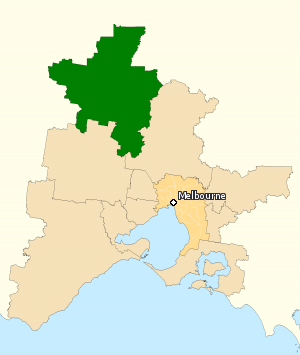





Geography and communities
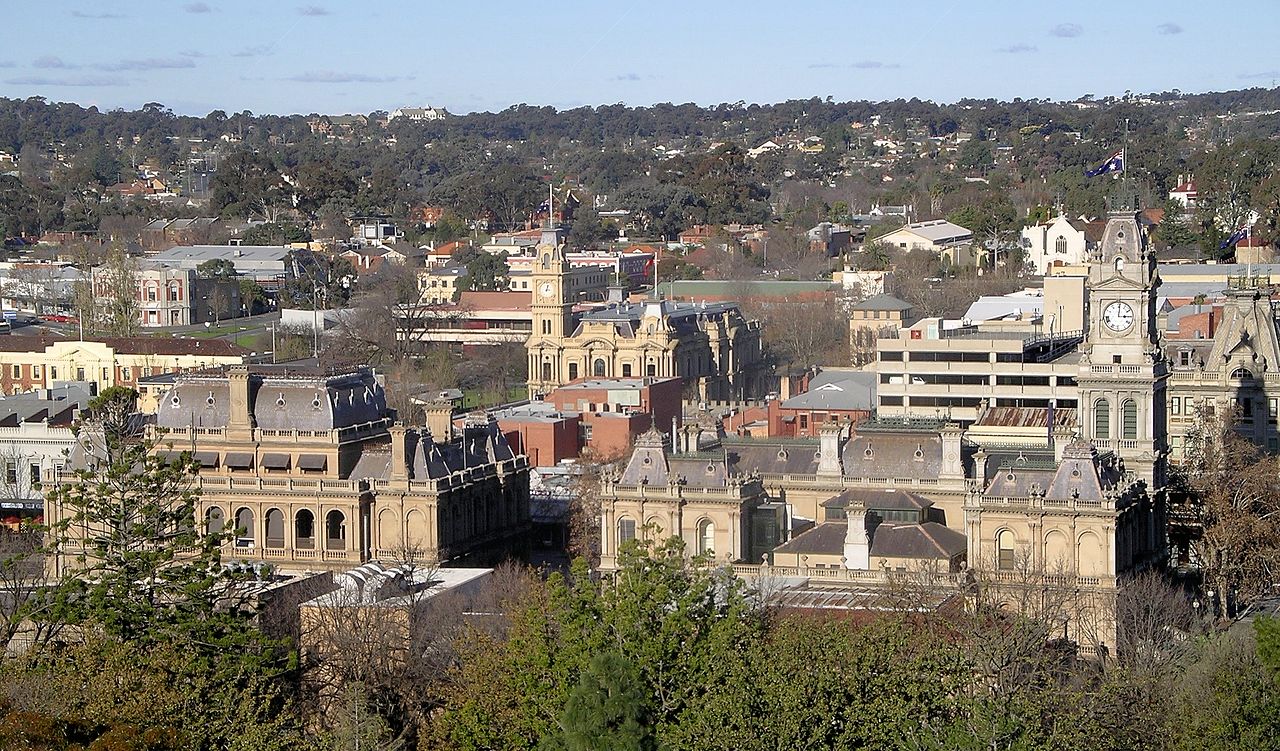
The electorate centres on Bendigo and includes a number of surrounding towns and rural districts. At different times its limits have incorporated places such as Echuca, Castlemaine, Maryborough and Seymour. In its current configuration it contains communities including Bendigo, Castlemaine, Kyneton and Maldon. These towns reflect a mix of regional service centres, agricultural districts and commuter towns linked to larger urban hubs.
Boundaries and administration
Federal electoral boundaries in Australia are reviewed regularly to maintain roughly equal numbers of electors and to reflect demographic change. The Australian Electoral Commission conducts redistributions that can expand, contract or shift the Division of Bendigo’s borders. Changes to the division often follow population growth in regional centres or broader shifts in Victoria’s settlement patterns.
History and development
Created for the first federal parliament, the Division of Bendigo has existed throughout Australia’s federation era. In the early years the division was largely coterminous with the urban area of Bendigo itself; over subsequent redistributions it has taken on a larger regional footprint. Historical maps and electoral rolls show that towns such as Echuca and Maryborough were at times included when boundaries moved to balance elector numbers across neighbouring seats.
Role and significance
As a federal electorate, Bendigo elects one member to the House of Representatives. The division is notable for representing a cross-section of regional Victoria: a central regional city, smaller historic towns, agricultural districts and growing peri-urban communities. This mix shapes local priorities and the issues that candidates and representatives address, from regional infrastructure and health services to rural industries and transport links.
Further information
For official information, maps and current enrolment details consult the division’s profile on the Australian Electoral Commission and related resources. The division’s long history since federation, together with periodic boundary adjustments, makes it a useful case study in how electoral representation adapts to changing populations across regional Australia. More detailed electoral histories and statistical profiles are available through official electoral publications and regional archives; see the Division of Bendigo entry for maps and data. Division profile
Questions and answers
Q: What is the Division of Bendigo?
A: The Division of Bendigo is an Australian Electoral Division in Victoria.
Q: When was the Division of Bendigo created?
A: The Division of Bendigo was created in 1900 for the first federal election in 1901.
Q: How did the Division of Bendigo get its name?
A: The Division of Bendigo is named after the city of Bendigo.
Q: What areas were initially covered by the Division of Bendigo?
A: In the early years, the Division of Bendigo was covered only Bendigo.
Q: What other towns have been included in the Division of Bendigo over the years?
A: The seat has included towns such as Echuca, Castlemaine, Maryborough, and Seymour.
Q: What towns are currently included in the Division of Bendigo?
A: The current Division of Bendigo includes Bendigo, Castlemaine, Kyneton, and Maldon.
Q: What is the purpose of the Division of Bendigo?
A: The Division of Bendigo is an Australian Electoral Division that serves the purpose of representing people from the areas it covers in the federal government.
Related articles
Author
AlegsaOnline.com Division of Bendigo Leandro Alegsa
URL: https://en.alegsaonline.com/art/27829